Outdoor Apparel Market Size
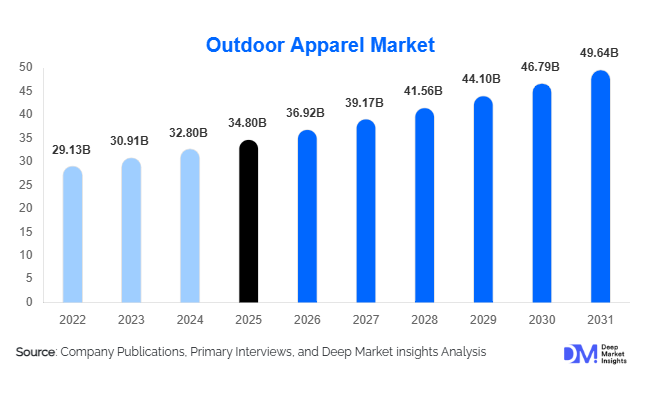
According to Deep Market Insights, the global outdoor apparel market size was valued at USD 34.8 billion in 2025 and is projected to grow from USD 36.92 billion in 2026 to reach USD 49.64 billion by 2031, expanding at a CAGR of 6.1% during the forecast period (2026–2031). The outdoor apparel market growth is primarily driven by increasing participation in outdoor recreation activities, rising demand for high-performance technical clothing, and the growing popularity of adventure tourism worldwide.
Outdoor apparel refers to specialized clothing designed to provide protection, comfort, and performance during activities such as hiking, trekking, camping, skiing, climbing, and trail running. These garments are engineered using advanced textile technologies that offer features such as moisture management, breathability, insulation, waterproofing, and durability. Over the past decade, outdoor clothing has transitioned beyond niche sporting communities into mainstream fashion, supported by the rising “outdoor lifestyle” or “gorpcore” trend where technical clothing is worn in everyday urban environments.
The expansion of adventure tourism, increasing disposable incomes, and greater awareness of health and fitness are key drivers shaping demand across global markets. Consumers are increasingly prioritizing multifunctional clothing that combines performance, durability, and style. Additionally, sustainability initiatives such as recycled fabrics, eco-friendly dyes, and circular product designs are becoming essential components of product development strategies. These factors collectively position the outdoor apparel industry for steady growth throughout the forecast period.
Key Market Insights
- Outdoor apparel is increasingly merging with lifestyle fashion, with technical jackets, fleece layers, and trekking pants becoming everyday urban wear.
- Sustainability is becoming a major purchasing factor, with consumers favoring recycled materials, organic fibers, and environmentally responsible production methods.
- North America dominates the global market, supported by a strong culture of outdoor recreation and the presence of major outdoor apparel brands.
- Asia-Pacific is the fastest-growing region, driven by rising disposable income and expanding participation in hiking, trekking, and outdoor sports.
- E-commerce is transforming distribution channels, allowing brands to reach global customers directly through digital platforms.
- Technological innovations in textiles, including waterproof membranes, breathable fabrics, and smart clothing technologies, are enhancing product performance and value.
What are the latest trends in the outdoor apparel market?
Sustainable and Eco-Friendly Outdoor Apparel
Sustainability has emerged as one of the most influential trends in the outdoor apparel industry. Consumers increasingly expect brands to demonstrate environmental responsibility, particularly because outdoor enthusiasts often have strong environmental values. In response, manufacturers are introducing recycled polyester fabrics, biodegradable materials, and environmentally friendly dyeing processes that significantly reduce water and chemical usage.
Leading outdoor apparel brands are also implementing circular business models that include repair programs, product recycling, and second-hand resale platforms. Some companies now design products specifically for durability and repairability to extend garment life cycles. Additionally, certification programs and transparent supply chains are gaining importance as consumers seek greater accountability regarding environmental and labor practices.
Outdoor Apparel as Everyday Lifestyle Fashion
The growing “gorpcore” trend has significantly expanded the consumer base for outdoor apparel. Traditionally designed for extreme environments, outdoor clothing is now widely worn in urban settings due to its durability, comfort, and technical features. Fleece jackets, hiking pants, and waterproof shells have become common elements of casual fashion wardrobes.
This shift is encouraging brands to blend performance functionality with modern design aesthetics. Apparel manufacturers are introducing versatile products that transition seamlessly from outdoor adventures to daily urban use. As a result, outdoor apparel is no longer limited to specialized sporting activities but is increasingly positioned as premium lifestyle clothing, expanding the addressable market significantly.
What are the key drivers in the outdoor apparel market?
Growing Participation in Outdoor Recreation
The rising popularity of outdoor activities such as hiking, camping, skiing, trekking, and trail running is a major driver of outdoor apparel demand. Increasing awareness of health and wellness, combined with urban lifestyles that encourage recreational escape into nature, is motivating consumers to participate in outdoor sports and adventures. Governments and tourism organizations are also promoting outdoor recreation through the development of national parks, hiking trails, and adventure tourism infrastructure.
These developments directly increase the demand for technical clothing that offers weather protection, durability, and comfort in various environmental conditions. As more consumers participate in outdoor activities, the need for specialized apparel continues to grow across both professional and recreational user segments.
Advancements in Performance Textile Technology
Continuous innovation in textile engineering has significantly enhanced the functionality of outdoor apparel. Modern garments incorporate advanced materials such as waterproof membranes, moisture-wicking fabrics, and lightweight synthetic insulation that improve performance in extreme weather conditions. These technological improvements enable outdoor clothing to deliver better comfort, breathability, and thermal regulation.
Additionally, emerging smart textile technologies are enabling features such as temperature regulation, biometric monitoring, and UV protection. These innovations allow apparel brands to offer premium products that command higher price points while meeting the evolving expectations of outdoor enthusiasts and professional athletes.
What are the restraints for the global market?
Volatility in Raw Material Prices
Outdoor apparel production relies heavily on synthetic fibers such as polyester and nylon, which are derived from petrochemical feedstocks. Fluctuations in crude oil prices can significantly impact manufacturing costs for textile producers. In addition, advanced technical fabrics used in waterproof jackets and insulated apparel often require complex manufacturing processes, increasing overall production costs.
This cost volatility can affect profit margins for manufacturers and lead to price increases for consumers. Smaller brands in particular may face challenges in absorbing these cost fluctuations while remaining competitive in the market.
Seasonal Demand Variability
Outdoor apparel sales are often influenced by seasonal weather patterns and tourism cycles. Winter sports clothing such as ski jackets, thermal layers, and insulated pants are heavily dependent on snowfall and winter tourism activity. Warm winters or unpredictable climate conditions can significantly reduce demand for certain product categories.
This seasonality creates inventory management challenges for manufacturers and retailers, who must accurately forecast demand and manage product cycles effectively. Overproduction or unsold inventory can lead to discounting pressures and reduced profitability within the industry.
What are the key opportunities in the outdoor apparel industry?
Expansion of Adventure Tourism
The global adventure tourism industry is expanding rapidly as travelers seek immersive nature-based experiences such as trekking, mountaineering, wildlife exploration, and camping. These activities require specialized clothing designed for comfort, protection, and durability in extreme environmental conditions.
As tourism authorities invest in outdoor recreation infrastructure such as hiking trails, ski resorts, and national parks, the demand for outdoor apparel is expected to grow substantially. Apparel manufacturers have the opportunity to develop destination-specific products tailored to specific climates and terrains, thereby strengthening their positioning within the adventure tourism ecosystem.
Integration of Smart Clothing Technologies
The integration of wearable technologies into clothing represents a major innovation opportunity for outdoor apparel manufacturers. Smart garments embedded with sensors can monitor body temperature, heart rate, and environmental conditions, providing valuable performance data to users during outdoor activities.
Electrically heated jackets, GPS-enabled clothing systems, and UV-protective fabrics are emerging as advanced product categories within the outdoor apparel market. These innovations enhance safety and performance for outdoor enthusiasts while enabling manufacturers to introduce premium product offerings with higher profit margins.
Report Scope
| Report Metric | Details |
|---|---|
| Market Size in 2025 | USD 34.8 Billion |
| Market Size in 2026 | USD 36.92 Billion |
| Market Size in 2031 | USD 49.64 Billion |
| CAGR | 6.1% (2026-2031) |
| Base Year for Estimation | 2025 |
| Historical Data | 2022-2024 |
| Forecast Period | 2026-2031 |
| Report Coverage | Revenue Forecast, Competitive Landscape, Supply Chain Disruption, Growth Factors, Environment & Regulatory Landscape and Trends |
| Geographies Covered | North America, Europe, APAC, Middle East and Africa, LATAM |
| Countries Covered | U.S., Canada, U.K., Germany, France, Spain, Italy, Russia, Nordic, Benelux, Rest of Europe, China, Korea, Japan, India, Australia, Singapore, Taiwan, South East Asia, Rest of Asia-Pacific, UAE, Turky, Saudi Arabia, South Africa, Egypt, Nigeria, Rest of MEA, Brazil, Mexico, Argentina, Chile, Colombia, Rest of LATAM |
Explore more data points, trends and opportunities Download Free Sample Report
Product Type Insights
Top wear, including jackets, fleece layers, hoodies, and performance shirts, represents the largest product category in the outdoor apparel market, accounting for approximately 42% of global revenue in 2025. Technical jackets remain the most popular item due to their multifunctional nature and strong branding appeal. Waterproof and insulated jackets are essential for outdoor activities such as hiking, skiing, and mountaineering, making them a staple purchase for consumers.
Bottom wear, including hiking pants, trekking shorts, and thermal base layers, represents another significant segment driven by the growing popularity of trekking and adventure tourism. Specialized apparel such as ski suits and mountaineering gear caters to niche high-performance markets where consumers prioritize advanced protection and durability. The increasing trend of urban outdoor fashion is further boosting demand for versatile top wear that combines functionality with everyday style.
Application Insights
Hiking and trekking represent the largest application segment in the outdoor apparel market, accounting for roughly 35% of total demand. These activities are among the most accessible forms of outdoor recreation and require specialized clothing designed for durability, moisture management, and weather protection.
Winter sports such as skiing and snowboarding also generate substantial demand for insulated jackets, thermal base layers, and waterproof outerwear. Trail running and outdoor fitness activities are emerging as fast-growing segments, particularly among younger demographics who seek lightweight performance apparel designed for mobility and breathability. Additionally, the growing trend of outdoor lifestyle fashion has created a new application segment where consumers wear technical apparel in everyday urban settings.
Distribution Channel Insights
Specialty outdoor retail stores dominate the distribution landscape for outdoor apparel, accounting for approximately 38% of global sales. These stores provide expert product knowledge, curated selections of technical gear, and opportunities for consumers to test products before purchasing.
E-commerce has rapidly gained traction as a major sales channel, allowing brands to reach global customers directly while reducing reliance on traditional retail intermediaries. Online platforms enable consumers to compare products, read reviews, and access a wider variety of brands. Brand-owned stores and direct-to-consumer digital platforms are also becoming increasingly important as companies seek to strengthen customer relationships and improve profit margins.
End-User Insights
Men represent the largest consumer segment in the outdoor apparel market, accounting for approximately 52% of total global demand in 2025. Historically, outdoor activities such as mountaineering, trekking, and hunting have had higher participation rates among male consumers, driving stronger demand within this demographic.
However, the women’s outdoor apparel segment is currently the fastest-growing category. Increasing female participation in adventure sports and outdoor recreation is encouraging brands to expand product lines designed specifically for women. Additionally, the kids and youth segment is gaining traction as families increasingly participate in outdoor travel and recreational activities together.
Explore more data points, trends and opportunities Download Free Sample Report
Outdoor Apparel Market Segmentations
By Product Type
- Top Wear
- Bottom Wear
- Outerwear & Protective Apparel
- Activity-Specific Apparel
By Material Type
- Synthetic Fabrics
- Natural Fibers
- Blended Fabrics
- Advanced Technical Materials
By End-User
- Men
- Women
- Kids / Youth
- Unisex Outdoor Apparel
By Application
- Hiking & Trekking
- Camping
- Mountaineering & Rock Climbing
- Winter Sports (Skiing & Snowboarding)
- Trail Running & Adventure Racing
- Fishing & Hunting
- Outdoor Lifestyle / Urban Outdoor Wear
By Distribution Channel
- Specialty Outdoor Retail Stores
- Sporting Goods Retail Chains
- Brand-Owned Stores
- E-commerce Platforms
- Department Stores & Hypermarkets
Regional Insights
North America
North America represents the largest regional market for outdoor apparel, accounting for approximately 34% of global demand in 2025. The United States alone contributes nearly 28% of global market revenue due to a strong outdoor recreation culture, well-developed national park infrastructure, and high consumer spending on sports and lifestyle products. Canada also represents a significant market due to its cold climate and strong participation in winter sports.
Europe
Europe accounts for nearly 30% of the global outdoor apparel market, with major demand originating from Germany, the United Kingdom, France, Switzerland, and Nordic countries. Alpine tourism and winter sports play a significant role in driving regional demand, particularly in Switzerland and Austria. European consumers also place strong emphasis on sustainability and environmentally responsible apparel production.
Asia-Pacific
Asia-Pacific represents approximately 26% of the global outdoor apparel market and is the fastest-growing region. China leads demand within the region due to rising middle-class incomes and growing participation in outdoor recreation. Japan and South Korea have strong hiking cultures that support steady demand for outdoor clothing, while India and Southeast Asian markets are emerging as promising growth hubs.
Latin America
Latin America accounts for around 6% of the global outdoor apparel market. Countries such as Brazil, Chile, and Argentina are witnessing growing interest in trekking, mountaineering, and adventure tourism. Patagonia and the Andes Mountains have become popular destinations for international outdoor travelers, supporting regional apparel demand.
Middle East & Africa
The Middle East and Africa collectively represent approximately 4% of the global market. Demand in this region is driven by adventure tourism activities such as desert trekking, mountain climbing, and wildlife exploration. Countries such as the UAE and South Africa are emerging as key markets due to expanding tourism infrastructure and rising consumer spending on outdoor recreation.