Oral Rinse Market Size
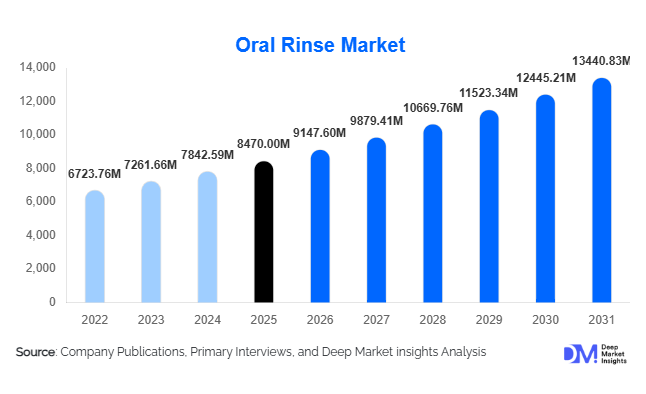
According to Deep Market Insights,the global oral rinse market size was valued at USD 8,470 million in 2025 and is projected to grow from USD 9,147.60 million in 2026 to reach USD 13,440.83 million by 2031, expanding at a CAGR of 8.0% during the forecast period (2026–2031). The oral rinse market growth is primarily driven by increasing consumer awareness of oral hygiene, the rising prevalence of dental conditions such as gingivitis and plaque buildup, and the growing integration of preventive oral care routines across households worldwide.
Oral rinse, commonly referred to as mouthwash, has become a critical component of modern oral care routines. Consumers are increasingly adopting mouthwash alongside brushing and flossing to ensure comprehensive oral hygiene. Growing concerns regarding bad breath, gum diseases, and dental cavities are driving demand for both therapeutic and cosmetic mouthwash formulations. Additionally, the increasing popularity of alcohol-free, herbal, and specialized therapeutic mouthwash products is transforming the competitive landscape of the market.
Rapid urbanization, expanding retail distribution networks, and strong marketing campaigns by leading oral care brands are further accelerating global adoption. The emergence of specialized formulations targeting dry mouth, teeth sensitivity, and enamel strengthening has created new demand segments. With growing healthcare awareness and increased spending on personal care products, the oral rinse market is expected to witness sustained expansion over the coming years.
Key Market Insights
- Therapeutic mouthwash formulations are witnessing strong growth, driven by increasing cases of gingivitis, plaque, and periodontal disease worldwide.
- Alcohol-free and herbal mouthwash products are gaining popularity among health-conscious consumers seeking safer and gentler oral care solutions.
- North America dominates the global market, supported by strong dental care awareness and high spending on oral hygiene products.
- Asia-Pacific is the fastest-growing regional market, fueled by expanding middle-class populations and rising healthcare awareness.
- E-commerce channels are rapidly expanding, enabling consumers to access premium and niche oral care brands globally.
- Innovation in oral care formulations, including probiotic mouthwash and microbiome-friendly products, is shaping future market growth.
What are the latest trends in the oral rinse market?
Rising Demand for Herbal and Natural Mouthwash
One of the most prominent trends in the oral rinse market is the increasing consumer preference for natural and herbal formulations. Many consumers are becoming cautious about synthetic ingredients and alcohol content in traditional mouthwash products. As a result, mouthwashes containing herbal ingredients such as neem, clove, aloe vera, tea tree oil, and eucalyptus are gaining strong market traction. These ingredients offer antibacterial and anti-inflammatory properties while minimizing irritation and dryness associated with alcohol-based products.
Herbal oral rinse products are particularly popular in regions such as Asia-Pacific where traditional medicine systems emphasize plant-based remedies. Global oral care brands are increasingly expanding their portfolios to include alcohol-free and botanical formulations in response to this trend. Additionally, clean-label marketing and sustainable ingredient sourcing are becoming important differentiators in the competitive landscape.
Technological Innovation in Therapeutic Mouthwash
Advances in oral healthcare science are enabling the development of more targeted mouthwash formulations designed to address specific dental issues. Modern oral rinses are now formulated with ingredients such as chlorhexidine, cetylpyridinium chloride (CPC), hydrogen peroxide, and fluoride to provide therapeutic benefits including plaque control, cavity prevention, and gum health improvement.
Innovations such as probiotic mouthwash and microbiome-friendly oral care products are also gaining attention. These formulations aim to maintain the natural balance of oral bacteria rather than eliminating all microbes. The integration of biotechnology and clinical research into oral care product development is expected to significantly enhance product effectiveness and consumer trust.
What are the key drivers in the oral rinse market?
Increasing Prevalence of Oral Diseases
The rising prevalence of oral health issues such as gingivitis, dental caries, and periodontal disease is one of the primary factors driving demand for oral rinse products. Millions of individuals worldwide experience gum infections, plaque buildup, and bad breath, making preventive oral care increasingly essential. Dental professionals often recommend mouthwash as an additional step in daily oral hygiene routines to reduce bacteria and maintain gum health.
Growing awareness regarding the importance of preventive dental care is encouraging consumers to adopt comprehensive oral hygiene practices. This trend has significantly increased the adoption of mouthwash across both developed and developing markets.
Growing Consumer Awareness of Oral Hygiene
Public health initiatives and dental awareness campaigns have played a crucial role in promoting oral hygiene practices globally. Educational programs conducted by healthcare organizations and dental associations emphasize the importance of maintaining proper oral hygiene to prevent long-term dental complications.
Consumers are increasingly integrating mouthwash into their daily oral care routines along with brushing and flossing. The rising popularity of multi-step oral care regimens is expected to continue driving market growth.
What are the restraints for the global market?
Potential Side Effects of Certain Formulations
Some mouthwash formulations, particularly alcohol-based variants, may cause irritation, dryness, or burning sensations in the oral cavity. Long-term use of certain therapeutic mouthwash ingredients may also affect the natural balance of oral bacteria. These concerns may discourage some consumers from incorporating mouthwash into their daily oral hygiene routines.
Competition from Alternative Oral Hygiene Solutions
Alternative oral care products such as dental floss, water flossers, and probiotic oral care solutions present competition to mouthwash products. Many dental professionals emphasize brushing and flossing as the primary methods of plaque removal, which may limit consumer reliance on oral rinses alone.
What are the key opportunities in the oral rinse industry?
Expansion in Emerging Markets
Emerging economies such as China, India, Indonesia, Brazil, and Vietnam present significant opportunities for the oral rinse market. Rapid urbanization, rising disposable income, and improving healthcare awareness are driving demand for advanced oral hygiene products in these regions. Expanding retail infrastructure and growing e-commerce penetration are also improving product accessibility.
Development of Specialized Therapeutic Products
The development of specialized mouthwash formulations designed to address specific oral health issues represents another major growth opportunity. Products targeting conditions such as dry mouth, teeth sensitivity, gum repair, and enamel strengthening are gaining strong demand among consumers seeking targeted solutions.
Report Scope
| Report Metric | Details |
|---|---|
| Market Size in 2025 | USD 8470 Million |
| Market Size in 2026 | USD 9147.60 Million |
| Market Size in 2031 | USD 13440.83 Million |
| CAGR | 8% (2026-2031) |
| Base Year for Estimation | 2025 |
| Historical Data | 2022-2024 |
| Forecast Period | 2026-2031 |
| Report Coverage | Revenue Forecast, Competitive Landscape, Supply Chain Disruption, Growth Factors, Environment & Regulatory Landscape and Trends |
| Geographies Covered | North America, Europe, APAC, Middle East and Africa, LATAM |
| Countries Covered | U.S., Canada, U.K., Germany, France, Spain, Italy, Russia, Nordic, Benelux, Rest of Europe, China, Korea, Japan, India, Australia, Singapore, Taiwan, South East Asia, Rest of Asia-Pacific, UAE, Turky, Saudi Arabia, South Africa, Egypt, Nigeria, Rest of MEA, Brazil, Mexico, Argentina, Chile, Colombia, Rest of LATAM |
Explore more data points, trends and opportunities Download Free Sample Report
Product Type Insights
Therapeutic oral rinse products represent the leading segment in the global oral rinse market, accounting for approximately 46% of the total market share in 2025. The dominance of this segment is largely attributed to the growing prevalence of oral health conditions such as gingivitis, plaque accumulation, and periodontal diseases, which require targeted therapeutic solutions. Dental professionals frequently recommend medicated mouthwashes containing antiseptic, antibacterial, and fluoride-based formulations to support oral health management and prevent disease progression. Increasing awareness regarding preventive dental care and the growing emphasis on maintaining oral hygiene routines are further supporting demand for therapeutic oral rinse products. In addition, product innovations incorporating clinically proven ingredients and alcohol-free formulations are attracting health-conscious consumers seeking effective yet gentle oral care solutions.
Cosmetic mouthwash products also hold a substantial share of the market as they are widely used for breath freshening, plaque reduction, and teeth whitening purposes. These products appeal to consumers seeking everyday oral hygiene maintenance and improved aesthetic outcomes. Meanwhile, natural and herbal oral rinse formulations are emerging as a rapidly expanding category within the market. Growing consumer preference for plant-based, chemical-free, and alcohol-free oral care products is encouraging manufacturers to develop herbal formulations using ingredients such as aloe vera, tea tree oil, clove oil, and mint extracts. This shift toward natural ingredients is particularly prominent among consumers who prioritize sustainable and holistic health solutions, thereby contributing to the diversification and expansion of the oral rinse product landscape.
Application Insights
Oral rinse products are utilized across a wide range of applications including daily oral hygiene maintenance, gum disease treatment, cavity prevention, and breath freshening. Among these applications, therapeutic oral care represents the leading segment, driven by the increasing global burden of dental disorders such as gingivitis, periodontitis, and dental plaque accumulation. Healthcare professionals frequently recommend therapeutic mouthwashes as part of comprehensive oral care routines to support plaque control, reduce bacterial growth, and promote gum health. The growing awareness regarding preventive dentistry and the increasing number of dental consultations are encouraging consumers to adopt mouthwash products as a complementary solution alongside brushing and flossing.
In addition to therapeutic applications, mouthwash products designed for specific oral health conditions are gaining traction. Formulations targeting dry mouth relief, enamel strengthening, and sensitivity reduction are becoming increasingly popular among consumers seeking specialized oral care solutions. Furthermore, oral rinse products are widely used in post-surgical oral care following dental procedures such as tooth extractions, implants, and periodontal surgeries, where antiseptic mouthwashes help prevent infections and support healing. Orthodontic treatment support also represents a growing application area, as patients with braces or aligners often require additional oral hygiene measures to maintain oral health and prevent plaque buildup. The expansion of dental clinics and increased awareness of specialized oral care treatments are further strengthening demand for oral rinse products across diverse application areas.
Distribution Channel Insights
Offline retail channels continue to dominate global oral rinse product sales, with pharmacies and drug stores accounting for nearly 38% of total market revenue. The leadership of this segment is primarily driven by consumer trust in professional recommendations and the availability of pharmacist guidance when selecting oral care products. Pharmacies often stock a wide range of therapeutic and medicated mouthwash products that are recommended by dental professionals, making them a preferred purchasing destination for consumers seeking clinically validated oral care solutions. In many regions, consumers rely on pharmacy outlets to access specialized formulations designed for gum disease treatment, dry mouth relief, and antibacterial protection.
Supermarkets and hypermarkets also represent significant distribution channels due to their extensive product variety, competitive pricing strategies, and high consumer foot traffic. These retail environments provide consumers with convenient access to multiple oral care brands and promotional offers, encouraging impulse purchases and brand experimentation. In recent years, online retail platforms have experienced rapid growth, supported by the increasing penetration of e-commerce and digital retail ecosystems. Online platforms allow consumers to compare product ingredients, read reviews, and access a broader range of international brands and specialized formulations that may not be readily available in physical stores. The convenience of home delivery and subscription-based purchasing models is further accelerating the adoption of online channels for oral rinse products worldwide.
End-Use Insights
Household consumers represent the largest end-use segment in the global oral rinse market, accounting for nearly 72% of total demand. The leading position of this segment is primarily driven by increasing consumer awareness regarding preventive oral hygiene practices and the growing adoption of comprehensive daily oral care routines. Many consumers are incorporating mouthwash into their regular dental care regimen alongside brushing and flossing to achieve improved oral cleanliness, fresher breath, and enhanced protection against plaque and bacteria. Rising health consciousness and growing concerns regarding dental diseases are encouraging individuals to proactively invest in oral hygiene products for long-term oral health maintenance.
Dental clinics also represent a key end-use segment within the market, as dentists frequently recommend therapeutic mouthwash products to patients undergoing treatment for gum disease, dental infections, or periodontal conditions. Mouthwashes are commonly prescribed as part of post-treatment care to reduce bacterial activity and promote healing following dental procedures. In addition, hospitals and long-term care facilities are increasingly adopting antiseptic oral rinse products as part of patient oral care management protocols. Patients undergoing surgeries, those with limited mobility, or individuals in critical care environments often require assisted oral hygiene, making antiseptic mouthwash solutions an essential component of clinical oral care practices.
Age Group Insights
Adults aged 18–60 years represent the largest consumer segment in the oral rinse market, accounting for approximately 55% of global demand. The leadership of this demographic group is largely attributed to higher purchasing power, greater awareness of oral hygiene products, and a strong emphasis on maintaining both oral health and personal appearance. Adults in this age group frequently use mouthwash products to address concerns such as bad breath, plaque buildup, and gum health while also seeking cosmetic benefits such as teeth whitening and long-lasting freshness. Busy lifestyles and growing professional interactions are also encouraging the use of convenient oral care solutions that provide quick and effective results.
Pediatric oral rinse products designed specifically for children are gaining increasing popularity as parents prioritize preventive dental care from an early age. Manufacturers are introducing child-friendly formulations that are alcohol-free, fluoride-controlled, and available in appealing flavors to encourage regular oral hygiene habits among young consumers. At the same time, the elderly population represents a rapidly expanding consumer segment due to the rising prevalence of oral health challenges such as dry mouth, gum disease, tooth sensitivity, and reduced saliva production among older adults. As global populations continue to age, the demand for specialized mouthwash formulations designed to address age-related oral health concerns is expected to grow steadily.
Explore more data points, trends and opportunities Download Free Sample Report
Oral Rinse Market Segmentations
By Product Type
- Cosmetic Oral Rinse
- Therapeutic Oral Rinse
- Natural & Herbal Oral Rinse
- Fluoride Oral Rinse
- Alcohol-Free Oral Rinse
- Specialized Oral Rinse
By Application
- Daily Oral Hygiene Maintenance
- Gum Disease Treatment
- Breath Freshening
- Post-Dental Procedure Care
- Orthodontic Care
By Distribution Channel
- Pharmacies & Drug Stores
- Supermarkets & Hypermarkets
- Convenience Stores
- Online Retail / E-commerce
- Dental Clinics & Professional Sales
By End-Use
- Household Consumers
- Dental Clinics
- Hospitals
- Long-Term Care Facilities
Regional Insights
North America
North America holds the largest share of the global oral rinse market, accounting for approximately 34% of total demand in 2025. The United States represents the dominant market within the region due to strong dental care awareness, high healthcare spending, and widespread adoption of preventive oral hygiene products. Consumers across the region demonstrate strong demand for advanced oral care solutions, including therapeutic and prescription-strength mouthwashes designed to address specific dental conditions. The presence of leading oral care manufacturers, extensive product innovation, and strong marketing campaigns also contribute to the region’s market leadership.Several factors are driving continued market growth in North America. Increasing prevalence of periodontal diseases, rising demand for premium oral care products, and growing awareness regarding preventive dentistry are encouraging consumers to adopt mouthwash as a routine oral hygiene product. Additionally, the strong presence of dental clinics and well-developed healthcare infrastructure supports professional recommendations and product adoption. E-commerce expansion and direct-to-consumer distribution strategies are further enhancing accessibility to specialized oral rinse products across the region.
Europe
Europe represents the second-largest market for oral rinse products, accounting for approximately 27% of global demand. Countries such as Germany, the United Kingdom, France, and Italy play a significant role in driving regional market growth due to well-established oral healthcare systems and strong consumer awareness regarding dental hygiene. Government-supported healthcare programs and regular dental check-up practices across several European countries are also encouraging the adoption of preventive oral care products including mouthwash.Regional market expansion is further supported by growing consumer interest in natural and alcohol-free oral care products. European consumers increasingly prefer formulations containing herbal extracts and environmentally sustainable ingredients, prompting manufacturers to introduce eco-friendly product lines and recyclable packaging. In addition, strong retail infrastructure, widespread availability of pharmacy chains, and increasing digital retail penetration are contributing to the steady growth of the oral rinse market across the region.
Asia-Pacific
Asia-Pacific is the fastest-growing region in the global oral rinse market, accounting for approximately 24% of total market share. Major economies such as China, India, Japan, and South Korea are driving regional growth due to rapid urbanization, rising disposable incomes, and expanding middle-class populations. Increasing awareness regarding oral hygiene practices and the growing influence of global oral care brands are encouraging consumers across the region to adopt mouthwash as part of their daily oral care routines.Several structural factors are supporting the rapid expansion of the oral rinse market in Asia-Pacific. Improvements in healthcare infrastructure, increasing dental clinic penetration, and rising investments in oral health education initiatives are enhancing consumer awareness regarding preventive oral care. The expansion of modern retail formats and e-commerce platforms is also enabling broader access to oral care products across both urban and semi-urban areas. Furthermore, regional manufacturers are introducing affordable product variants tailored to local consumer preferences, which is further accelerating market adoption.
Latin America
Latin America accounts for nearly 9% of global demand, with Brazil and Mexico representing the largest markets within the region. Increasing urbanization, expanding retail networks, and rising consumer awareness regarding personal hygiene are supporting the steady adoption of oral care products across Latin American countries. Growing middle-class populations and improving access to consumer healthcare products are also contributing to rising demand for mouthwash products.Market growth in Latin America is further driven by expanding supermarket and pharmacy retail chains that provide greater accessibility to oral care brands. Additionally, public health initiatives aimed at improving dental hygiene awareness and increasing dental clinic availability are encouraging preventive oral care practices. As disposable incomes continue to rise and consumers become more health conscious, the demand for oral rinse products is expected to increase across the region.
Middle East & Africa
The Middle East and Africa region accounts for approximately 6% of global market demand. Countries such as Saudi Arabia, the United Arab Emirates, and South Africa represent key markets within the region due to improving healthcare infrastructure and increasing consumer awareness regarding oral hygiene. Rising urban populations and growing access to modern retail outlets are supporting the distribution and availability of oral care products across several Middle Eastern and African markets.Regional market growth is also supported by increasing healthcare investments, expanding dental care services, and rising adoption of preventive health practices. In several Middle Eastern countries, strong purchasing power and demand for premium personal care products are encouraging the adoption of advanced oral hygiene solutions. Meanwhile, improving access to healthcare services and expanding public awareness campaigns related to dental health are contributing to the gradual growth of the oral rinse market across Africa.
Key Players in the Oral Rinse Market
- Procter & Gamble
- Colgate-Palmolive Company
- Johnson & Johnson
- Unilever
- GlaxoSmithKline
- Lion Corporation
- Church & Dwight Co.
- Sunstar Group
- Amway Corporation
- Himalaya Wellness Company
- Dabur India Ltd.
- LG Household & Health Care
- Kao Corporation
- Dr. Harold Katz LLC
- Chattem Inc.