KSA & UAE Spa Market Size
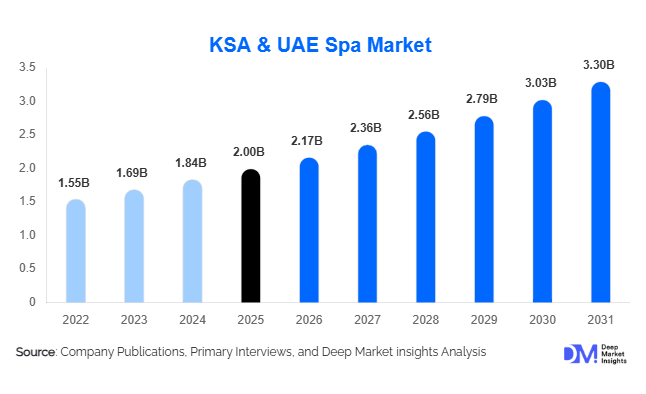
According to Deep Market Insights, the KSA & UAE spa market was valued at approximately USD 2.0 billion in 2025 and is projected to grow from USD 2.17 billion in 2026 to reach USD 3.30 billion by 2031, expanding at a CAGR of 8.7% during the forecast period (2026–2031). Market growth is largely driven by rising wellness awareness, increasing luxury tourism, and expanding hospitality infrastructure across Saudi Arabia and the United Arab Emirates. Government-led tourism initiatives, including Saudi Arabia’s Vision 2031 and the UAE’s continuous investment in lifestyle and hospitality sectors, are accelerating spa development in luxury hotels, resorts, and urban wellness centers.
The spa industry in both countries has evolved beyond traditional relaxation services into a comprehensive wellness ecosystem that integrates beauty treatments, therapeutic massages, holistic therapies, and advanced aesthetic procedures. Growing disposable incomes, changing lifestyle preferences, and rising demand for stress management services are encouraging consumers to adopt regular spa and wellness routines. Additionally, the rapid growth of medical aesthetics and male grooming services is reshaping service offerings and expanding the customer base.
The UAE currently represents the largest spa market in the region due to its mature tourism sector and large expatriate population. Meanwhile, Saudi Arabia is emerging as the fastest-growing market as new luxury tourism projects, resorts, and entertainment destinations incorporate premium wellness facilities. The increasing adoption of technology-enabled spa services, personalized wellness programs, and subscription-based memberships is further transforming the regional spa market, making it a key component of the broader lifestyle and tourism economy.
Key Market Insights
- Luxury hotel and resort spas dominate the regional market, accounting for more than half of spa revenue due to strong integration with hospitality and tourism infrastructure.
- The UAE leads the regional spa industry, supported by international tourism, luxury hospitality development, and a large expatriate consumer base.
- Saudi Arabia is the fastest-growing spa market in the region, driven by Vision 2031 tourism projects and rapid hospitality expansion.
- Massage therapies represent the most demanded spa service, generating the largest share of treatment revenue across urban and resort facilities.
- Male grooming and wellness services are expanding rapidly, with male customers representing a significant portion of spa visitors in major cities such as Dubai, Riyadh, and Jeddah.
- Technology adoption is increasing, with digital booking platforms, AI-driven skin diagnostics, and personalized wellness programs reshaping the customer experience.
What are the latest trends in the KSA & UAE spa market?
Luxury Wellness Tourism Driving Spa Demand
Luxury tourism continues to play a pivotal role in the expansion of spa services across the UAE and Saudi Arabia. High-end resorts, destination hotels, and integrated tourism developments are increasingly incorporating full-scale wellness centers as core amenities. International travelers visiting destinations such as Dubai, Abu Dhabi, AlUla, and the Red Sea coast are seeking premium relaxation and rejuvenation experiences as part of their travel itineraries. As a result, hospitality operators are expanding spa menus with signature therapies, holistic wellness programs, and regionally inspired treatments.
Luxury spas are also emphasizing personalized wellness journeys that combine skincare, massage therapy, nutrition guidance, and mindfulness practices. Resorts are offering multi-day wellness retreats featuring detox programs, yoga sessions, and medical aesthetic treatments. These offerings appeal strongly to affluent travelers seeking exclusive wellness experiences and longer resort stays.
Growth of Medical and Aesthetic Spa Services
Medical and aesthetic spas are becoming one of the fastest-growing segments within the regional spa industry. Increasing consumer awareness about skincare, anti-aging treatments, and cosmetic enhancements is encouraging spas to integrate dermatology and aesthetic medicine services into their offerings. Treatments such as laser skin rejuvenation, body contouring, and injectable cosmetic procedures are gaining popularity among both male and female consumers.
Many spas are partnering with dermatologists and medical professionals to provide clinically supervised treatments that combine relaxation with advanced skincare solutions. This integration of medical aesthetics with traditional wellness services is helping spa operators attract a broader clientele and generate higher per-customer revenue.
What are the key drivers in the KSA & UAE spa market?
Rapid Expansion of Luxury Hospitality Infrastructure
The continuous expansion of luxury hotels, resorts, and lifestyle destinations across Saudi Arabia and the UAE is a major driver of spa market growth. Most upscale hospitality properties now incorporate spa facilities as essential amenities that enhance guest experiences and support premium pricing strategies. New tourism developments in Saudi Arabia, including the Red Sea Project and NEOM, are integrating large wellness centers and spa resorts designed to attract international travelers.
Similarly, the UAE continues to strengthen its reputation as a global luxury tourism hub, with new hotels and resorts offering world-class spa services. The integration of spa facilities into hospitality infrastructure ensures a steady flow of visitors and consistent demand for wellness services.
Increasing Consumer Focus on Wellness and Self-Care
Growing awareness of mental health, stress management, and preventive wellness is encouraging consumers to adopt spa services as part of their regular lifestyle routines. Urban professionals in cities such as Dubai, Abu Dhabi, Riyadh, and Jeddah are increasingly seeking massage therapies, relaxation treatments, and skincare services to manage stress and maintain overall well-being.
The growing popularity of fitness culture, skincare awareness, and holistic wellness practices has also contributed to rising spa visitation rates among both men and women. Wellness-focused lifestyle trends are therefore expected to remain a major growth catalyst for the regional spa market.
What are the restraints for the market?
High Operational Costs for Premium Spa Facilities
Operating spa facilities in prime locations such as luxury hotels and high-end commercial districts involves significant investment and ongoing operational costs. Expenses related to imported skincare products, specialized spa equipment, and highly trained therapists can increase service prices and affect profit margins for operators.
In addition, maintaining high service quality standards requires continuous staff training and infrastructure upgrades. These cost pressures can limit market entry for smaller operators and create barriers for expansion in certain segments.
Limited Availability of Skilled Spa Professionals
The spa industry relies heavily on trained therapists and wellness professionals capable of delivering specialized treatments. Many spa operators in the Gulf region recruit international staff due to limited local expertise. Visa regulations, training requirements, and labor costs can create staffing challenges for operators.
Shortages of skilled therapists may also lead to service capacity constraints, particularly during peak tourism seasons when demand for spa treatments increases significantly.
What are the key opportunities in the KSA & UAE spa industry?
Expansion of Wellness Tourism
The rapid growth of wellness tourism in the Middle East presents significant opportunities for spa operators. International travelers increasingly seek destinations that offer relaxation, rejuvenation, and holistic wellness experiences. The UAE has already established itself as a luxury wellness destination, while Saudi Arabia is rapidly developing new tourism hubs that integrate spa and wellness facilities.
Future tourism developments across the Gulf region are expected to include large-scale wellness resorts that combine spa treatments, fitness programs, and holistic therapies. This trend will create new revenue opportunities for spa operators and international wellness brands entering the market.
Rising Demand for Male Grooming and Wellness Services
The male grooming and wellness segment is expanding rapidly across the region. Urban male consumers are increasingly investing in grooming services, sports recovery therapies, and skincare treatments. Spas are responding by introducing male-focused treatment packages, specialized massage therapies, and grooming services tailored to male customers.
As social attitudes toward male grooming continue to evolve, spa operators can tap into this growing demographic by developing dedicated male wellness programs and exclusive treatment facilities.
Report Scope
| Report Metric | Details |
|---|---|
| Market Size in 2025 | USD 2.0 Billion |
| Market Size in 2026 | USD 2.17 Billion |
| Market Size in 2031 | USD 3.30 Billion |
| CAGR | 8.7% (2026-2031) |
| Base Year for Estimation | 2025 |
| Historical Data | 2022-2024 |
| Forecast Period | 2026-2031 |
| Report Coverage | Revenue Forecast, Competitive Landscape, Supply Chain Disruption, Growth Factors, Environment & Regulatory Landscape and Trends |
| Geographies Covered | North America, Europe, APAC, Middle East and Africa, LATAM |
| Countries Covered | U.S., Canada, U.K., Germany, France, Spain, Italy, Russia, Nordic, Benelux, Rest of Europe, China, Korea, Japan, India, Australia, Singapore, Taiwan, South East Asia, Rest of Asia-Pacific, UAE, Turky, Saudi Arabia, South Africa, Egypt, Nigeria, Rest of MEA, Brazil, Mexico, Argentina, Chile, Colombia, Rest of LATAM |
Explore more data points, trends and opportunities Download Free Sample Report
Facility Type Insights
Hotel and resort spas dominate the KSA & UAE spa market, accounting for approximately 52% of total industry revenue in 2025. The leadership of this segment is largely driven by the strong integration of spa services within the luxury hospitality ecosystem across the region. Premium hotels and destination resorts increasingly position wellness facilities as a core component of the guest experience rather than an optional amenity. International tourists visiting Dubai, Abu Dhabi, Riyadh, Jeddah, and emerging resort destinations frequently seek relaxation and rejuvenation experiences during their stay, making spa services a key revenue contributor for hospitality operators.
The expansion of luxury tourism infrastructure, including high-end resorts, beachside wellness retreats, and integrated lifestyle developments, continues to strengthen demand for hotel-based spa facilities. These spas typically feature extensive treatment menus, hydrotherapy pools, saunas, hammams, aromatherapy therapies, and holistic wellness programs designed to attract high-spending travelers and affluent residents. Many luxury hotels also offer curated wellness packages that combine accommodation, spa treatments, fitness programs, and nutrition plans, further increasing customer spending per visit.
Day spas and urban wellness centers represent the second-largest segment, particularly in densely populated metropolitan areas where residents seek convenient access to relaxation, beauty treatments, and quick wellness therapies. Cities such as Dubai, Abu Dhabi, Riyadh, and Jeddah have witnessed rapid growth in boutique spas and urban wellness studios catering to working professionals and middle- to high-income consumers. Meanwhile, medical spas are emerging as the fastest-growing facility type, driven by rising demand for dermatological procedures, aesthetic medicine treatments, and advanced skincare therapies. The increasing popularity of non-invasive cosmetic treatments, including laser therapies, skin rejuvenation procedures, and anti-aging treatments, is encouraging many spa operators to integrate medical aesthetics into their service offerings.
Service Type Insights
Massage therapies represent the largest service segment in the regional spa market, accounting for approximately 34% of spa service revenue. Their dominance can be attributed to widespread consumer acceptance and the strong therapeutic benefits associated with massage treatments, including stress relief, muscle recovery, and improved circulation. Popular massage offerings across the region include Swedish massage, deep tissue massage, Thai massage, sports massage, and aromatherapy massage. The increasing pace of urban lifestyles and the growing emphasis on mental wellness have significantly boosted demand for massage therapies among both residents and tourists. Corporate professionals and business travelers often seek massage services to alleviate stress and fatigue, particularly in major commercial hubs such as Dubai and Riyadh. In addition, fitness-focused consumers are increasingly opting for sports massage and recovery therapies following intense physical activity.
Facial and skincare treatments represent another major service category contributing significantly to overall spa revenues. Rising awareness of skincare routines, anti-aging treatments, and dermatological health is encouraging consumers to invest in advanced facial treatments such as hydration therapy, collagen-boosting facials, and skin-brightening procedures. Meanwhile, medical aesthetic services are witnessing rapid growth as spas integrate advanced technologies including laser therapy, chemical peels, and non-invasive body contouring treatments. This shift toward results-oriented skincare and aesthetic wellness is expanding the revenue potential of spa service providers across the region.
Customer Demographic Insights
Male customers represent a significant share of spa visitors in the KSA and UAE markets, accounting for approximately 60% of total demand. This trend reflects a growing cultural shift toward male grooming and wellness in the Gulf region. Urban male consumers are increasingly investing in personal care, relaxation therapies, and sports recovery treatments as part of their lifestyle routines. Massage therapies, muscle recovery treatments, and grooming services such as facials, manicures, and hair spa treatments are particularly popular among male customers. Fitness culture and increased participation in sports and gym activities have further contributed to the demand for therapeutic massage and physiotherapy-inspired spa services.
Female consumers remain a crucial segment for the spa industry, particularly for skincare treatments, beauty services, and holistic wellness therapies. Anti-aging facials, body treatments, and aesthetic services such as laser treatments and skin rejuvenation procedures are especially popular among female clientele. Couples and international tourists represent high-value customer segments, particularly within luxury hotel spas. These customers often purchase premium wellness packages that combine multiple treatments, spa day experiences, and wellness retreats, significantly increasing revenue per customer. The growing popularity of wellness tourism in the Gulf region is expected to further strengthen demand from this segment.
Distribution Channel Insights
Direct bookings through hotel concierge services and walk-in appointments represent the largest distribution channel in the spa market, accounting for roughly 55% of total bookings. Hotel concierge teams play a key role in recommending spa services to hotel guests, particularly in luxury properties where spa treatments are marketed as part of the overall hospitality experience. However, digital booking platforms are rapidly gaining traction as consumers increasingly prefer mobile and online scheduling options. Spa operators are adopting digital reservation systems and mobile apps that allow customers to browse treatment menus, compare prices, and book appointments instantly. These platforms also enable operators to offer promotional packages and targeted marketing campaigns.
Membership-based wellness programs are another growing distribution model within the spa industry. Many spa operators now offer subscription-based packages that provide regular customers with discounted treatments, loyalty rewards, and exclusive access to wellness facilities. These membership programs help improve customer retention while ensuring consistent revenue streams for spa operators.
End-Use Industry Insights
The hospitality industry remains the primary end-use sector driving spa demand in Saudi Arabia and the UAE. Luxury hotels, resorts, and integrated tourism developments incorporate spa facilities as essential components of their guest experience offerings. With billions of dollars being invested in tourism infrastructure across the region, particularly in Saudi Arabia under Vision 2031, the hospitality sector is expected to remain the dominant driver of spa market growth. The personal wellness and lifestyle segment is also experiencing strong expansion as residents increasingly adopt spa treatments as part of their regular health and relaxation routines. Rising disposable incomes, increased awareness of mental wellness, and changing lifestyle preferences are encouraging frequent visits to urban spas and wellness centers.
Corporate wellness programs are emerging as an important application area within the spa market. Large corporations are increasingly partnering with spa operators to provide stress management and relaxation packages for employees. These programs often include massage therapies, mindfulness sessions, and wellness consultations aimed at improving employee productivity and mental well-being.
Explore more data points, trends and opportunities Download Free Sample Report
KSA & UAE Spa Market Segmentations
By Facility Type
- Hotel & Resort Spas
- Day / Standalone Urban Spas
- Medical & Aesthetic Spas
- Club & Fitness Center Spas
- Residential & Community Spas
By Service Type
- Massage Therapies
- Facial & Skin Treatments
- Body Treatments
- Beauty & Grooming Services
- Wellness & Holistic Therapies
- Medical Aesthetic Treatments
By Customer Demographic
- Women
- Men
- Couples
- Corporate & Group Clients
- Tourists / Visitors
By Distribution Channel
- Direct Walk-In & Hotel Concierge Bookings
- Online Booking Platforms
- Membership & Subscription Programs
- Corporate Wellness Partnerships
By Pricing Tier
- Luxury Spas
- Premium Spas
- Mid-Range Spas
- Affordable / Budget Spas
Regional Insights
United Arab Emirates
The UAE accounts for the largest share of the regional spa market, representing approximately 70% of total industry revenue in 2025. Dubai and Abu Dhabi serve as the primary wellness tourism hubs in the region due to their highly developed hospitality infrastructure and strong international tourism flows. The presence of numerous luxury hotels, beach resorts, and wellness retreats has created a highly competitive spa ecosystem offering premium services to both tourists and residents.
Several factors drive spa market growth in the UAE. First, the country’s status as a global tourism destination ensures a consistent influx of international travelers seeking relaxation and wellness experiences. Second, the UAE has a large expatriate population with relatively high disposable incomes, supporting regular demand for spa services. Third, the government continues to invest heavily in tourism infrastructure, entertainment destinations, and lifestyle developments that include premium wellness facilities. The strong presence of luxury hospitality brands and international spa operators has also encouraged innovation in spa services, including advanced skincare technologies, personalized wellness programs, and holistic treatment offerings. As wellness tourism continues to grow globally, the UAE is expected to remain the leading spa market in the Middle East.
Saudi Arabia
Saudi Arabia represents the fastest-growing spa market in the region, supported by large-scale tourism and lifestyle transformation initiatives under the Vision 2031 program. The government is investing heavily in tourism megaprojects such as NEOM, the Red Sea Project, and AlUla, many of which include luxury resorts and wellness-focused hospitality developments. These projects are expected to significantly increase the number of spa facilities across the country over the next decade. Urbanization and rising disposable incomes are also contributing to the growth of spa demand in major Saudi cities such as Riyadh, Jeddah, and Dammam. Increasing awareness of wellness, personal grooming, and mental health is encouraging consumers to adopt spa services as part of their regular lifestyle routines.
Additionally, regulatory reforms supporting the entertainment and tourism sectors have created new opportunities for international hospitality and wellness brands to enter the Saudi market. The expansion of luxury hotels, shopping destinations, and lifestyle complexes is expected to drive strong growth in urban wellness centers and medical spas. As tourism development accelerates and wellness awareness continues to rise, Saudi Arabia is likely to become one of the most dynamic spa markets in the Middle East.
Key Players in the KSA & UAE Spa Market
- Marriott International
- Hilton Worldwide
- Hyatt Hotels Corporation
- Four Seasons Hotels & Resorts
- Mandarin Oriental Hotel Group
- Accor Hotels
- Six Senses Hotels, Resorts, and Spas
- Banyan Tree Holdings
- OneSpaWorld Holdings
- IHG Hotels & Resorts
- Canyon Ranch
- Kerzner International
- Chiva-Som International Health Resort
- Steiner Leisure Limited
- Elemis Spa Group