Isolation Tank Market Size
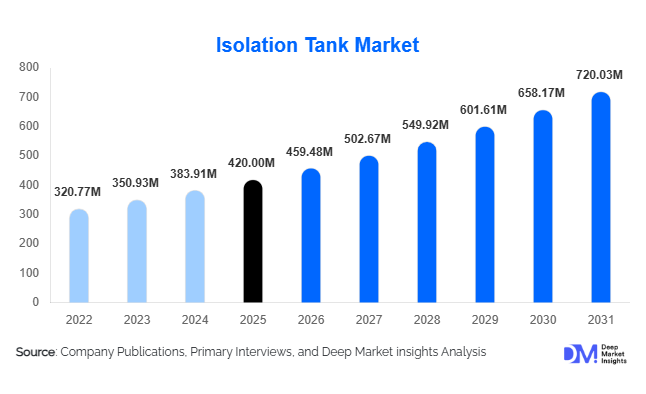
According to Deep Market Insights, the global isolation tank market size was valued at USD 420 million in 2025 and is projected to grow from USD 459.48 million in 2026 to reach USD 720.03 million by 2031, expanding at a CAGR of 9.4% during the forecast period (2026–2031). The isolation tank market growth is primarily driven by rising awareness of mental wellness therapies, growing demand for stress-management solutions, and the rapid expansion of wellness centers and float therapy clinics worldwide. Increasing adoption of sensory deprivation therapy for relaxation, meditation, and rehabilitation is also strengthening demand for advanced floatation tanks across healthcare, spa, and sports recovery facilities.
Key Market Insights
- Mental wellness awareness is significantly boosting demand for floatation therapy, with consumers increasingly seeking non-pharmaceutical treatments for stress, anxiety, and sleep disorders.
- Wellness centers and float spas are expanding globally, particularly in North America and Europe, driving large-scale adoption of isolation tank equipment.
- North America dominates the market, supported by a well-established wellness industry and a strong presence of specialized float therapy clinics.
- Asia-Pacific is emerging as the fastest-growing regional market, fueled by rising urban stress levels and increasing adoption of premium wellness technologies.
- Sports recovery and rehabilitation applications are expanding rapidly, with professional athletes and physiotherapy clinics increasingly adopting floatation therapy.
- Technological integration, including smart controls, automated filtration, biometric monitoring, and guided meditation systems, is transforming modern isolation tanks.
What are the latest trends in the isolation tank market?
Smart and Connected Floatation Systems
Technological innovation is reshaping the isolation tank industry. Manufacturers are increasingly introducing smart tanks equipped with advanced filtration systems, biometric sensors, and app-based control platforms. These systems allow users to customize float sessions through adjustable lighting, sound therapy, and guided meditation programs. Integration with mobile wellness applications enables operators to track relaxation metrics, session duration, and user feedback, improving both therapy personalization and operational efficiency. Some advanced tanks also integrate IoT-based monitoring systems that allow remote diagnostics and automated sanitation alerts, reducing maintenance costs for wellness operators.
Expansion of Float Therapy Centers
The number of dedicated float therapy centers is growing rapidly across major urban markets. These centers typically operate multiple tanks and provide subscription-based therapy packages for regular users. Float spas are particularly popular in North America, Australia, and parts of Europe, where consumers increasingly view float therapy as part of routine wellness and mental health maintenance. Franchise models for float therapy studios are also emerging, enabling rapid expansion across metropolitan areas. This trend is strengthening equipment demand as operators invest in multi-tank installations and advanced sanitation technologies to ensure high operational capacity.
What are the key drivers in the isolation tank market?
Rising Demand for Mental Health and Stress Management Solutions
Urbanization, digital lifestyles, and work-related stress are increasing the prevalence of anxiety, insomnia, and burnout. Isolation tanks offer a controlled sensory environment that allows the brain to enter deep relaxation states, making them highly effective for stress reduction and mindfulness practices. As mental wellness awareness grows globally, more consumers are exploring alternative therapies such as floatation therapy. This shift toward preventative mental healthcare is a major factor driving adoption in wellness centers, spas, and therapy clinics.
Growth of the Global Wellness Economy
The broader wellness industry, which includes spas, meditation centers, and alternative therapies, has experienced substantial growth in recent years. Isolation tanks fit seamlessly into this ecosystem as a premium wellness offering. Luxury resorts, high-end spas, and boutique wellness studios are integrating float therapy into their service portfolios to attract high-income clients seeking unique relaxation experiences. Wellness tourism destinations are particularly active in adopting floatation systems to enhance their service differentiation.
What are the restraints for the global market?
High Equipment and Installation Costs
Isolation tanks require specialized infrastructure, including soundproof environments, filtration systems, and humidity control. Commercial-grade tanks typically cost between USD 15,000 and USD 40,000, which can represent a significant capital investment for smaller wellness operators. Installation and maintenance expenses further increase the overall cost of ownership, creating barriers for new market entrants and limiting adoption in price-sensitive markets.
Hygiene and Regulatory Compliance Challenges
Floatation tanks involve shared water environments, which necessitates strict sanitation and filtration protocols. Regulatory authorities in several countries impose stringent health standards on float therapy centers to ensure consumer safety. Compliance with these regulations requires advanced filtration technology, regular water testing, and staff training, increasing operational complexity for facility operators.
What are the key opportunities in the isolation tank industry?
Integration with Digital Health Platforms
Digital health technologies present a significant opportunity for the isolation tank market. Smart tanks capable of monitoring physiological indicators such as heart rate variability and stress levels can integrate with broader wellness ecosystems. These features allow therapists and wellness providers to design personalized therapy programs based on user data. Integration with wearable devices and mobile applications is expected to enhance consumer engagement and enable long-term subscription-based therapy services.
Expansion into Clinical Healthcare Applications
Isolation tanks are gaining recognition as therapeutic tools for treating conditions such as anxiety disorders, chronic pain, and post-traumatic stress disorder (PTSD). Hospitals and rehabilitation centers are increasingly evaluating floatation therapy as a complementary treatment option alongside traditional medical therapies. If clinical validation continues to strengthen, healthcare adoption could significantly expand the addressable market beyond wellness and spa applications.
Report Scope
| Report Metric | Details |
|---|---|
| Market Size in 2025 | USD 420 Million |
| Market Size in 2026 | USD 459.48 Million |
| Market Size in 2031 | USD 720.03 Million |
| CAGR | 9.4% (2026-2031) |
| Base Year for Estimation | 2025 |
| Historical Data | 2022-2024 |
| Forecast Period | 2026-2031 |
| Report Coverage | Revenue Forecast, Competitive Landscape, Supply Chain Disruption, Growth Factors, Environment & Regulatory Landscape and Trends |
| Geographies Covered | North America, Europe, APAC, Middle East and Africa, LATAM |
| Countries Covered | U.S., Canada, U.K., Germany, France, Spain, Italy, Russia, Nordic, Benelux, Rest of Europe, China, Korea, Japan, India, Australia, Singapore, Taiwan, South East Asia, Rest of Asia-Pacific, UAE, Turky, Saudi Arabia, South Africa, Egypt, Nigeria, Rest of MEA, Brazil, Mexico, Argentina, Chile, Colombia, Rest of LATAM |
Explore more data points, trends and opportunities Download Free Sample Report
Product Type Insights
Traditional floatation tanks remain the dominant product category, accounting for nearly 48% of the global isolation tank market. The leadership of this segment is primarily driven by its cost efficiency, standardized therapy environment, and ease of installation compared to larger float room systems. These tanks are widely used by float therapy centers because they require less floor space, offer consistent sensory deprivation conditions, and can be installed in modular wellness studio environments. Their relatively lower capital cost also enables small and mid-sized wellness operators to scale multi-tank facilities, making them the preferred solution for commercial float therapy studios.
Isolation pods represent another rapidly growing product segment, offering enclosed capsule-style systems with integrated sound, lighting, and digital relaxation programs. These pods are particularly popular in urban wellness centers where compact design and aesthetic appeal are important for attracting customers. Walk-in float rooms are gaining popularity in luxury wellness resorts and premium spas because they provide a more spacious and less confined experience, appealing to first-time users who may be hesitant about enclosed tanks. These larger float environments also support customized experiences such as ambient lighting, guided meditation sessions, and multi-user therapeutic environments. Smart isolation tanks equipped with IoT-enabled controls, automated filtration systems, and biometric monitoring capabilities are also gaining traction, particularly in premium wellness facilities. These advanced tanks allow operators to offer personalized float therapy sessions by adjusting water temperature, lighting, and audio therapy based on user preferences. The growing demand for technology-enabled wellness experiences and digital health integration is expected to accelerate the adoption of smart floatation systems over the next decade.
Application Insights
Stress relief and relaxation therapy represent the largest application segment, accounting for approximately 45% of global demand. The dominance of this segment is primarily driven by the increasing prevalence of work-related stress, anxiety disorders, and sleep disturbances among urban populations. Floatation therapy provides a controlled sensory deprivation environment that allows the brain to enter deep relaxation states, making it highly effective for stress management and mental recovery. As consumers increasingly prioritize mental well-being and mindfulness practices, demand for relaxation-focused float therapy sessions continues to grow across wellness centers and spas. Mental health therapy is another important application segment, with floatation therapy being explored as a complementary treatment for conditions such as anxiety, depression, and post-traumatic stress disorder (PTSD). Clinical studies suggest that sensory deprivation therapy can significantly reduce cortisol levels and improve emotional well-being, which has encouraged therapists and mental health practitioners to integrate floatation therapy into holistic treatment programs.
Athletic recovery and rehabilitation applications are expanding rapidly as sports teams, physiotherapy clinics, and fitness facilities adopt float therapy to reduce muscle strain, improve blood circulation, and accelerate post-exercise recovery. Many professional athletes now incorporate float therapy sessions into training routines to enhance performance and reduce injury recovery time. Pain management therapies for conditions such as arthritis, fibromyalgia, and chronic back pain also represent a growing application area for isolation tanks, further expanding the technology’s adoption in medical and rehabilitation environments.
Distribution Channel Insights
Direct manufacturer sales represent the largest distribution channel for isolation tanks, as wellness operators often require customized installation, system integration, and ongoing technical support. Manufacturers typically work directly with float therapy studios, luxury spa developers, and wellness resort operators to design tailored installations that meet specific spatial and operational requirements. This direct sales model allows manufacturers to maintain quality control while offering customized filtration systems, digital features, and ergonomic designs. Specialized wellness equipment distributors also play an important role in supplying tanks to spas, rehabilitation centers, and boutique wellness facilities. These distributors often provide installation services, training programs, and after-sales maintenance support, which are critical for operators unfamiliar with floatation therapy technologies.
Online direct-to-consumer sales channels are gradually expanding, particularly for smaller home-use float tanks targeted at affluent consumers interested in personal wellness solutions. High-income households and biohacking enthusiasts are increasingly investing in personal float tanks to integrate relaxation therapy into their home wellness routines. In addition, medical procurement channels are emerging as hospitals and rehabilitation facilities begin adopting floatation therapy equipment as part of therapeutic treatment programs.
End-User Insights
Wellness centers and float therapy clinics represent the largest end-user segment, accounting for nearly 52% of the global market. The dominance of this segment is driven by the rapid expansion of dedicated float therapy studios in urban wellness markets. These facilities typically operate multiple isolation tanks and offer session-based or subscription-based therapy programs that encourage repeat customer visits. The subscription model adopted by many float studios has proven highly successful in generating stable recurring revenue while improving equipment utilization rates.
Luxury spas and resort wellness facilities represent another significant segment, using isolation tanks to enhance premium relaxation offerings for high-end travelers. Float therapy is increasingly integrated into wellness tourism packages, where it is combined with yoga, meditation, hydrotherapy, and holistic healing treatments to provide comprehensive wellness experiences. Hospitals and rehabilitation centers are gradually emerging as new end users as float therapy gains recognition in pain management, physiotherapy, and mental health therapy. Medical practitioners are exploring the benefits of sensory deprivation therapy in treating chronic pain, anxiety disorders, and sleep disturbances. Fitness centers and sports recovery facilities are also increasingly adopting isolation tanks to support athlete recovery programs, particularly in professional sports training environments.
Explore more data points, trends and opportunities Download Free Sample Report
Isolation Tank Market Segmentations
By Product Type
- Traditional Floatation Tanks
- Isolation Pods
- Float Rooms
- Smart Isolation Tanks
By Application
- Stress Relief & Relaxation Therapy
- Mental Health Therapy
- Athletic Recovery & Rehabilitation
- Pain Management Therapy
- Meditation & Mindfulness
By Distribution Channel
- Direct Manufacturer Sales
- Wellness Equipment Distributors
- Online Direct-to-Consumer Sales
- Medical Equipment Procurement Channels
By End-User
- Wellness Centers & Float Therapy Clinics
- Luxury Spas & Resort Wellness Facilities
- Hospitals & Rehabilitation Centers
- Fitness Centers & Sports Recovery Facilities
- Residential / Home Users
Regional Insights
North America
North America dominates the isolation tank market with approximately 38% share of global revenue in 2025. The United States represents the largest national market, accounting for nearly 30% of global demand. The region benefits from a highly developed wellness industry, strong consumer spending on alternative therapies, and a large network of specialized float therapy studios. The growing focus on mental health awareness and stress management has significantly boosted demand for floatation therapy services in major metropolitan areas.
The United States has witnessed rapid growth in float therapy franchises and boutique wellness studios, particularly in cities such as Los Angeles, New York, Austin, and Denver. Canada also represents a growing market, particularly in urban centers like Toronto and Vancouver, where wellness tourism, meditation practices, and holistic therapy services are expanding. High disposable income, strong healthcare infrastructure, and increasing adoption of digital wellness technologies continue to support regional market growth.
Europe
Europe holds roughly 28% of the global market, driven by strong demand from the United Kingdom, Germany, the Netherlands, and Scandinavia. European consumers have demonstrated increasing interest in holistic wellness therapies, meditation practices, and mental health treatments. This cultural preference for preventative healthcare and relaxation therapies has accelerated the adoption of floatation therapy across wellness centers and spa facilities.
In the United Kingdom, float therapy studios have expanded significantly across major cities, supported by rising consumer awareness and the growth of urban wellness culture. Germany has also emerged as a key market due to its strong spa and rehabilitation industry, where float therapy is increasingly integrated into physiotherapy and pain management programs. Government support for wellness tourism in several European countries further contributes to regional market growth.
Asia-Pacific
Asia-Pacific is the fastest-growing regional market, with demand increasing rapidly in countries such as China, Japan, South Korea, and India. Rapid urbanization, increasing workplace stress, and growing middle-class incomes are encouraging consumers to invest in wellness experiences and mental health therapies. The expansion of luxury wellness resorts and urban spa chains is also accelerating demand for isolation tanks across the region.
China is witnessing significant growth due to rising consumer spending on premium wellness services and the rapid expansion of luxury spa facilities. Japan’s long-standing spa and relaxation culture has also supported the adoption of advanced float therapy technologies. South Korea’s strong beauty and wellness industry is integrating floatation therapy into high-end wellness centers. In India, early adoption is occurring in metropolitan cities such as Mumbai, Delhi, and Bangalore, where boutique wellness studios and biohacking communities are beginning to adopt float therapy solutions.
Latin America
The isolation tank market in Latin America is still emerging, with Brazil and Mexico representing the primary growth markets. Increasing awareness of mental wellness therapies and the expansion of boutique wellness centers are gradually boosting demand across major metropolitan areas. Urban consumers in cities such as São Paulo, Rio de Janeiro, and Mexico City are showing growing interest in alternative relaxation therapies.
The expansion of premium fitness centers, yoga studios, and holistic wellness clinics is also contributing to market growth in the region. Additionally, the rise of wellness tourism in countries such as Costa Rica and Mexico is creating opportunities for luxury resorts to integrate float therapy facilities into spa offerings.
Middle East & Africa
The Middle East and Africa region is witnessing growing demand from luxury wellness resorts and high-end spa facilities. Countries such as the United Arab Emirates and Saudi Arabia are investing heavily in premium tourism infrastructure, which is supporting the adoption of advanced spa technologies, including floatation therapy systems.
Dubai and Abu Dhabi have become important hubs for luxury wellness tourism, where high-end spa resorts and wellness clinics are incorporating float therapy into their service offerings. Saudi Arabia’s tourism development initiatives under Vision 2031 are also encouraging the development of luxury wellness destinations. In Africa, South Africa represents a niche but growing market, supported by the expansion of urban wellness centers and premium spa facilities in cities such as Cape Town and Johannesburg.
Key Players in the Isolation Tank Market
- Float Pod Technologies
- DreamPod
- Samadhi Tank Co.
- Zen Float Co.
- Superior Float Tanks
- i-sopod
- FloatStar
- The Isolation Tank Company
- Oasis Float
- Royal Spa
- Escape Pod Tank
- Ocean Float Rooms
- Relaxarium Wellness
- FloatOne
- True REST Float Spa