Hair Salon Service Market Size
According to Deep Market Insights, the global hair salon service market size was valued at USD 215 billion in 2025 and is projected to grow from USD 230.27 billion in 2026 to reach USD 324.47 billion by 2031, expanding at a CAGR of 7.1% during the forecast period (2026–2031). The market growth is primarily driven by rising consumer focus on grooming and aesthetics, growing adoption of premium and technology-enabled salon services, and expansion of organized salon chains across emerging economies.
Key Market Insights
- Premiumization and wellness-oriented services are reshaping the market, with salons offering holistic treatments, organic products, and personalized experiences to attract higher-spending customers.
- Asia-Pacific and Latin America are emerging as key growth regions, driven by rising middle-class incomes, urbanization, and growing awareness of organized salon services.
- Digital integration is transforming customer engagement, including app-based bookings, AI-driven style recommendations, and subscription-based grooming services.
- Urban areas dominate the market, accounting for over 60% of total revenue in 2025, due to higher disposable incomes and lifestyle-driven grooming consumption.
- Female customers remain the largest segment, representing 55% of market share, driven by frequent visits and adoption of hair treatments and styling services.
- Independent salons still lead the industry, with 45% share, though franchise and premium chains are rapidly expanding.
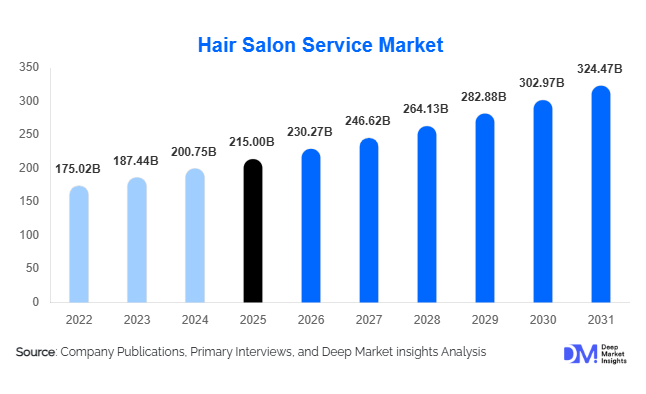
What are the latest trends in the hair salon service market?
Premiumization and Wellness Integration
Salons globally are increasingly offering wellness-integrated services, such as scalp therapies, organic treatments, anti-hair fall solutions, and hair spas, appealing to health- and experience-conscious consumers. Luxury and premium segments are expanding in urban centers and affluent regions, offering bespoke treatments, holistic experiences, and eco-friendly product lines. This trend is supported by growing disposable incomes, rising social media influence, and demand for personalized grooming solutions.
Digital and Technology-Enabled Services
Adoption of digital tools such as app-based bookings, AI-powered hairstyle recommendations, and online consultations is transforming the salon experience. Virtual try-on tools allow customers to experiment with new styles before visiting, while subscription models provide predictable revenue streams. Salons are also using digital marketing and social media engagement to target younger demographics and improve customer retention. Technology adoption is enhancing operational efficiency and personalization, leading to higher customer satisfaction.
What are the key drivers in the hair salon service market?
Rising Consumer Spending on Personal Grooming
Increasing disposable income and lifestyle awareness are driving more frequent salon visits. Millennials and working professionals are particularly willing to invest in styling, treatments, and premium services, boosting market demand. Social media and influencer culture have amplified beauty consciousness, accelerating service adoption globally.
Expansion of Organized Salon Chains
Branded and franchise salon models are growing rapidly, particularly in emerging markets such as India, China, and Brazil. Standardized services, quality assurance, and brand trust help attract new customers and retain existing ones. These organized chains are also adopting digital tools to streamline operations, enhancing customer convenience and market penetration.
Innovation in Hair Care Treatments
Advanced hair treatments, such as keratin treatments, chemical straightening, anti-hair fall therapies, and spa services, are driving growth. Continuous product innovations from global hair care brands enable salons to offer differentiated and premium services, increasing revenue per customer.
What are the restraints for the global market?
High Operational Costs
Salons require skilled professionals, quality products, and premium infrastructure, leading to high operational and labor costs. Urban areas, in particular, face elevated rental and wage pressures, impacting profitability and pricing strategies.
Fragmented Market Structure
A significant proportion of the industry remains unorganized, especially in developing countries. This fragmentation leads to intense price competition and inconsistent service quality, posing challenges for organized players to scale and maintain standardized offerings.
What are the key opportunities in the hair salon service industry?
Expansion in Emerging Markets
Asia-Pacific, Latin America, and parts of Africa present immense growth potential due to urbanization, rising disposable incomes, and growing beauty awareness. New entrants and established brands can leverage franchising, mid-range offerings, and digital marketing to capture these underpenetrated markets.
Technology Integration and Digital Services
Digital tools, including mobile apps, AI styling recommendations, and subscription-based packages, offer opportunities for enhanced customer engagement and loyalty. Salons can also adopt online consultations, virtual try-ons, and CRM systems to provide personalized experiences, differentiate their offerings, and improve operational efficiency.
Premium and Wellness-Oriented Services
Consumers increasingly value holistic grooming experiences, combining aesthetic treatments with wellness services. Organic products, scalp therapies, and spa treatments are gaining traction. Salons that integrate eco-friendly products and sustainable practices can differentiate themselves and capture high-value, health-conscious customers.
Report Scope
| Report Metric | Details |
|---|---|
| Market Size in 2025 | USD 215 Billion |
| Market Size in 2026 | USD 230.27 Billion |
| Market Size in 2031 | USD 324.47 Billion |
| CAGR | 7.1% (2026-2031) |
| Base Year for Estimation | 2025 |
| Historical Data | 2022-2024 |
| Forecast Period | 2026-2031 |
| Report Coverage | Revenue Forecast, Competitive Landscape, Supply Chain Disruption, Growth Factors, Environment & Regulatory Landscape and Trends |
| Geographies Covered | North America, Europe, APAC, Middle East and Africa, LATAM |
| Countries Covered | U.S., Canada, U.K., Germany, France, Spain, Italy, Russia, Nordic, Benelux, Rest of Europe, China, Korea, Japan, India, Australia, Singapore, Taiwan, South East Asia, Rest of Asia-Pacific, UAE, Turky, Saudi Arabia, South Africa, Egypt, Nigeria, Rest of MEA, Brazil, Mexico, Argentina, Chile, Colombia, Rest of LATAM |
Explore more data points, trends and opportunities Download Free Sample Report
Product Type Insights
Hair coloring services dominate the global hair salon service market, accounting for approximately 28% of total revenue in 2025. This leadership is primarily driven by rising fashion consciousness, social media influence, and increasing demand for personalized styling. Advanced techniques such as balayage, ombre, highlights, and creative color transformations have significantly increased average service ticket sizes, particularly among younger consumers and urban populations. The segment is further supported by premium product innovations and longer-lasting color solutions, which encourage repeat visits and higher spending per customer.
Haircuts and styling services continue to represent the foundation of salon offerings, ensuring consistent footfall across all demographics. Meanwhile, advanced hair treatment services, including keratin treatments, scalp therapies, and anti-hair fall solutions, are witnessing strong growth due to increasing consumer awareness of hair health and damage repair. These services are particularly popular in urban and premium segments, where customers are willing to pay a premium for long-term benefits. From a pricing perspective, mid-range salons dominate with nearly 50% market share, driven by their ability to balance affordability with quality service delivery. This segment benefits from expanding middle-class populations globally. In contrast, luxury salons are growing rapidly in metropolitan areas, focusing on exclusivity, wellness integration, and personalized experiences, thereby driving premiumization trends across the industry.
Application Insights
The largest end-use segment in the hair salon service market is individual consumers, particularly working professionals and millennials, who demand frequent grooming, styling, and treatment services. This segment dominates due to increasing lifestyle awareness, rising disposable incomes, and the growing importance of personal appearance in both social and professional settings. Repeat visits and subscription-based grooming models are further strengthening demand in this segment. The weddings and events segment represents a high-value application area, growing at over 8% CAGR. Demand is driven by increasing expenditure on bridal grooming, destination weddings, and event-based styling services. Salons are increasingly offering specialized packages, including pre-wedding treatments and personalized styling, contributing significantly to revenue growth.
The fashion and entertainment industry also plays a crucial role in driving demand, particularly in major metropolitan regions. Professional styling services are essential for media, advertising, and fashion events, creating consistent high-value demand. Additionally, export-driven demand is indirectly influenced by the tourism and hospitality sector, where international travelers seek premium grooming services in urban and luxury salon settings, further boosting market revenues.
Distribution Channel Insights
Walk-in services continue to dominate, accounting for approximately 65% of total bookings in 2025, driven by consumer preference for convenience and immediate service availability. This channel remains particularly strong in developing markets and among traditional customer segments. However, online booking platforms and app-based channels are witnessing the fastest growth, supported by increasing smartphone penetration and digital adoption. Customers are increasingly using mobile apps and websites to schedule appointments, compare services, and access promotions. Subscription-based models are also gaining traction, offering bundled services and loyalty benefits, which enhance customer retention and predictability of revenue streams.
Direct-to-consumer digital engagement through social media platforms is becoming a critical acquisition channel, especially among younger demographics. Franchise and premium salon chains are leveraging CRM systems, AI-based recommendations, and personalized marketing to enhance customer experience, improve operational efficiency, and increase repeat visits. This shift toward digital integration is reshaping the competitive landscape and driving long-term market growth.
Customer Type Insights
High-frequency and premium consumers form the backbone of the hair salon service market. Female customers account for approximately 55% of total market share, driven by higher service frequency, greater adoption of hair treatments, and willingness to spend on premium services such as coloring, styling, and wellness therapies. Working professionals and millennials are the fastest-growing customer segments, fueled by rising disposable incomes, urban lifestyles, and increased focus on personal grooming. This group is also more inclined toward experimenting with new styles and adopting digital booking platforms, further driving market growth.
Family-oriented services, including children’s haircuts and group packages, contribute to steady demand, while bridal and occasion-based customers represent a niche but high-value segment. In terms of business models, independent salons dominate with around 45% market share, owing to their accessibility and affordability, although franchise chains are rapidly expanding in organized urban markets due to brand trust and standardized service quality.
Age Group Insights
The 31–50 years age group represents the largest segment in the market, driven by a combination of high disposable income, professional grooming needs, and strong awareness of personal appearance. This segment typically prefers mid-range to premium services, contributing significantly to overall market revenue. The 18–30 years demographic is the fastest-growing segment, driven by digital adoption, social media influence, and a strong inclination toward fashion trends and experimentation. This group primarily fuels demand for hair coloring, styling, and budget-to-mid-range services. Consumers aged 51–65 years increasingly prefer premium and wellness-oriented services, including scalp treatments and anti-aging hair therapies. Meanwhile, the above-65 segment, although smaller in size, is gradually expanding, with demand focused on comfort, safety, and specialized treatments, presenting opportunities for tailored service offerings.
Explore more data points, trends and opportunities Download Free Sample Report
Hair Salon Service Market Segmentations
By Service Type
- Hair Cutting Services
- Hair Coloring Services
- Hair Styling Services
- Hair Treatment Services
- Chemical Services
- Others
By Customer Demographic
- Male Customers
- Female Customers
- Children & Teenagers
By Salon Type
- Independent Salons
- Franchise Salons
- Luxury/Premium Salons
- Budget/Value Salons
- Mobile/On-Demand Salons
By Distribution Channel
- Walk-in Services
- Online/App-Based Booking
- Subscription/Membership Models
Regional Insights
North America
North America holds approximately 30% of the global market share, with the United States contributing over 75% of regional revenue. The region’s dominance is driven by high disposable incomes, strong consumer focus on personal grooming, and widespread adoption of premium salon services. The presence of well-established salon chains and high spending on beauty services further supports growth. Additionally, increasing demand for organic and sustainable hair care products, along with advanced treatments such as keratin and scalp therapies, is driving premiumization. Digital transformation, including online booking platforms and AI-based personalization, is also a key growth driver in this region.
Europe
Europe accounts for approximately 25% of the global market, led by countries such as the United Kingdom, Germany, and France. Growth in the region is driven by high per capita spending on grooming, strong fashion influence, and increasing demand for eco-friendly and organic salon services. Stringent regulations on product quality and sustainability are encouraging salons to adopt safer and environmentally friendly practices. Additionally, the region benefits from a mature beauty industry ecosystem and a strong presence of premium salon brands. The rising popularity of wellness-integrated services and personalized treatments is further supporting market expansion.
Asia-Pacific
Asia-Pacific represents approximately 28% of the global market and is the fastest-growing region with a CAGR of around 9%. Key markets include China, India, Japan, and Southeast Asia. Growth is driven by rapid urbanization, rising middle-class income levels, and increasing awareness of personal grooming. The expansion of organized salon chains and franchise models is significantly improving service accessibility and quality. Additionally, a young population, strong influence of social media, and increasing adoption of digital booking platforms are accelerating market growth. Government initiatives supporting skill development and small businesses are also contributing to the expansion of the salon industry in this region.
Latin America
Latin America holds approximately 9% of the global market, with Brazil and Mexico as the leading contributors. Growth is driven by a strong cultural emphasis on beauty and grooming, particularly in Brazil, which is one of the largest beauty markets globally. Increasing urbanization and rising disposable incomes are boosting demand for mid-range and premium salon services. The growing popularity of weddings, fashion events, and social gatherings is also driving demand for styling and treatment services. Additionally, the expansion of organized salon chains and digital booking platforms is improving market accessibility and customer engagement.
Middle East & Africa
The Middle East & Africa region accounts for approximately 8% of the global market, with key markets including the UAE, Saudi Arabia, and South Africa. Growth in this region is driven by high disposable incomes, particularly in the Gulf countries, and a strong cultural emphasis on personal grooming and aesthetics. The increasing presence of luxury salons and international brands is supporting premium segment growth. In Africa, rising urbanization and improving economic conditions are contributing to increased demand for salon services. Additionally, the growth of tourism in the Middle East is boosting demand for high-end salon services, particularly in hospitality and luxury segments.
Key Players in the Hair Salon Service Market
- Regis Corporation
- Great Clips Inc.
- Supercuts
- Toni & Guy
- Jean Louis David
- Fantastic Sams
- Hair Cuttery
- Dessange International
- Seva Beauty
- Drybar Holdings
- Blo Blow Dry Bar
- Saks Salon
- VLCC (Salon division)
- Jawed Habib Hair & Beauty
- Naturals Salon & Spa