Goat Milk Soap Market Size
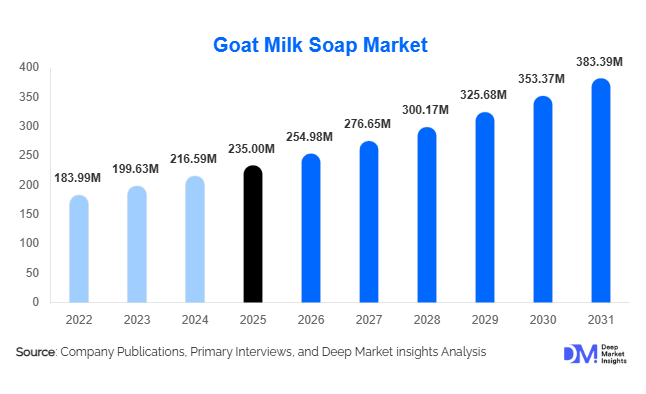
According to Deep Market Insights, the global goat milk soap market size was valued at USD 235 million in 2025 and is projected to grow from USD 254.98 million in 2026 to reach USD 383.39 million by 2031, expanding at a CAGR of 8.5% during the forecast period (2026–2031). The goat milk soap market growth is primarily driven by increasing consumer preference for natural and organic skincare products, rising awareness regarding skin sensitivity and dermatological health, and expanding demand for clean-label personal care products across premium beauty and wellness categories.
Key Market Insights
- Consumer demand is increasingly shifting toward chemical-free and natural skincare products, supporting strong growth for goat milk soap formulations with organic and herbal ingredients.
- Premium and artisanal soap brands are rapidly expanding globally, leveraging handcrafted production methods, sustainable packaging, and direct-to-consumer retail strategies.
- North America dominates the goat milk soap market, supported by high spending on premium skincare products and strong clean beauty adoption trends.
- Asia-Pacific is the fastest-growing regional market, driven by rising disposable incomes, urbanization, and increasing awareness regarding natural personal care solutions.
- E-commerce and social commerce platforms are reshaping product distribution, enabling independent skincare brands to expand internationally with lower entry barriers.
- Product innovation involving herbal infusions, essential oils, and dermatological formulations is strengthening market competitiveness and expanding consumer adoption.
What are the latest trends in the goat milk soap market?
Clean Beauty and Organic Skincare Trends Accelerating Demand
The global skincare industry is witnessing a strong transition toward clean-label and organic personal care products, significantly benefiting the goat milk soap market. Consumers are increasingly avoiding soaps containing sulfates, parabens, artificial fragrances, and harsh synthetic chemicals due to growing concerns regarding long-term skin health. Goat milk soap products are gaining popularity because they are perceived as safer, moisturizing, and suitable for sensitive skin conditions such as eczema and psoriasis. Manufacturers are responding by introducing certified organic formulations, cruelty-free products, vegan-adjacent blends, and eco-friendly packaging solutions. The integration of ingredients such as oatmeal, charcoal, honey, aloe vera, turmeric, lavender, and tea tree oil is further enhancing product differentiation and consumer appeal.
Digital-First Skincare Brands Expanding Market Reach
E-commerce and social media platforms are transforming the competitive landscape of the goat milk soap industry. Independent and artisanal skincare manufacturers are increasingly relying on direct-to-consumer business models to reach global audiences. Influencer marketing, subscription-based skincare kits, personalized product recommendations, and social commerce campaigns are accelerating consumer engagement. Younger consumers, particularly millennials and Gen Z buyers, are driving online demand for handcrafted, ethically sourced, and premium wellness products. Companies are also adopting sustainable branding strategies and transparent ingredient labeling to strengthen digital customer loyalty. Online marketplaces are allowing small-scale manufacturers to compete effectively with established personal care brands.
What are the key drivers in the goat milk soap market?
Rising Demand for Natural and Sensitive Skin Products
The growing prevalence of skin allergies, eczema, dryness, and sensitivity-related dermatological conditions is a major driver supporting demand for goat milk soap products. Goat milk naturally contains lactic acid, vitamins, proteins, and fatty acids that support skin hydration and mild exfoliation without damaging the skin barrier. Consumers increasingly perceive goat milk soap as a healthier alternative to conventional soaps containing synthetic ingredients. Dermatologists and skincare influencers are also contributing to market expansion by recommending mild cleansing products suitable for sensitive skin applications.
Premiumization of Personal Care Products
Consumers across developed and emerging economies are increasingly shifting from low-cost mass-market soaps toward premium skincare and wellness-oriented bathing products. Goat milk soap is widely positioned as a luxury personal care solution because of its moisturizing and therapeutic properties. Premium packaging, artisanal branding, organic certification, and sustainable sourcing practices are enabling manufacturers to command higher profit margins. The expansion of luxury wellness tourism, spa treatments, and boutique skincare retailing is also strengthening premium demand globally.
Expansion of E-Commerce and Direct-to-Consumer Channels
The rapid growth of online beauty retailing has significantly improved accessibility and visibility for goat milk soap brands. Digital platforms allow small manufacturers and independent skincare companies to access international consumers without extensive physical retail infrastructure. Subscription skincare models, targeted social media advertising, and influencer-led campaigns are increasing product adoption rates. Cross-border e-commerce growth in Asia-Pacific, Europe, and North America is also creating favorable export opportunities for artisanal soap manufacturers.
What are the restraints for the global market?
High Raw Material and Production Costs
Goat milk availability is significantly lower compared to conventional dairy inputs, resulting in higher raw material procurement costs for soap manufacturers. Seasonal fluctuations in milk production, livestock management expenses, feed costs, and supply chain limitations can negatively impact production economics and profit margins. Small-scale artisanal producers are particularly vulnerable to price volatility and operational cost pressures.
Limited Shelf Life and Preservation Challenges
Natural skincare products containing minimal synthetic preservatives generally face shorter shelf life and higher susceptibility to microbial contamination. Goat milk soap products require careful storage, packaging, and inventory management, particularly in humid and high-temperature markets. Regulatory compliance regarding cosmetic safety standards, ingredient labeling, and organic certification also increases operational complexity for manufacturers operating in international markets.
What are the key opportunities in the goat milk soap industry?
Expansion into Therapeutic and Dermatological Skincare
The increasing adoption of preventive skincare and therapeutic personal care products presents major opportunities for goat milk soap manufacturers. Dermatologists and skincare clinics are increasingly recommending goat milk formulations for sensitive skin management, eczema relief, and post-treatment skincare routines. Manufacturers can expand into medicated and dermatologically tested product lines targeting therapeutic skincare applications. This trend is particularly strong in North America, Europe, Japan, and South Korea, where consumers actively seek functional skincare solutions with natural ingredients.
Growth of Sustainable and Eco-Friendly Packaging
Sustainability is becoming a key purchasing criterion among skincare consumers globally. Goat milk soap brands that adopt biodegradable, recyclable, refillable, and plastic-free packaging solutions are expected to gain strong competitive advantages. Governments and retailers are increasingly promoting sustainable packaging standards, particularly in Europe and North America. Eco-conscious consumers are also showing strong willingness to pay premium prices for environmentally responsible personal care products, creating additional growth opportunities for manufacturers.
Hospitality and Wellness Sector Adoption
Luxury hotels, wellness resorts, boutique spas, and premium hospitality chains are increasingly incorporating goat milk soap products into guest amenity offerings. Wellness tourism growth is accelerating demand for natural skincare products associated with relaxation, self-care, and premium experiences. Goat milk soaps are being positioned as luxury wellness amenities because of their moisturizing and hypoallergenic properties. This trend is expected to create long-term demand opportunities for premium and artisanal skincare manufacturers.
Report Scope
| Report Metric | Details |
|---|---|
| Market Size in 2025 | USD 235 Million |
| Market Size in 2026 | USD 254.98 Million |
| Market Size in 2031 | USD 383.39 Million |
| CAGR | 8.5% (2026-2031) |
| Base Year for Estimation | 2025 |
| Historical Data | 2022-2024 |
| Forecast Period | 2026-2031 |
| Report Coverage | Revenue Forecast, Competitive Landscape, Supply Chain Disruption, Growth Factors, Environment & Regulatory Landscape and Trends |
| Geographies Covered | North America, Europe, APAC, Middle East and Africa, LATAM |
| Countries Covered | U.S., Canada, U.K., Germany, France, Spain, Italy, Russia, Nordic, Benelux, Rest of Europe, China, Korea, Japan, India, Australia, Singapore, Taiwan, South East Asia, Rest of Asia-Pacific, UAE, Turky, Saudi Arabia, South Africa, Egypt, Nigeria, Rest of MEA, Brazil, Mexico, Argentina, Chile, Colombia, Rest of LATAM |
Explore more data points, trends and opportunities Download Free Sample Report
Product Type Insights
Bar goat milk soap continues to dominate the global goat milk soap market and accounted for nearly 62% of total revenue in 2025. The segment maintains leadership due to its affordability, ease of storage, longer shelf life, and strong consumer familiarity within daily skincare routines. Traditional soap bars also align closely with the growing sustainability trend, as they generally require less plastic packaging compared to liquid formats. In North America and Europe, artisanal and handcrafted bar soaps are witnessing particularly strong demand as consumers increasingly associate handmade skincare products with premium quality, authenticity, and clean-label wellness benefits. The expansion of boutique wellness brands, organic beauty retailers, and farmers-market skincare channels has further strengthened growth for artisanal goat milk soap bars globally.
The rising preference for multifunctional skincare products is also supporting innovation within the segment. Manufacturers are increasingly launching specialty bar soaps infused with activated charcoal, lavender, oatmeal, tea tree oil, turmeric, aloe vera, honey, and essential oils to provide added exfoliating, moisturizing, anti-inflammatory, and aromatherapeutic benefits. Sensitive skin formulations and dermatologist-recommended variants are gaining traction among consumers suffering from eczema, acne, psoriasis, and dry skin conditions. Premiumization trends within personal care are allowing manufacturers to command higher margins for luxury goat milk soap bars featuring organic certification, cold-process production methods, and eco-friendly packaging.
Meanwhile, liquid goat milk soap products are emerging as one of the fastest-growing categories due to rising adoption across hospitality, spa, wellness, and hygienic hand-wash applications. Increasing consumer preference for hygienic dispensing systems, particularly after heightened awareness regarding personal hygiene and sanitation, is supporting demand for liquid formats in commercial and institutional settings. Luxury hotels, boutique resorts, and premium wellness centers are increasingly incorporating liquid goat milk soaps into guest amenity offerings, contributing to long-term segment expansion.
Ingredient Composition Insights
Organic goat milk soap remains the leading ingredient composition segment and represented approximately 48% of global market demand in 2025. The dominance of this segment is primarily driven by rising global consumer preference for certified organic, cruelty-free, and chemical-free skincare products. Consumers are becoming increasingly cautious regarding synthetic additives, sulfates, parabens, artificial fragrances, and preservatives commonly found in traditional soap products. As a result, organic goat milk soap formulations are being positioned as healthier and safer alternatives for sensitive skin care and long-term skincare maintenance.
The segment is further benefiting from the broader clean beauty movement, particularly across North America, Europe, Japan, and South Korea, where consumers actively seek ingredient transparency and environmentally sustainable personal care products. Organic certification labels are becoming major purchase influencers, especially among millennials and Gen Z consumers who prioritize sustainability, ethical sourcing, and wellness-oriented consumption patterns. In addition, biodegradable packaging and eco-friendly manufacturing practices are enhancing consumer trust and strengthening premium brand positioning.
Herbal-infused goat milk soaps are also witnessing accelerated growth due to increasing demand for multifunctional skincare products that combine cleansing with therapeutic and wellness benefits. Ingredients such as turmeric, lavender, activated charcoal, aloe vera, oatmeal, tea tree oil, and shea butter are increasingly incorporated to target anti-inflammatory, anti-acne, moisturizing, detoxifying, and anti-aging skincare applications. Sulfate-free and paraben-free formulations are rapidly becoming mainstream across premium skincare channels as dermatology-conscious consumers seek gentler cleansing alternatives. Manufacturers are also investing in botanical formulations and aromatherapy-based product lines to cater to wellness-focused consumers globally.
Distribution Channel Insights
Online retail and direct-to-consumer (D2C) platforms collectively accounted for nearly 38% of the global goat milk soap market in 2025 and remain the fastest-growing distribution channels globally. The dominance of digital retail channels is primarily driven by increasing internet penetration, growing consumer confidence in online beauty shopping, and the ability of small skincare brands to directly engage with global audiences. E-commerce platforms have significantly lowered entry barriers for artisanal and independent goat milk soap manufacturers, enabling them to compete effectively against established personal care companies without requiring extensive physical retail infrastructure. Social media marketing, influencer collaborations, live commerce campaigns, and subscription-based skincare models are increasingly shaping consumer purchasing behavior, particularly among younger demographics. Consumers are heavily influenced by product reviews, skincare tutorials, ingredient education, and wellness-focused digital content across platforms such as Instagram, TikTok, and YouTube. Personalized skincare recommendations and direct brand engagement are also strengthening online conversion rates for premium goat milk soap products.
Specialty beauty stores, organic product retailers, wellness boutiques, and natural cosmetics chains continue to play a critical role in premium product positioning and consumer trust-building. These retail channels allow consumers to physically evaluate product quality, fragrance profiles, and ingredient composition before purchase. Supermarkets, pharmacies, and hypermarkets remain important distribution channels for mid-range and mass-market goat milk soap brands targeting broader household adoption. Meanwhile, luxury spa retail channels and hotel partnerships are emerging as high-value sales avenues for premium artisanal products.
Consumer Category Insights
Women continue to dominate global goat milk soap consumption and account for approximately 58% of the overall market demand in 2025. The segment leadership is primarily driven by higher spending on skincare, beauty, wellness, and anti-aging products among female consumers globally. Women are significantly more likely to purchase premium and organic personal care products, particularly those offering moisturizing, exfoliating, hydration, anti-inflammatory, and sensitive skin benefits. Increasing awareness regarding ingredient safety and long-term skin health is further accelerating demand for goat milk-based skincare products among female consumers. The rapid expansion of clean beauty trends, self-care routines, and wellness-oriented lifestyles is also strengthening female consumer demand for handcrafted and organic soap products. Social media-driven skincare education, beauty influencer marketing, and rising adoption of holistic skincare routines continue influencing purchasing behavior in this segment. Premium packaging, aromatherapy infusions, and luxury wellness branding are particularly effective in attracting female consumers within the mid-range and premium skincare categories.
At the same time, men’s grooming applications are emerging as a high-growth opportunity within the goat milk soap market. Male consumers are increasingly adopting natural personal care products for beard care, facial cleansing, body wash, and sensitive skin treatment applications. The expansion of premium grooming brands and rising awareness regarding skincare among male consumers are supporting long-term segment growth. Family-oriented and baby-safe goat milk soap formulations are also witnessing rising demand among parents seeking gentle, chemical-free skincare products suitable for infants and children with sensitive skin conditions.
End-Use Industry Insights
Household personal care remains the largest end-use segment in the goat milk soap market and contributed nearly 68% of global demand in 2025. The segment continues to benefit from rising consumer awareness regarding natural skincare benefits, increasing preference for organic hygiene products, and the growing shift away from synthetic cleansing solutions. Consumers are increasingly incorporating goat milk soap products into daily skincare routines because of their moisturizing properties, gentle exfoliation capabilities, and compatibility with sensitive skin conditions. The household segment is also benefiting from premiumization within the global soap industry, where consumers are increasingly willing to pay higher prices for wellness-oriented bathing products featuring natural ingredients and sustainable production practices. Growing adoption of cruelty-free, biodegradable, and eco-conscious personal care products is further strengthening long-term demand within residential applications.
Spa and wellness centers represent one of the fastest-growing end-use categories due to the rapid global expansion of wellness tourism and luxury self-care industries. Premium spas, wellness retreats, and treatment centers are increasingly integrating goat milk soap products into skincare therapies, aromatherapy sessions, and holistic wellness packages. The hospitality industry is also becoming a major growth contributor, with luxury hotels, boutique resorts, and premium guest accommodations increasingly offering artisanal goat milk soaps as upscale amenities to enhance guest experiences. Dermatology clinics and therapeutic skincare applications are steadily expanding because of growing consumer demand for mild cleansing solutions suitable for eczema, psoriasis, acne, and dry skin treatment routines. Medical wellness trends and preventive skincare awareness are expected to further strengthen demand from clinical and dermatological skincare applications over the forecast period.
Explore more data points, trends and opportunities Download Free Sample Report
Goat Milk Soap Market Segmentations
By Product Type
- Bar Goat Milk Soap
- Liquid Goat Milk Soap
- Specialty Goat Milk Soap
- Medicated & Dermatological Goat Milk Soap
By Ingredient Composition
- Organic Goat Milk Soap
- Herbal-Infused Goat Milk Soap
- Essential Oil-Based Goat Milk Soap
- Sulfate-Free & Paraben-Free Goat Milk Soap
By Distribution Channel
- Online Retail & D2C Platforms
- Supermarkets & Hypermarkets
- Specialty Beauty & Organic Stores
- Pharmacies & Drug Stores
- Spa & Wellness Retail Channels
By Consumer Category
- Women
- Men
- Children & Infants
- Family & Unisex Consumers
By End-Use Industry
- Household Personal Care
- Hospitality & Hotels
- Spa & Wellness Centers
- Dermatology & Therapeutic Skincare
Regional Insights
North America
North America remains the dominant regional market and accounted for approximately 36% of global goat milk soap revenue in 2025. The region’s leadership is primarily driven by strong consumer awareness regarding clean beauty, premium skincare spending, and increasing preference for natural and organic personal care products. The United States represents the largest consumer market due to the rapid expansion of artisanal skincare brands, wellness-oriented consumer lifestyles, and widespread adoption of chemical-free beauty products. Consumers in the U.S. increasingly prioritize sulfate-free, paraben-free, cruelty-free, and environmentally sustainable skincare products, significantly supporting goat milk soap demand.
The region is also benefiting from strong e-commerce penetration and the rapid growth of direct-to-consumer skincare brands. Social media marketing, influencer-driven beauty trends, and subscription-based skincare models continue to accelerate product visibility and consumer adoption. Canada is witnessing robust growth because of rising demand for sustainable cosmetics, eco-friendly packaging, and premium wellness products. Additionally, North America’s mature spa, wellness, and luxury hospitality sectors are contributing to strong commercial demand for artisanal goat milk soap products.
Europe
Europe represented nearly 29% of global market share in 2025 and remains one of the most mature and sustainability-focused markets for natural skincare products. Germany, the United Kingdom, France, Italy, and the Nordic countries are among the largest consumers of premium goat milk soap products. The region’s growth is strongly supported by stringent cosmetic safety regulations, high awareness regarding ingredient transparency, and widespread consumer preference for biodegradable and eco-friendly personal care solutions.
European consumers are highly inclined toward certified organic skincare products and ethically sourced ingredients, making goat milk soap an attractive alternative to synthetic cleansing products. The rapid expansion of clean beauty trends and increasing demand for vegan-adjacent and cruelty-free skincare products are further strengthening regional market growth. Boutique skincare retailers, wellness-focused lifestyle trends, and premium spa tourism also continue supporting product penetration across Western Europe. Additionally, government sustainability initiatives promoting recyclable packaging and reduced plastic usage are encouraging manufacturers to adopt environmentally compliant production practices.
Asia-Pacific
Asia-Pacific is the fastest-growing regional market and is projected to expand at a CAGR exceeding 10% during the forecast period. The region’s rapid growth is primarily driven by rising disposable incomes, expanding middle-class populations, increasing urbanization, and growing consumer awareness regarding chemical-free skincare solutions. China and India are major growth engines due to rising beauty and personal care spending, increasing social media influence, and strong expansion of online retail ecosystems.
South Korea and Japan continue supporting demand through highly developed skincare cultures and strong consumer preference for premium cosmetic products featuring natural ingredients. Korean beauty trends emphasizing gentle skincare and hydration are particularly favorable for goat milk soap adoption. Australia also represents a strong niche market for organic, handcrafted, and sustainable skincare products due to increasing consumer focus on wellness and environmental responsibility. The region is also witnessing rapid expansion of domestic skincare startups and independent beauty brands that leverage digital commerce platforms for product distribution. E-commerce growth, smartphone penetration, and influencer-led beauty marketing are accelerating accessibility for both domestic and international goat milk soap manufacturers across Asia-Pacific markets.
Latin America
Latin America is experiencing gradual but consistent market expansion, led primarily by Brazil, Mexico, and Argentina. Brazil’s well-established beauty and cosmetics industry continues to support strong demand for herbal, botanical, and natural skincare products. Rising urbanization, improving internet penetration, and growing middle-class consumer spending are creating favorable conditions for goat milk soap adoption across the region.
The market is also benefiting from increasing awareness regarding organic skincare products and rising preference for premium wellness-oriented personal care solutions among younger consumers. Social media-driven beauty trends and expanding e-commerce channels are strengthening product accessibility in major urban markets. In addition, rising demand for sustainable and cruelty-free cosmetics is encouraging regional skincare manufacturers to expand natural product portfolios.
Middle East & Africa
The Middle East & Africa region is witnessing steady market growth due to rising imports of premium skincare products, increasing luxury wellness tourism, and expanding demand for organic personal care solutions. UAE and Saudi Arabia are emerging as key premium skincare markets because of high disposable incomes, luxury retail expansion, and growing consumer preference for high-end beauty products. Premium malls, luxury department stores, and wellness-focused retail channels are supporting market penetration for imported artisanal goat milk soap brands.
The hospitality and tourism industries are also major growth drivers across the region. Luxury hotels, resorts, and wellness spas increasingly incorporate goat milk soap products into premium guest amenity offerings to enhance customer experiences. South Africa contributes significantly to regional demand through rising skincare awareness, expanding wellness culture, and increasing adoption of natural cosmetic products. The growing influence of international beauty trends and rising preference for halal-compliant and natural ingredient-based cosmetics are expected to further support long-term regional market expansion.
Key Players in the Goat Milk Soap Market
- Beekman 1802
- Canus Goat’s Milk
- Bend Soap Company
- Dionis Goat Milk Skincare
- Little Seed Farm
- Sunaroma
- Nubian Heritage
- Legend’s Creek Farm
- Zum Bar
- Crate 61 Organics
- Nature by Canus
- The Goat Milk Soap Store
- Chagrin Valley Soap & Salve
- Alpine Made
- Southern Natural Goat Milk Soap