Fishing Apparel Market Size
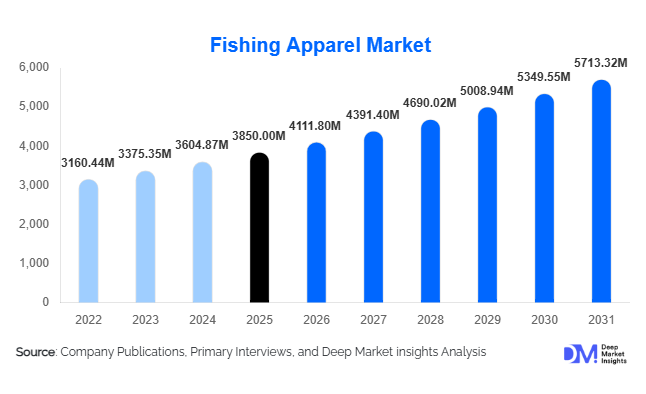
According to Deep Market Insights, the global fishing apparel market size was valued at USD 3,850 million in 2025 and is projected to grow from USD 4,111.80 million in 2026 to reach USD 5,713.32 million by 2031, expanding at a CAGR of 6.8% during the forecast period (2026–2031). The fishing apparel market growth is primarily driven by the rising popularity of recreational fishing, increasing demand for high-performance outdoor clothing, and advancements in textile technologies such as moisture-wicking, UV protection, and waterproof fabrics.
Key Market Insights
- Fishing apparel is increasingly transitioning toward performance-driven and multi-functional designs, combining comfort, durability, and protection for diverse environmental conditions.
- Premium and technical apparel segments are expanding rapidly, supported by innovations in breathable membranes, lightweight materials, and sustainable fabrics.
- North America dominates the market, driven by a strong recreational fishing culture and high consumer spending on outdoor gear.
- Asia-Pacific is the fastest-growing region, fueled by rising disposable incomes and growing participation in outdoor leisure activities.
- E-commerce platforms are reshaping distribution channels, enabling brands to reach niche consumers and expand global footprints.
- Sustainability trends are influencing product development, with increasing adoption of recycled materials and eco-friendly manufacturing processes.
What are the latest trends in the fishing apparel market?
Rise of Performance and Technical Apparel
Fishing apparel is evolving into highly specialized performance wear designed to enhance comfort and safety. Features such as UV protection (UPF-rated fabrics), moisture management, anti-microbial treatments, and waterproof membranes are becoming standard. Anglers are increasingly seeking apparel that performs across varying climates, from tropical offshore fishing to cold-water environments. This trend is driving demand for multi-layered clothing systems and hybrid fabrics that offer both durability and flexibility. Manufacturers are also focusing on ergonomic designs, ensuring ease of movement during long fishing sessions.
Sustainability and Eco-Friendly Materials
Sustainability is emerging as a critical trend in the fishing apparel market. Consumers are increasingly prioritizing products made from recycled plastics, organic fibers, and low-impact dyes. Brands are investing in eco-conscious manufacturing processes and transparent supply chains to meet regulatory standards and consumer expectations. This shift is particularly strong in Europe and North America, where environmental awareness is high. Companies are also introducing repair and recycling programs, extending product lifecycles and reducing environmental impact.
What are the key drivers in the fishing apparel market?
Growing Participation in Recreational Fishing
The increasing popularity of recreational fishing as a leisure activity is a major driver of market growth. Rising awareness of outdoor wellness, coupled with government initiatives promoting tourism and inland fisheries, has led to higher participation rates globally. This has created strong demand for specialized apparel that enhances comfort and performance during fishing activities.
Advancements in Textile Technology
Continuous innovation in textile engineering is significantly boosting the fishing apparel market. Advanced materials such as breathable waterproof membranes, stretchable synthetic blends, and UV-resistant fabrics are enhancing product functionality. These innovations are encouraging consumers to shift from traditional clothing to specialized fishing gear, driving market expansion.
What are the restraints for the global market?
High Cost of Premium Products
Premium fishing apparel often incorporates advanced materials and technologies, resulting in higher price points. This limits adoption among price-sensitive consumers, particularly in developing regions, and creates a barrier to market penetration.
Seasonality of Fishing Activities
Fishing is often seasonal in many regions, leading to fluctuating demand for apparel. This seasonality creates challenges in inventory management and revenue stability for manufacturers and retailers.
What are the key opportunities in the fishing apparel industry?
Integration of Smart and Wearable Technologies
The integration of smart technologies into fishing apparel presents significant growth opportunities. Innovations such as temperature-regulating fabrics, UV sensors, and GPS-enabled safety features can enhance user experience and safety. These advancements are particularly relevant for professional anglers and extreme fishing environments, offering a new dimension of functionality.
Expansion into Emerging Markets
Emerging economies in the Asia-Pacific and Latin America offer substantial growth potential. Rising middle-class populations, increasing disposable incomes, and growing interest in outdoor recreation are driving demand. Localized product offerings and competitive pricing strategies can help companies capture these untapped markets.
Report Scope
| Report Metric | Details |
|---|---|
| Market Size in 2025 | USD 3850 Million |
| Market Size in 2026 | USD 4111.80 Million |
| Market Size in 2031 | USD 5713.32 Million |
| CAGR | 6.8% (2026-2031) |
| Base Year for Estimation | 2025 |
| Historical Data | 2022-2024 |
| Forecast Period | 2026-2031 |
| Report Coverage | Revenue Forecast, Competitive Landscape, Supply Chain Disruption, Growth Factors, Environment & Regulatory Landscape and Trends |
| Geographies Covered | North America, Europe, APAC, Middle East and Africa, LATAM |
| Countries Covered | U.S., Canada, U.K., Germany, France, Spain, Italy, Russia, Nordic, Benelux, Rest of Europe, China, Korea, Japan, India, Australia, Singapore, Taiwan, South East Asia, Rest of Asia-Pacific, UAE, Turky, Saudi Arabia, South Africa, Egypt, Nigeria, Rest of MEA, Brazil, Mexico, Argentina, Chile, Colombia, Rest of LATAM |
Explore more data points, trends and opportunities Download Free Sample Report
Product Type Insights
Fishing shirts continue to dominate the product segment, accounting for approximately 28% of the global market share in 2025. Their leadership is primarily driven by their versatility across multiple fishing environments, ranging from freshwater angling to offshore fishing. The increasing integration of advanced features such as UPF 50+ UV protection, moisture-wicking technology, anti-odor treatments, and quick-dry fabrics has positioned fishing shirts as an essential component of an angler’s wardrobe. Additionally, their crossover appeal as casual outdoor wear has expanded their adoption beyond core fishing applications. Jackets and rainwear are witnessing accelerated growth, particularly in regions with unpredictable weather conditions such as North America and Europe, where anglers require protection from wind, rain, and cold temperatures. Waders remain indispensable for professional fishermen and cold-water fishing environments, especially in commercial fisheries and fly-fishing applications, where durability and waterproofing are critical performance requirements.
Material Type Insights
Synthetic fabrics dominate the fishing apparel market with nearly 45% share, supported by their superior durability, lightweight nature, and cost efficiency. Polyester and nylon blends are widely preferred due to their excellent moisture management, abrasion resistance, and quick-drying capabilities, making them ideal for prolonged outdoor use. The increasing demand for performance-oriented apparel has further accelerated the adoption of advanced synthetic blends incorporating elastane for stretchability and comfort. Additionally, waterproof and breathable membranes, particularly in premium apparel, are gaining traction as they enhance protection against harsh environmental conditions while maintaining airflow. Sustainability trends are also influencing material innovation, with manufacturers increasingly incorporating recycled polyester and eco-friendly fibers to align with regulatory standards and evolving consumer preferences.
End-User Insights
Recreational anglers dominate the end-user segment, contributing around 52% of the global market. This segment’s leadership is driven by the growing popularity of fishing as a leisure activity, supported by rising disposable incomes, increased participation in outdoor recreation, and the expansion of fishing tourism globally. The influence of social media and experiential travel trends has further amplified interest in recreational fishing, particularly among younger demographics. Professional and commercial fishermen represent a stable and essential demand base, requiring highly durable, weather-resistant apparel for daily operations. This segment emphasizes functionality and longevity over style, driving consistent demand for heavy-duty products such as waders, bibs, and protective outerwear.
Distribution Channel Insights
Offline retail channels continue to lead the market, accounting for approximately 60% of total market share. The dominance of this segment is attributed to consumer preference for physically assessing product fit, fabric quality, and comfort before purchase, especially for technical apparel. Specialty fishing stores and sporting goods retailers play a crucial role in providing expert guidance and personalized recommendations, enhancing the in-store shopping experience. However, online retail is rapidly gaining momentum, driven by the convenience of home delivery, access to a wider product range, and competitive pricing. The growth of direct-to-consumer (D2C) channels and digital marketing strategies is further accelerating online sales, particularly among tech-savvy consumers.
Price Range Insights
The mid-range segment dominates the fishing apparel market with nearly 50% share, as it offers an optimal balance between affordability and performance. This segment caters to a broad consumer base, including recreational anglers seeking reliable and functional apparel without the premium price tag. The premium segment is witnessing steady growth, driven by increasing demand from professional anglers and enthusiasts who prioritize advanced features such as waterproof membranes, thermal insulation, and ergonomic designs. Meanwhile, the economy segment remains relevant in emerging markets, where price sensitivity is higher, and consumers prioritize basic functionality over advanced performance features.
Explore more data points, trends and opportunities Download Free Sample Report
Fishing Apparel Market Segmentations
By Product Type
- Fishing Jackets & Rainwear
- Fishing Shirts
- Fishing Pants & Bibs
- Waders
- Fishing Vests
- Base Layers & Thermal Wear
- Fishing Gloves
- Headwear
By Material Type
- Synthetic Fabrics
- Natural Fabrics
- Waterproof & Breathable Membranes
- Neoprene
- Hybrid Materials
By End-User
- Recreational Anglers
- Professional/Commercial Fishermen
- Sports & Tournament Anglers
By Distribution Channel
- Offline Retail
- Online Retail
- Institutional/Direct Sales
By Price Range
- Economy Segment
- Mid-Range Segment
- Premium/Technical Segment
Regional Insights
North America
North America leads the global fishing apparel market, accounting for approximately 35% of the total market share in 2025. The United States alone contributes nearly 30% of global demand, driven by a deeply rooted outdoor recreation culture and high consumer spending on fishing gear. The region benefits from a well-established recreational fishing industry, supported by over 50 million active anglers. Additionally, strong retail infrastructure, widespread availability of premium brands, and increasing participation in sport fishing tournaments are key growth drivers. Canada further strengthens regional demand due to its extensive freshwater resources and thriving fishing tourism sector. The presence of leading apparel manufacturers and continuous product innovation also contributes to North America’s dominance.
Europe
Europe holds around 25% of the global market share, with key countries including Germany, the United Kingdom, and Norway driving demand. Growth in this region is primarily fueled by a strong emphasis on sustainability and eco-conscious consumption. European consumers are increasingly opting for high-performance apparel made from recycled and environmentally friendly materials. Additionally, well-regulated fishing practices and the popularity of recreational angling in coastal and inland regions support consistent demand. Government initiatives promoting sustainable fisheries and outdoor tourism further enhance market growth. The region’s colder climate in northern countries also drives demand for thermal and waterproof fishing apparel.
Asia-Pacific
Asia-Pacific accounts for approximately 22% of the global market and is the fastest-growing region, with a CAGR exceeding 8%. China dominates both production and consumption, serving as a global manufacturing hub for fishing apparel due to its cost-efficient textile industry. Japan represents a mature market with strong demand for high-quality and technologically advanced fishing gear, driven by its rich fishing culture. India is emerging as a high-growth market, supported by rising disposable incomes, increasing interest in recreational fishing, and government initiatives promoting inland fisheries and the blue economy. The region’s expanding middle class and growing participation in outdoor activities are key drivers of market expansion.
Latin America
Latin America is experiencing steady growth, particularly in Brazil and Mexico, where fishing tourism and recreational fishing activities are gaining traction. The region benefits from abundant natural water resources, including rivers, lakes, and coastal areas, which support both commercial and recreational fishing. Increasing government efforts to promote tourism and outdoor sports are further driving demand for fishing apparel. Additionally, rising urbanization and improving economic conditions are encouraging greater participation in leisure activities, contributing to market growth.
Middle East & Africa
The Middle East & Africa region is gradually expanding, with South Africa leading market demand. Growth is driven by increasing investments in coastal and marine tourism, as well as government initiatives promoting fishing and water-based recreational activities. The Middle East, particularly the UAE and Saudi Arabia, is witnessing rising interest in sport fishing as part of luxury tourism offerings. In Africa, the presence of extensive coastlines and inland water bodies supports both subsistence and commercial fishing, creating consistent demand for durable apparel. Infrastructure development and rising tourism inflows are expected to further accelerate market growth in this region.
Key Players in the Fishing Apparel Market
- Columbia Sportswear Company
- VF Corporation
- Patagonia Inc.
- Simms Fishing Products
- Grundéns
- Shimano Inc.
- Daiwa (Globeride Inc.)
- Rapala VMC Corporation
- Under Armour Inc.
- Nike Inc.
- Decathlon S.A.
- Huk Gear
- Gill Marine
- Musto (Helly Hansen Group)
- AFTCO