Embroidery (Needlepoint) Retail Market Size
According to Deep Market Insights, the global Embroidery (Needlepoint) Retail Market was valued at approximately USD 5,850 million in 2025 and is projected to grow from USD 6,277.05 million in 2026 to reach nearly USD 8,928.00 million by 2031, expanding at a CAGR of 7.3% during the forecast period (2026–2031). The embroidery retail market growth is driven by rising DIY and hobby crafting trends, increasing consumer demand for personalized handmade products, expansion of e-commerce craft platforms, and growing integration of embroidery into fashion, wellness, and home décor applications globally.
Key Market Insights
- DIY and hobby crafting culture is expanding rapidly, especially among younger consumers influenced by social media platforms showcasing embroidery art and tutorials.
- Online retail channels are becoming the dominant distribution mode, supported by global accessibility, wider product variety, and subscription-based craft kits.
- North America remains the largest market, driven by high disposable income and a strong crafting culture in the U.S. and Canada.
- Asia-Pacific is the fastest-growing region, supported by rising middle-class income, cultural craft traditions, and government support for handicrafts.
- Beginner consumers dominate demand, supported by starter kits, online tutorials, and influencer-driven learning content.
- Embroidery is increasingly linked to wellness and mindfulness trends, positioning it as a therapeutic and stress-relief activity.
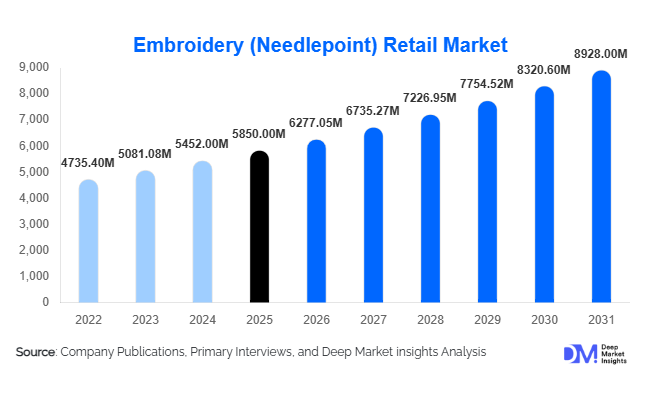
What are the latest trends in the Embroidery (Needlepoint) Retail Market?
Digital Customization and AI-Driven Craft Design
The embroidery retail market is witnessing a major shift toward digital customization, where consumers can convert personal images, patterns, or artistic ideas into embroidery designs using online tools. AI-powered design platforms are enabling real-time pattern generation, allowing users to personalize kits based on skill level, color preference, and fabric type. This trend is particularly popular among younger consumers seeking unique, one-of-a-kind creative outputs. E-commerce platforms are increasingly integrating these tools directly into their shopping ecosystems, making embroidery more interactive and accessible than ever before.
Wellness-Oriented Crafting and Mindfulness Embroidery
Embroidery is increasingly being positioned as a wellness activity that supports mental relaxation, stress reduction, and mindfulness. Craft kits designed specifically for relaxation—such as slow stitching and beginner-friendly therapeutic embroidery sets—are gaining traction. This trend is being reinforced by wellness brands and lifestyle influencers promoting embroidery as a digital detox activity. As a result, embroidery products are now being bundled with wellness subscriptions, meditation apps, and hobby therapy programs, expanding the market beyond traditional crafting communities.
What are the key drivers in the Embroidery (Needlepoint) Retail Market?
Rising Demand for DIY and Personalized Products
One of the strongest drivers of the embroidery retail market is the increasing global demand for personalized and handmade products. Consumers are shifting away from mass-produced goods toward customized apparel, décor, and gifts. Embroidery allows individuals to create unique designs for clothing, home interiors, and gifting purposes, making it highly attractive in the personalization economy. This trend is particularly strong in urban markets where consumers seek creative self-expression through handcrafted products.
Expansion of E-commerce and Digital Craft Ecosystem
The rapid expansion of online retail platforms has significantly boosted accessibility to embroidery kits, threads, patterns, and tools. E-commerce marketplaces and specialized craft platforms have made it easier for consumers to explore global product varieties, compare pricing, and access beginner tutorials. This has reduced entry barriers for new hobbyists and expanded global market reach for manufacturers and retailers, especially in emerging economies.
What are the restraints for the global market?
Competition from Machine Embroidery and Mass Production
The availability of machine embroidery and factory-produced textile designs presents a major challenge to the handmade embroidery retail market. Machine alternatives are faster, cheaper, and scalable, making them more attractive for commercial applications. This limits demand for traditional needlepoint products, particularly in price-sensitive segments and industrial use cases.
Time-Intensive Nature and Skill Barriers
Embroidery requires time, patience, and skill development, which can deter potential beginners. Despite the availability of starter kits, many consumers drop out due to the learning curve associated with stitching techniques and design execution. This limits market penetration among casual users and creates reliance on beginner-friendly innovations to sustain long-term growth.
What are the key opportunities in the Embroidery (Needlepoint) Retail Industry?
Emerging Market Expansion and Cultural Craft Integration
Emerging economies in Asia-Pacific, Latin America, and parts of Africa present strong growth opportunities due to rising disposable incomes and strong cultural ties to textile crafts. Countries like India and China are witnessing increased adoption of embroidery kits, supported by government initiatives promoting handicrafts. Localized product offerings that reflect cultural patterns and traditional art forms can significantly enhance adoption rates in these regions.
Subscription-Based Craft Kits and Direct-to-Consumer Models
The rise of subscription-based business models presents a strong opportunity for recurring revenue generation. Monthly embroidery kits that include materials, patterns, and tutorials are gaining popularity among hobbyists. Direct-to-consumer (D2C) platforms are also enabling brands to build loyal customer communities through personalized recommendations, online workshops, and exclusive design drops.
Report Scope
| Report Metric | Details |
|---|---|
| Market Size in 2025 | USD 5850 Million |
| Market Size in 2026 | USD 6277.05 Million |
| Market Size in 2031 | USD 8928.00 Million |
| CAGR | 7.3% (2026-2031) |
| Base Year for Estimation | 2025 |
| Historical Data | 2022-2024 |
| Forecast Period | 2026-2031 |
| Report Coverage | Revenue Forecast, Competitive Landscape, Supply Chain Disruption, Growth Factors, Environment & Regulatory Landscape and Trends |
| Geographies Covered | North America, Europe, APAC, Middle East and Africa, LATAM |
| Countries Covered | U.S., Canada, U.K., Germany, France, Spain, Italy, Russia, Nordic, Benelux, Rest of Europe, China, Korea, Japan, India, Australia, Singapore, Taiwan, South East Asia, Rest of Asia-Pacific, UAE, Turky, Saudi Arabia, South Africa, Egypt, Nigeria, Rest of MEA, Brazil, Mexico, Argentina, Chile, Colombia, Rest of LATAM |
Explore more data points, trends and opportunities Download Free Sample Report
Product Type Insights
Embroidery threads continue to dominate the product landscape, accounting for approximately 32% of the global market share in 2025. This leadership is primarily driven by its universal applicability across all skill levels and end-use applications. Cotton threads remain the most widely used sub-segment due to their affordability, ease of handling, and compatibility with a broad range of fabrics, making them especially attractive for beginners and mass-market consumers. Additionally, increasing demand for eco-friendly and organic cotton threads is reinforcing growth in this segment. Fabric and canvas products form the second-largest category, supported by the rising popularity of pre-printed canvases and beginner-friendly embroidery kits that reduce complexity for new users. Kits and starter packs are emerging as one of the fastest-growing sub-segments, driven by the surge in first-time hobbyists and the convenience of bundled offerings that include all essential materials. Meanwhile, tools and accessories such as needles, hoops, and frames maintain steady demand, particularly among advanced users and institutional buyers, as they are essential for precision and long-term usage. Continuous product innovation, including ergonomic tools and premium materials, is further strengthening this segment.
Application Insights
Home décor remains the leading application segment, contributing nearly 30% of total market demand, driven by the growing consumer preference for personalized and handcrafted interior design elements. The increasing influence of home improvement trends, social media inspiration, and DIY décor projects has significantly boosted the adoption of embroidered wall art, cushion covers, and decorative textiles. Apparel customization is another rapidly expanding segment, fueled by the global shift toward personalized fashion and the rise of boutique and small-scale clothing brands offering embroidered designs. Gifting applications are gaining strong traction, particularly for personalized and handmade gifts that offer emotional value and uniqueness. Religious and cultural artifacts continue to represent a stable niche segment, especially in regions with deep-rooted textile traditions such as Asia and the Middle East. Additionally, DIY hobby crafting is the fastest-growing application area, driven by digital tutorials, online communities, and influencer-led content that encourage participation and skill development among new users.
Distribution Channel Insights
Online retail dominates the distribution landscape, accounting for approximately 38% of global sales, and is also the fastest-growing channel. This dominance is driven by the increasing penetration of e-commerce platforms, ease of product comparison, availability of global brands, and access to customer reviews and tutorials. Craft-focused marketplaces and brand-owned websites are further enhancing consumer engagement through personalized recommendations and digital pattern downloads. Offline specialty craft stores continue to play a crucial role, particularly for premium and tactile product selection, where consumers prefer to physically evaluate materials before purchase. Hypermarkets and general retail outlets contribute to mass-market accessibility, especially in developing regions. Direct-to-consumer (D2C) platforms are gaining momentum, enabling brands to offer subscription-based kits, exclusive designs, and community-driven engagement. Additionally, social commerce channels such as Instagram and Pinterest are increasingly influencing purchasing behavior, particularly among younger consumers who discover products through visual content and influencer endorsements.
End User Insights
Individual consumers dominate the embroidery retail market, representing nearly 60% of total demand, primarily driven by hobbyists, DIY enthusiasts, and wellness-focused users. The growth of this segment is supported by the increasing popularity of embroidery as a creative and therapeutic activity. Small craft businesses are emerging as a high-growth segment, leveraging embroidery for customized product offerings such as apparel, accessories, and home décor items sold through online marketplaces. This segment benefits from low entry barriers and rising entrepreneurial activity in the handmade goods sector. Institutional users, including schools, workshops, and craft training centers, contribute a steady demand for educational kits and tools, particularly in regions promoting vocational training and skill development. The expanding ecosystem of online learning platforms and community-based workshops is further diversifying the end-user base and driving sustained market growth.
Explore more data points, trends and opportunities Download Free Sample Report
Embroidery (Needlepoint) Retail Market Segmentations
By Product Type
- Embroidery Threads
- Fabric & Canvas
- Kits & Starter Packs
- Needles & Tools
- Patterns & Designs
- Embellishments
By Application
- Home Décor
- Apparel Customization
- Gifting & Personalized Products
- Religious & Cultural Artifacts
- DIY Crafting & Hobby Projects
By Distribution Channel
- Online Retail
- Specialty Craft Stores
- Hypermarkets & Supermarkets
- Independent Retailers
- Direct-to-Consumer (D2C) Channels
By End User
- Individual Consumers
- Small Craft Businesses
- Institutional Buyers
Regional Insights
North America
North America accounts for approximately 35% of the global embroidery retail market, making it the largest regional market. The United States leads demand due to a well-established DIY culture, high disposable income, and strong consumer inclination toward personalized and premium craft products. Canada also contributes significantly to a growing crafting community and increasing adoption of hobby-based wellness activities. Key growth drivers in this region include the rapid expansion of e-commerce platforms, the strong presence of leading brands, and the influence of social media and DIY influencers. Additionally, the rising trend of mindfulness and stress-relief activities is further boosting demand for embroidery kits and supplies.
Europe
Europe holds around 28% market share, driven by countries such as the United Kingdom, Germany, and France. The region benefits from a long-standing tradition of textile arts and embroidery craftsmanship, which continues to sustain demand. European consumers show a strong preference for sustainable, eco-friendly, and artisanal products, driving growth in premium and organic embroidery materials. Key regional drivers include increasing awareness of sustainable consumption, government support for traditional crafts, and the growing popularity of heritage-inspired designs. Additionally, the presence of established retail networks and craft communities supports steady market expansion.
Asia-Pacific
Asia-Pacific is the fastest-growing region, expanding at over 9% CAGR, led by China, India, and Japan. India’s market growth is driven by deep cultural roots in embroidery and strong government initiatives promoting handicrafts and local artisans. China benefits from its dual role as a major manufacturing hub and a rapidly growing consumer market with increasing disposable income. Japan and Australia contribute through demand for premium, high-quality embroidery products and artistic designs. Key drivers in this region include rising middle-class income, urbanization, increasing interest in DIY hobbies, and expanding digital retail infrastructure. Government programs supporting small-scale industries and export-oriented handicrafts further accelerate growth.
Latin America
Latin America, led by Brazil and Mexico, is an emerging market with growing interest in DIY crafts and handmade products. The region is witnessing the gradual adoption of embroidery retail products, supported by rising middle-class income and increasing exposure to global craft trends through digital platforms. Key growth drivers include expanding e-commerce penetration, growing youth interest in creative hobbies, and the rise of small-scale craft businesses. Cultural affinity toward handmade products and local artistry also supports long-term market development.
Middle East & Africa
The Middle East & Africa region is witnessing moderate growth, with the UAE, Saudi Arabia, and South Africa emerging as key markets. Demand in the Middle East is driven by premium lifestyle consumption, high purchasing power, and strong interest in luxury and customized products. In Africa, growth is supported by the region’s role as a production hub for handmade embroidery and textile crafts, contributing to export-driven demand. Additional drivers include tourism-linked retail, cultural appreciation for traditional embroidery, and increasing government initiatives to support local artisans and craft industries. The expansion of retail infrastructure and rising digital adoption are further enhancing market accessibility across the region.
Key Players in the Embroidery (Needlepoint) Retail Market
- DMC Group
- Coats Group plc
- Anchor Crafts
- Bucilla
- Dimensions Crafts
- Zweigart
- Madeira Threads
- Cosmo Embroidery
- Sullivans USA
- Leisure Arts
- Herrschners
- Vervaco