Earwax Removal Products Market Size
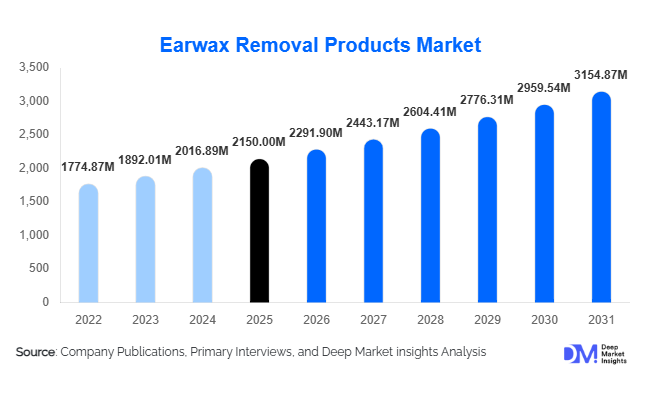
According to Deep Market Insights, the global earwax removal products market size was valued at USD 2,150 million in 2025 and is projected to grow from USD 2291.90 million in 2026 to reach USD 3154.87 million by 2031, expanding at a CAGR of 6.6% during the forecast period (2026–2031). The earwax removal products market growth is primarily driven by the increasing prevalence of cerumen impaction, growing awareness of ear hygiene, and the expanding availability of over-the-counter ear care solutions across global retail and e-commerce channels.
Earwax, medically known as cerumen, serves as a protective barrier for the ear canal, but excessive buildup can lead to discomfort, infections, hearing impairment, and tinnitus. As preventive healthcare and self-care practices gain traction globally, consumers are increasingly turning toward safe and accessible ear hygiene products such as cerumenolytic ear drops, irrigation kits, ear cleaning sprays, and electronic earwax removal devices. The expansion of consumer healthcare markets, particularly in North America, Europe, and the Asia-Pacific, is further contributing to the growth of this industry.
Technological innovation is also reshaping the earwax removal products market. Smart ear cleaning devices equipped with LED lighting, micro-cameras, and smartphone connectivity are gaining popularity among consumers seeking safe and convenient home-based solutions. Additionally, the growing use of earbuds, hearing aids, and other in-ear devices is increasing the incidence of wax buildup, driving demand for routine ear cleaning products. As healthcare systems increasingly emphasize preventive care and home healthcare management, the earwax removal products market is expected to witness steady growth throughout the forecast period.
Key Market Insights
- Increasing adoption of preventive ear hygiene practices is driving demand for cerumenolytic ear drops and ear cleaning sprays among consumers worldwide.
- Home healthcare solutions are gaining popularity, with consumers preferring over-the-counter earwax removal kits that can be used safely without clinical intervention.
- North America dominates the global market, supported by strong consumer healthcare spending and widespread availability of retail pharmacy networks.
- Asia-Pacific is the fastest-growing region, driven by rising healthcare awareness and the rapid expansion of online pharmacies and consumer health platforms.
- Technological innovation in smart ear cleaning devices with integrated cameras and smartphone connectivity is creating premium product segments.
- The increasing use of earbuds and hearing aids is contributing to higher incidences of earwax buildup, boosting demand for ear cleaning products.
What are the latest trends in the earwax removal products market?
Rise of Smart Ear Cleaning Devices
One of the most notable trends in the earwax removal products market is the emergence of smart ear cleaning devices equipped with miniature cameras, LED lighting systems, and smartphone connectivity. These devices allow users to visualize the ear canal during the cleaning process, significantly improving safety and precision compared with traditional manual tools. Consumer demand for technology-enabled healthcare solutions has accelerated the adoption of these products, particularly among younger and tech-savvy demographics.
Manufacturers are increasingly integrating high-resolution cameras, wireless connectivity, and real-time mobile applications into ear cleaning devices to enhance user experience. Some products also provide educational guidance on safe ear cleaning techniques. This technological shift is transforming ear hygiene from a simple healthcare routine into a digitally assisted self-care practice. As telehealth platforms and digital diagnostics expand globally, future ear cleaning devices may integrate remote consultation features with ENT specialists, creating new opportunities for connected healthcare ecosystems.
Growing Popularity of Natural and Herbal Formulations
Another important trend shaping the earwax removal products market is the growing consumer preference for natural and herbal ear care formulations. Products based on olive oil, almond oil, and plant-derived extracts are gaining traction among consumers who prefer gentle and chemical-free healthcare solutions. These formulations help soften earwax naturally while minimizing irritation in the ear canal.
Consumer healthcare brands are increasingly expanding their portfolios to include organic or naturally derived ear drops and sprays. This trend aligns with the broader movement toward natural personal care and wellness products. In many developed markets, consumers are actively seeking safer alternatives to peroxide-based treatments, which has encouraged manufacturers to invest in botanical formulations and eco-friendly packaging solutions.
What are the key drivers in the earwax removal products market?
Increasing Prevalence of Cerumen Impaction
The rising prevalence of cerumen impaction is one of the primary drivers of growth in the earwax removal products market. Cerumen impaction occurs when excessive earwax accumulates in the ear canal, potentially causing hearing loss, discomfort, dizziness, and infections. This condition affects individuals across all age groups but is particularly common among elderly populations.
Medical research indicates that a significant percentage of older adults experience recurring earwax blockage, which often requires routine cleaning or treatment. As global populations age, particularly in developed regions such as North America, Europe, and Japan, demand for earwax removal solutions is increasing. This demographic trend is expected to sustain long-term growth in the market.
Growth of Home Healthcare and Self-Care Products
The expansion of the home healthcare sector is another major factor driving the earwax removal products market. Consumers increasingly prefer convenient and affordable healthcare solutions that can be used without visiting clinics or hospitals. Earwax removal products such as ear drops, irrigation systems, and cleaning sprays are widely available over the counter, making them ideal for home use.
The growth of online pharmacies and e-commerce platforms has further improved accessibility to these products. Consumers can now easily purchase ear cleaning kits online, enabling manufacturers to reach broader markets and increase product adoption across emerging economies.
What are the restraints for the global market?
Risk of Ear Damage from Improper Usage
Improper use of ear cleaning tools or irrigation systems can potentially damage the ear canal or eardrum. Medical professionals often warn against aggressive ear cleaning practices, particularly with sharp instruments or excessive irrigation pressure. Such risks can discourage some consumers from adopting earwax removal products, especially in markets where clinical consultation is preferred for ear care.
Availability of Professional ENT Procedures
Professional earwax removal procedures performed by ENT specialists remain widely available in developed healthcare systems. Techniques such as microsuction and manual extraction are commonly used in hospitals and audiology clinics. For severe cerumen impaction cases, many patients prefer clinical treatment rather than home-based solutions, which may limit the adoption of consumer ear cleaning products.
What are the key opportunities in the earwax removal products industry?
Expansion of Hearing Aid Maintenance Solutions
The global hearing aid market is expanding rapidly due to increasing awareness of hearing disorders and aging populations. Hearing aid users frequently experience earwax accumulation, which can affect device performance and hygiene. This creates a strong opportunity for manufacturers to develop specialized earwax removal solutions tailored for hearing aid maintenance.
Products such as cleaning sprays, earwax filters, and dedicated ear hygiene kits are increasingly being marketed through audiology clinics and hearing aid distributors. Partnerships between hearing aid manufacturers and ear care product companies are expected to strengthen this niche market segment.
Growth of Direct-to-Consumer E-commerce Channels
The rapid expansion of digital retail platforms has created new opportunities for earwax removal product manufacturers. Online pharmacies and consumer healthcare marketplaces allow companies to reach customers in regions where specialized ENT services may be limited. Direct-to-consumer sales channels also enable manufacturers to promote bundled ear care kits, subscription models, and educational content about ear hygiene.
Digital marketing campaigns emphasizing preventive ear care are helping increase consumer awareness and product adoption. As e-commerce penetration continues to rise in emerging economies, this distribution channel is expected to play an increasingly important role in market expansion.
Report Scope
| Report Metric | Details |
|---|---|
| Market Size in 2025 | USD 2150 Million |
| Market Size in 2026 | USD 2291.90 Million |
| Market Size in 2031 | USD 3154.87 Million |
| CAGR | 6.6% (2026-2031) |
| Base Year for Estimation | 2025 |
| Historical Data | 2022-2024 |
| Forecast Period | 2026-2031 |
| Report Coverage | Revenue Forecast, Competitive Landscape, Supply Chain Disruption, Growth Factors, Environment & Regulatory Landscape and Trends |
| Geographies Covered | North America, Europe, APAC, Middle East and Africa, LATAM |
| Countries Covered | U.S., Canada, U.K., Germany, France, Spain, Italy, Russia, Nordic, Benelux, Rest of Europe, China, Korea, Japan, India, Australia, Singapore, Taiwan, South East Asia, Rest of Asia-Pacific, UAE, Turky, Saudi Arabia, South Africa, Egypt, Nigeria, Rest of MEA, Brazil, Mexico, Argentina, Chile, Colombia, Rest of LATAM |
Explore more data points, trends and opportunities Download Free Sample Report
Product Type Insights
Cerumenolytic ear drops represent the largest product segment in the earwax removal products market, accounting for approximately 37% of global demand in 2025. These products are widely recommended as the first line of treatment for earwax buildup due to their ability to soften hardened wax and facilitate natural removal. Their affordability, ease of use, and availability as over-the-counter products make them highly accessible to consumers. Ear irrigation systems also represent a significant segment, particularly among consumers seeking more effective home-based cleaning methods. These systems typically include bulb syringes or pressurized irrigation kits designed to flush softened wax from the ear canal. Electronic earwax removal devices are an emerging premium segment driven by technological innovation, offering advanced features such as suction mechanisms, LED lighting, and camera-assisted visualization.
Application Insights
Preventive ear hygiene remains the leading application in the earwax removal products market, accounting for roughly 41% of global demand. Consumers increasingly use ear drops and cleaning sprays as part of routine personal hygiene to prevent wax buildup rather than waiting for severe blockage. Treatment of cerumen impaction is another major application, particularly among elderly populations and individuals who frequently use hearing aids or in-ear headphones. Audiology clinics and ENT specialists often recommend ear cleaning products to maintain ear health and reduce the frequency of clinical procedures. Hearing aid maintenance represents a rapidly growing application segment. As global adoption of hearing aids increases, the need for regular earwax management has become essential to ensure device functionality and hygiene.
Distribution Channel Insights
Retail pharmacies dominate the earwax removal products market, accounting for approximately 38% of total sales. Pharmacies remain the primary point of purchase for over-the-counter ear care products because consumers often rely on pharmacist recommendations when selecting treatment solutions. Online pharmacies and e-commerce platforms are the fastest-growing distribution channels due to convenience, wider product selection, and competitive pricing. Consumers increasingly prefer purchasing healthcare products online, particularly in emerging markets where pharmacy infrastructure may be limited. Supermarkets and hypermarkets also play a role in product distribution by offering ear cleaning products alongside other personal healthcare items. Hospital pharmacies remain important for professional-grade products recommended by ENT specialists.
End-Use Insights
Individual consumers represent the largest end-use segment in the earwax removal products market, accounting for approximately 40% of global demand in 2025. Growing awareness of personal hygiene and increasing availability of OTC ear care solutions have significantly expanded consumer adoption. Hospitals and ENT clinics represent another important segment, particularly for severe earwax impaction cases requiring professional intervention. Audiology centers and hearing aid clinics are among the fastest-growing end-use sectors due to the increasing adoption of hearing devices among elderly populations. Long-term care facilities and nursing homes also contribute to market demand, as elderly residents often require routine ear hygiene management to prevent hearing complications and infections.
Explore more data points, trends and opportunities Download Free Sample Report
Earwax Removal Products Market Segmentations
By Product Type
- Cerumenolytic Ear Drops
- Ear Irrigation and Flushing Systems
- Earwax Removal Devices
- Ear Cleaning Sprays and Solutions
- Earwax Removal Kits
By Formulation
- Oil-Based Formulations
- Water-Based Formulations
- Peroxide-Based Formulations
- Herbal or Natural Formulations
By Application
- Preventive Ear Hygiene
- Cerumen Impaction Treatment
- Hearing Aid Maintenance Cleaning
- ENT Clinical Earwax Removal Procedures
By Distribution Channel
- Retail Pharmacies and Drugstores
- Hospital Pharmacies
- Online Pharmacies and E-commerce Platforms
- Supermarkets and Hypermarkets
- Specialty Medical Equipment Stores
By End Use
- Individual Consumers
- Hospitals and ENT Clinics
- Audiology Centers and Hearing Aid Clinics
- Long-Term Care Facilities
Regional Insights
North America
North America accounts for approximately 34% of the global earwax removal products market. The United States represents the largest market in the region due to high healthcare awareness, strong consumer spending on OTC healthcare products, and widespread access to retail pharmacies. Canada also contributes significantly to regional demand due to its well-developed healthcare infrastructure and increasing adoption of hearing aids among aging populations.
Europe
Europe represents roughly 28% of the global market, with major demand coming from Germany, the United Kingdom, France, and Italy. Aging demographics and well-established healthcare systems drive strong demand for ear hygiene products across the region. Increasing awareness of preventive healthcare and the widespread availability of consumer healthcare products further support market growth.
Asia-Pacific
Asia-Pacific accounts for about 24% of global demand and is the fastest-growing regional market. Countries such as China, Japan, India, and South Korea are experiencing increasing adoption of ear care products due to rising healthcare awareness and the rapid expansion of retail pharmacy and online healthcare platforms. Japan is a mature market driven by high hearing aid adoption among elderly populations, while China and India represent high-growth emerging markets.
Latin America
Latin America holds approximately 7% of the global market, with Brazil and Mexico representing the largest markets in the region. Rising healthcare awareness and expansion of pharmacy retail chains are driving demand for earwax removal products across the region.
Middle East & Africa
The Middle East and Africa region accounts for roughly 7% of global demand. Countries such as Saudi Arabia, the United Arab Emirates, and South Africa are witnessing increasing investments in healthcare infrastructure and consumer healthcare products, supporting gradual market expansion.
Key Players in the Earwax Removal Products Market
- Prestige Consumer Healthcare
- Johnson & Johnson
- Reckitt Benckiser Group
- Bausch + Lomb
- NeilMed Pharmaceuticals
- Medline Industries
- SafKan Health
- Eosera Inc.
- Bionix LLC
- Apothecary Products LLC
- Squip Inc.
- Wax-Rx
- Clearwax Ltd
- Cipla Limited
- Kaizen Pharmaceuticals