Diaper Disposal Bags Market Size
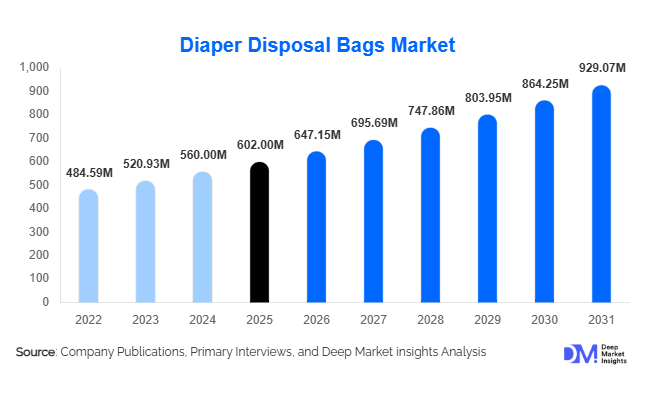
According to Deep Market Insights,the global diaper disposal bags market size was valued at USD 602 million in 2025 and is projected to grow from USD 647.15 million in 2026 to reach USD 929.07 million by 2031, expanding at a CAGR of 7.5% during the forecast period (2026–2031). The diaper disposal bags market growth is primarily driven by increasing global awareness of infant hygiene, rising adoption of disposable diapers, and growing demand for convenient odor-controlling waste management solutions for households and childcare facilities.
Key Market Insights
- Increasing adoption of disposable diapers globally is driving parallel demand for hygienic disposal solutions such as odor-sealing diaper disposal bags.
- Biodegradable and eco-friendly diaper disposal bags are gaining traction, particularly in Europe and North America, due to growing environmental regulations and consumer sustainability awareness.
- North America dominates the market due to high disposable diaper penetration, strong retail infrastructure, and high awareness of baby hygiene products.
- Asia-Pacific is the fastest-growing region, supported by rising birth rates, urbanization, and expanding middle-class populations in countries such as China and India.
- E-commerce platforms are becoming a major sales channel, enabling subscription-based purchasing models for baby hygiene products.
- Technological improvements in odor-control and antibacterial coatings are enhancing product functionality and consumer adoption.
What are the latest trends in the diaper disposal bags market?
Growing Demand for Eco-Friendly Disposal Bags
Sustainability concerns are reshaping the diaper disposal bags industry, with manufacturers increasingly focusing on biodegradable and compostable materials. Traditional polyethylene-based bags are being gradually supplemented with plant-based polymers and cornstarch-derived biodegradable plastics. Consumers, especially in developed markets, are actively seeking environmentally responsible alternatives that reduce plastic waste while maintaining odor control and durability. Regulatory pressure on single-use plastics in regions such as Europe has accelerated innovation in compostable materials. As a result, several brands are launching eco-certified disposal bags that comply with compostability standards and carbon reduction targets. These sustainable products command premium pricing and are becoming increasingly popular among environmentally conscious parents.
Integration of Odor Neutralization and Antibacterial Technology
Product innovation is increasingly focused on improving odor containment and hygiene. Manufacturers are incorporating multi-layer bag structures, activated carbon filters, and antibacterial coatings to enhance performance. Fragrance-infused disposal bags are particularly popular among urban households where waste storage space is limited. Technological advancements are also enabling the development of dispenser-compatible refill bags that integrate with diaper pail systems. These solutions simplify waste management for parents while maintaining sanitary conditions. In addition, companies are investing in research and development to improve bag strength and leak-proof performance, ensuring safer handling of soiled diapers. Such functional enhancements are differentiating premium products from basic disposal bags.
What are the key drivers in the diaper disposal bags market?
Rising Global Birth Rates and Infant Population
The increasing number of births in emerging economies is one of the primary factors driving demand for diaper disposal bags. Countries in Asia-Pacific, Latin America, and Africa continue to experience relatively high birth rates compared to developed regions. As disposable diapers become more affordable and widely available, parents are adopting complementary products that improve hygiene and convenience. Diaper disposal bags help prevent unpleasant odors and reduce exposure to bacteria, making them a valuable accessory in infant care routines. The continued expansion of the disposable diaper industry is therefore directly supporting market growth for diaper disposal bags.
Growing Awareness of Hygiene and Sanitation
Modern consumers are placing greater emphasis on cleanliness and sanitation, particularly when handling infant waste. Diaper disposal bags offer an easy and hygienic solution to seal and isolate used diapers before disposal. This prevents contamination and reduces odor in household waste bins. The COVID-19 pandemic further strengthened hygiene awareness among households worldwide, increasing the adoption of sanitary products across daily routines. Parents are now more inclined to invest in specialized baby care accessories that improve safety and cleanliness in the home environment.
What are the restraints for the global market?
Environmental Concerns Related to Plastic Waste
One of the key challenges facing the diaper disposal bags market is the environmental impact associated with plastic waste. Most conventional disposal bags are manufactured from polyethylene or polypropylene, which are not biodegradable and contribute to landfill accumulation. Governments and environmental organizations are increasingly advocating for reduced use of single-use plastics, which could limit demand for traditional disposal bags. Manufacturers must therefore innovate with biodegradable materials to remain competitive and compliant with emerging environmental regulations.
Availability of Alternative Disposal Systems
Alternative waste management systems such as diaper pails with odor-lock cartridges and reusable diaper disposal systems are gaining popularity among environmentally conscious consumers. These solutions reduce reliance on disposable plastic bags and provide long-term waste management solutions for households. Although these alternatives currently represent a smaller share of the market, their growing adoption could moderate demand growth for traditional diaper disposal bags.
What are the key opportunities in the diaper disposal bags industry?
Expansion of Biodegradable Product Lines
The transition toward eco-friendly products represents one of the largest opportunities in the diaper disposal bags market. Compostable bags made from plant-based polymers or cornstarch can significantly reduce environmental impact compared to conventional plastic bags. Manufacturers that invest in biodegradable technologies can capture premium consumer segments and benefit from regulatory support in regions that promote sustainable packaging solutions.
Emerging Market Demand
Rapid urbanization and rising household incomes in emerging markets such as India, Indonesia, Brazil, and Vietnam are creating significant growth opportunities. These countries have large infant populations and increasing adoption of modern baby care products. Companies that offer affordable and locally manufactured diaper disposal bags are likely to gain substantial market share in these regions.
Report Scope
| Report Metric | Details |
|---|---|
| Market Size in 2025 | USD 602 Million |
| Market Size in 2026 | USD 647.15 Million |
| Market Size in 2031 | USD 929.07 Million |
| CAGR | 7.5% (2026-2031) |
| Base Year for Estimation | 2025 |
| Historical Data | 2022-2024 |
| Forecast Period | 2026-2031 |
| Report Coverage | Revenue Forecast, Competitive Landscape, Supply Chain Disruption, Growth Factors, Environment & Regulatory Landscape and Trends |
| Geographies Covered | North America, Europe, APAC, Middle East and Africa, LATAM |
| Countries Covered | U.S., Canada, U.K., Germany, France, Spain, Italy, Russia, Nordic, Benelux, Rest of Europe, China, Korea, Japan, India, Australia, Singapore, Taiwan, South East Asia, Rest of Asia-Pacific, UAE, Turky, Saudi Arabia, South Africa, Egypt, Nigeria, Rest of MEA, Brazil, Mexico, Argentina, Chile, Colombia, Rest of LATAM |
Explore more data points, trends and opportunities Download Free Sample Report
Product Type Insights
Scented diaper disposal bags dominate the market, capturing approximately 52% of the global market share. These bags are infused with fragrance additives that effectively neutralize unpleasant odors from soiled diapers, making them highly preferred among urban households and working parents who prioritize hygiene and convenience. Unscented bags continue to appeal to consumers with sensitivities to artificial fragrances, while antibacterial variants are witnessing increased adoption in healthcare facilities, including maternity wards and neonatal clinics, due to their enhanced protection against germs and bacteria. The rising awareness of infant hygiene and the need for convenient odor management are the primary drivers propelling demand across all product types.
Material Type Insights
Polyethylene-based diaper disposal bags lead the market with nearly 58% of global share, owing to their cost-effectiveness, durability, and superior odor containment properties. In contrast, biodegradable and compostable materials represent the fastest-growing segment, fueled by growing environmental awareness, consumer preference for sustainable products, and government policies restricting single-use plastics. Compostable bags made from plant-based polymers are increasingly favored by eco-conscious households and premium daycare centers seeking greener alternatives. The shift toward environmentally friendly materials is accelerating as consumers and institutions prioritize sustainability alongside functionality.
Distribution Channel Insights
Supermarkets and hypermarkets account for the largest share of the market, representing nearly 38% of total distribution. These outlets offer convenient access to a wide range of baby care products, allowing consumers to purchase diaper disposal bags alongside other household necessities. Online retail channels are growing rapidly, supported by the increasing adoption of e-commerce, mobile shopping, and subscription-based delivery models targeting busy parents. The convenience of home delivery, competitive pricing, and product variety are key factors driving the expansion of online channels globally.
End-Use Insights
Residential households dominate the market, contributing approximately 72% of global demand. Daily use of diaper disposal bags by parents for efficient and hygienic waste management underscores the segment's prominence. Daycare centers are an emerging segment, supported by the rising number of working parents and the expansion of organized childcare services. Hospitals and maternity clinics continue to require specialized diaper disposal solutions to maintain hygiene standards and manage neonatal waste safely. Overall, increasing awareness of infant health and hygiene remains the key driver for end-use adoption across all segments.
Explore more data points, trends and opportunities Download Free Sample Report
Diaper Disposal Bags Market Segmentations
By Product Type
- Scented Diaper Disposal Bags
- Unscented Diaper Disposal Bags
- Antibacterial Diaper Disposal Bags
- Compostable / Biodegradable Diaper Disposal Bags
- Refill Bags for Diaper Pails
By Material Type
- Polyethylene (PE)
- Polypropylene (PP)
- Biodegradable Plastics
- Plant-Based / Compostable Polymers
- Recycled Plastic Materials
By Distribution Channel
- Online Retail & E-commerce Platforms
- Supermarkets & Hypermarkets
- Pharmacies & Drug Stores
- Baby Specialty Stores
- Wholesale & Bulk Retailers
By End Use
- Residential Households
- Daycare Centers
- Hospitals & Maternity Clinics
- Travel & Outdoor Use
Regional Insights
North America
North America holds nearly 32% of the global diaper disposal bags market, primarily driven by the United States and Canada. High usage of disposable diapers, advanced retail and distribution infrastructure, and strong consumer awareness of hygiene products support market growth. Additionally, the presence of major global and regional manufacturers, coupled with increasing adoption of eco-friendly and scented disposal bags, fuels continuous regional demand.
Europe
Europe accounts for approximately 27% of the global market, with Germany, the United Kingdom, and France being the largest contributors. Stringent environmental regulations, government initiatives promoting sustainability, and increasing preference for biodegradable and compostable diaper disposal bags drive the market. Consumers in this region are highly conscious of environmental impact and product safety, which supports the adoption of innovative and eco-friendly solutions across both residential and healthcare segments.
Asia-Pacific
Asia-Pacific is the fastest-growing regional market, led by China, India, Japan, and Indonesia. Factors such as rising birth rates, urbanization, and increasing disposable incomes are driving the adoption of modern baby care products, including scented and biodegradable diaper disposal bags. Expanding e-commerce penetration, growing awareness of infant hygiene, and the proliferation of organized daycare services further support rapid market growth across urban and semi-urban areas.
Latin America
Brazil and Mexico represent the leading markets in Latin America, driven by growing awareness of infant hygiene, increasing disposable income, and improving retail penetration for baby care products. The rising number of dual-income households and urban population expansion are also key drivers, boosting the adoption of convenient and hygienic diaper disposal solutions in residential and childcare settings.
Middle East & Africa
The Middle East and Africa market is gradually expanding, supported by rising household incomes, improving healthcare infrastructure, and increasing awareness of infant hygiene. Countries such as the UAE, Saudi Arabia, and South Africa are witnessing higher adoption of premium, scented, and eco-friendly diaper disposal bags. Government initiatives promoting health and sanitation, along with expanding modern retail formats, are expected to further accelerate market growth in this region.
Key Players in the Diaper Disposal Bags Market
- Edgewell Personal Care Company
- Munchkin Inc.
- Angelcare Baby Inc.
- Ubbi (Pearhead Inc.)
- Sassy Inc.
- Tommee Tippee (Mayborn Group)
- The Clorox Company
- Babyganics
- Diono LLC
- Bambino Mio Ltd.
- Nuby (Luv n' Care)
- Prince Lionheart Inc.
- Babyjem
- OXO International
- Playtex Baby