Bite Toothpaste Bits Market Size
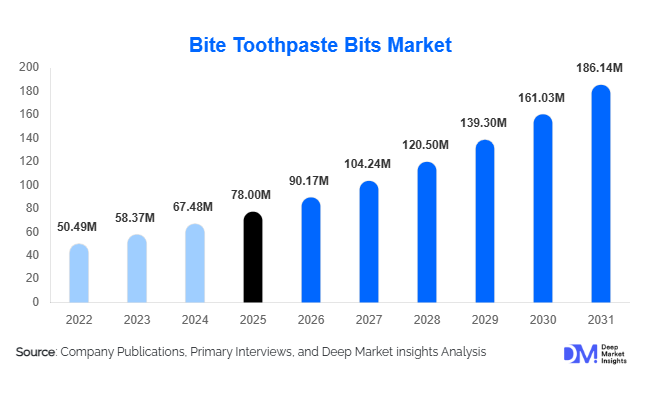
According to Deep Market Insights, the global Bite Toothpaste Bits market size was valued at USD 78 million in 2025 and is projected to grow from USD 90.17 million in 2026 to reach USD 186.14 million by 2031, expanding at a CAGR of 15.6% during the forecast period (2026–2031). The Bite Toothpaste Bits market growth is primarily driven by increasing consumer preference for sustainable oral care products, growing awareness regarding plastic waste reduction, and rising demand for clean-label personal care alternatives. The market is witnessing rapid adoption among environmentally conscious consumers seeking convenient, travel-friendly, and refillable oral hygiene solutions.
Toothpaste bits are emerging as a premium substitute for conventional toothpaste tubes, particularly among millennials and Gen Z consumers prioritizing eco-friendly lifestyles. Brands are increasingly focusing on vegan formulations, fluoride-free options, hydroxyapatite-based products, and biodegradable packaging formats to align with changing consumer expectations. Subscription-based delivery models and direct-to-consumer sales strategies are also strengthening market penetration globally.
North America currently dominates the global Bite Toothpaste Bits market due to strong consumer awareness regarding sustainable wellness products and high penetration of premium oral care brands. Europe continues to witness strong adoption owing to strict environmental regulations and rising demand for zero-waste consumer goods. Meanwhile, the Asia-Pacific region is emerging as the fastest-growing regional market, supported by expanding e-commerce channels, rising disposable incomes, and growing awareness regarding oral health and sustainability.
Key Market Insights
- Sustainable and plastic-free oral care products are becoming mainstream globally, accelerating consumer adoption of toothpaste bits packaged in refillable jars and compostable pouches.
- Direct-to-consumer subscription models are reshaping the industry, improving customer retention while reducing packaging and logistics costs for manufacturers.
- North America dominates the Bite Toothpaste Bits market, supported by strong premium oral care spending and high sustainability awareness.
- Asia-Pacific is the fastest-growing regional market, driven by rapid urbanization, rising middle-class populations, and expanding digital commerce ecosystems.
- Natural, vegan, and fluoride-free formulations are gaining significant traction, particularly among wellness-oriented and eco-conscious consumers.
- Hospitality and travel industries are increasingly adopting toothpaste bits, replacing single-use toothpaste tubes with sustainable guest amenity solutions.
Bite Toothpaste Bits Market Trends
Refillable and Zero-Waste Packaging Systems Expanding Rapidly
The Bite Toothpaste Bits market is increasingly shifting toward refill-based packaging ecosystems designed to minimize single-use plastic waste. Consumers are actively adopting reusable glass jars, aluminum tins, and compostable refill pouches that align with zero-waste lifestyle preferences. Brands are heavily investing in subscription-based refill systems that deliver toothpaste bit refills directly to consumers regularly. This model not only improves customer loyalty but also supports sustainability goals by reducing transportation and packaging waste. Retailers specializing in sustainable consumer products are also expanding shelf space dedicated to refillable oral care solutions, helping drive mainstream adoption.
Governments across Europe and North America are implementing stricter regulations on plastic packaging waste, indirectly supporting demand for sustainable oral care alternatives. Companies are increasingly marketing their environmental impact reductions, including lower carbon footprints, reduced water usage, and recyclable packaging materials, as key product differentiators.
Functional and Science-Based Oral Care Formulations Gaining Momentum
Consumers are increasingly seeking multifunctional toothpaste bits that provide benefits beyond basic oral hygiene. Hydroxyapatite-based formulations designed for enamel repair and tooth remineralization are becoming particularly popular. Whitening formulations, sensitivity-relief products, gum-care variants, and probiotic oral care tablets are also gaining strong traction globally.
Technological innovation within oral care ingredients is enabling brands to position toothpaste bits as premium wellness products rather than simple sustainability alternatives. Companies are increasingly collaborating with dentists and oral health professionals to strengthen product credibility and encourage wider adoption. Scientific backing, clean-label positioning, and transparency regarding ingredient sourcing are becoming critical competitive advantages within the market.
Bite Toothpaste Bits Market Drivers
Growing Consumer Demand for Sustainable Oral Care Products
The increasing global focus on sustainability and plastic waste reduction is one of the strongest drivers supporting the Bite Toothpaste Bits market. Traditional toothpaste tubes are difficult to recycle due to multi-layer plastic and aluminum compositions, creating substantial environmental concerns. Consumers are therefore shifting toward eco-friendly alternatives packaged in refillable or biodegradable formats.
Eco-conscious millennials and Gen Z consumers are particularly influential in driving market growth. These demographics increasingly prioritize ethical sourcing, cruelty-free certifications, vegan ingredients, and environmentally responsible packaging when purchasing personal care products. Social media campaigns promoting sustainable living are also accelerating awareness and product adoption globally.
Expansion of Direct-to-Consumer and Subscription Commerce Models
The rapid growth of direct-to-consumer e-commerce platforms has significantly improved accessibility to Bite Toothpaste Bits products. Leading brands are leveraging subscription-based delivery systems that provide recurring product shipments while improving customer retention and lifetime value. Subscription models also enable manufacturers to optimize inventory planning and reduce retail dependency.
Influencer-driven marketing and digital advertising campaigns are playing a critical role in building consumer awareness. Brands frequently utilize TikTok, Instagram, and YouTube to educate consumers regarding sustainability benefits, convenience, and ingredient transparency. These digital-first strategies are allowing emerging companies to compete effectively against established oral care brands.
Bite Toothpaste Bits Market Restraints
Premium Product Pricing Limiting Mass-Market Penetration
Bite Toothpaste Bits remain significantly more expensive than conventional toothpaste products, creating affordability challenges for price-sensitive consumers. Premium ingredients, sustainable packaging materials, and relatively smaller manufacturing scales continue to increase production costs. As a result, adoption remains concentrated among higher-income and environmentally conscious consumer groups.
While refill systems can reduce long-term packaging expenses, the initial purchase cost of reusable jars and premium formulations may discourage first-time buyers. Developing regions, particularly within Latin America and parts of the Asia-Pacific, continue to face slower adoption due to pricing sensitivity.
Consumer Awareness and Behavioral Adjustment Challenges
Many consumers remain unfamiliar with chewable toothpaste formats and may initially perceive toothpaste bits as less effective than traditional toothpaste. Behavioral resistance associated with changing daily oral hygiene habits can slow adoption rates. Some consumers also require time to adapt to the texture and usage experience of chewable toothpaste tablets.
To address these challenges, companies are investing heavily in educational marketing campaigns, clinical validation studies, and dentist partnerships to improve trust and awareness. However, achieving widespread mainstream acceptance remains a gradual process.
Bite Toothpaste Bits Market Opportunities
Hospitality and Travel Industry Adoption
The hospitality and travel sectors present significant opportunities for Bite Toothpaste Bits manufacturers. Hotels, airlines, resorts, and travel wellness brands are increasingly replacing single-use toothpaste tubes with sustainable oral care alternatives to support environmental commitments and ESG targets. Toothpaste bits provide operational advantages including reduced shipping weight, lower leakage risk, and improved portability.
Luxury hospitality operators are particularly adopting premium sustainable guest amenities as part of broader eco-conscious branding strategies. Institutional supply agreements with hotels and airlines could provide manufacturers with stable high-volume revenue streams and accelerate global visibility.
Expansion into Emerging Markets
Asia-Pacific and Latin America represent major long-term growth opportunities for the Bite Toothpaste Bits market. Urban consumers in countries such as China, India, Brazil, and Indonesia are increasingly adopting sustainable wellness products due to rising disposable incomes and growing awareness regarding environmental issues.
Localized product strategies including affordable refill packs, regional flavor customization, and smaller packaging formats may help companies penetrate price-sensitive markets more effectively. E-commerce expansion across emerging economies is also reducing market entry barriers for international oral care brands.
Report Scope
| Report Metric | Details |
|---|---|
| Market Size in 2025 | USD 78 Million |
| Market Size in 2026 | USD 90.17 Million |
| Market Size in 2031 | USD 186.14 Million |
| CAGR | 15.6% (2026-2031) |
| Base Year for Estimation | 2025 |
| Historical Data | 2022-2024 |
| Forecast Period | 2026-2031 |
| Report Coverage | Revenue Forecast, Competitive Landscape, Supply Chain Disruption, Growth Factors, Environment & Regulatory Landscape and Trends |
| Geographies Covered | North America, Europe, APAC, Middle East and Africa, LATAM |
| Countries Covered | U.S., Canada, U.K., Germany, France, Spain, Italy, Russia, Nordic, Benelux, Rest of Europe, China, Korea, Japan, India, Australia, Singapore, Taiwan, South East Asia, Rest of Asia-Pacific, UAE, Turky, Saudi Arabia, South Africa, Egypt, Nigeria, Rest of MEA, Brazil, Mexico, Argentina, Chile, Colombia, Rest of LATAM |
Explore more data points, trends and opportunities Download Free Sample Report
Product Type Insights
Fluoride toothpaste bits dominate the market, accounting for nearly 46% of global revenue in 2025. Consumers continue to prioritize cavity protection and dentist-recommended oral care products, making fluoride formulations the most widely accepted segment globally. Whitening and sensitivity-relief variants are witnessing particularly strong demand growth as consumers increasingly seek multifunctional oral care solutions.
Fluoride-free toothpaste bits are also expanding rapidly among wellness-oriented consumers seeking natural and chemical-free oral care alternatives. Hydroxyapatite-based toothpaste bits are emerging as a premium category due to increasing interest in enamel repair and remineralization benefits. Kids’ toothpaste bits are gradually gaining traction as parents seek safer and travel-friendly oral hygiene solutions for children.
Ingredient Composition Insights
Natural and organic ingredient formulations account for approximately 41% of the global market, driven by rising demand for clean-label personal care products. Consumers increasingly prefer toothpaste bits free from sulfates, parabens, artificial dyes, and synthetic preservatives. Vegan and cruelty-free certifications are also becoming essential purchasing considerations among younger demographics. Hydroxyapatite and science-backed formulations are witnessing rapid growth due to increasing clinical recognition for enamel repair and tooth sensitivity management. Botanical ingredients such as peppermint oil, tea tree extracts, charcoal, and herbal blends are also strengthening consumer appeal by supporting natural wellness positioning.
Packaging Type Insights
Refillable pouch packaging represents the leading packaging segment, accounting for nearly 38% of market demand in 2025. Consumers increasingly prefer refill systems that reduce packaging waste while supporting recurring subscription purchases. Refillable glass jars remain highly popular among premium consumers due to their aesthetic appeal and sustainability positioning. Compostable packaging and aluminum tins are also gaining traction as companies seek alternatives to traditional plastic packaging. Travel-friendly single-use packs are expanding within hospitality and tourism applications due to their portability and convenience advantages.
Distribution Channel Insights
Direct-to-consumer websites dominate the Bite Toothpaste Bits market with approximately 44% share of global revenue in 2025. Digital-first business models allow brands to maintain higher margins while building direct customer relationships through subscription services and personalized marketing. E-commerce marketplaces including Amazon and sustainable lifestyle platforms continue to support category visibility and global expansion. Specialty zero-waste stores and premium wellness retailers are also increasing market penetration, while pharmacies and supermarkets are gradually expanding shelf space for sustainable oral care products.
Consumer Type Insights
Eco-conscious millennials represent the largest consumer segment within the Bite Toothpaste Bits market, accounting for nearly 35% of total demand in 2025. Younger consumers are more willing to experiment with innovative oral care formats and prioritize environmentally responsible purchasing decisions. Family households are increasingly adopting toothpaste bits due to growing awareness regarding sustainable living and clean-label oral care products. Travel consumers also represent a rapidly growing segment because toothpaste bits offer portability, TSA compliance, and leak-free convenience. Institutional buyers including hotels and corporate wellness programs are gradually becoming important commercial demand channels.
Flavor Type Insights
Mint-based flavors dominate the global Bite Toothpaste Bits market, accounting for nearly 62% of total demand in 2025. Peppermint and spearmint remain the most preferred variants globally due to strong alignment with traditional oral care flavor expectations. Herbal, fruit-based, and charcoal-infused flavors are increasingly gaining traction among consumers seeking differentiated oral care experiences. Cinnamon and botanical flavors are also emerging as niche premium segments, particularly within natural wellness-focused product portfolios.
Explore more data points, trends and opportunities Download Free Sample Report
Bite Toothpaste Bits Market Segmentations
By Product Type
- Fluoride Toothpaste Bits
- Fluoride-Free Toothpaste Bits
- Whitening Toothpaste Bits
- Sensitivity Relief Toothpaste Bits
- Hydroxyapatite Toothpaste Bits
- Kids’ Toothpaste Bits
- Herbal & Natural Toothpaste Bits
By Ingredient Composition
- Natural & Organic
- Vegan & Cruelty-Free
- Chemical-Free Formulations
- Hydroxyapatite-Based Formulations
- Fluoride-Based Formulations
By Packaging Type
- Glass Jar Packaging
- Refillable Pouch Packaging
- Compostable Packaging
- Aluminum Tin Packaging
- Travel & Single-Use Packs
By Distribution Channel
- Direct-to-Consumer Websites
- E-Commerce Marketplaces
- Supermarkets & Hypermarkets
- Pharmacies & Drug Stores
- Specialty Oral Care Stores
- Zero-Waste Retail Stores
- Dental Clinics & Professional Channels
By Consumer Type
- Eco-Conscious Consumers
- Millennials & Gen Z Consumers
- Family Households
- Travel Consumers
- Institutional Buyers
By End Use
- Residential/Homecare
- Hospitality & Travel
- Commercial Wellness Programs
- Healthcare & Dental Facilities
Regional Insights
North America
North America accounted for approximately 39% of the global Bite Toothpaste Bits market in 2025, making it the largest regional market. The United States dominates regional demand due to high awareness regarding sustainability, strong premium oral care spending, and rapid adoption of subscription-based e-commerce models. Consumers increasingly prioritize zero-waste personal care products and clean-label formulations. Canada also demonstrates strong market growth due to expanding eco-conscious retail ecosystems and increasing demand for refillable wellness products. Direct-to-consumer brands and influencer-driven marketing campaigns continue to strengthen category penetration across the region.
Europe
Europe represented nearly 31% of the global market in 2025, supported by stringent environmental regulations and rising adoption of sustainable consumer goods. Germany remains the largest European market due to strong demand for organic personal care products and zero-waste packaging solutions. The United Kingdom, France, and the Netherlands are also witnessing rising adoption of toothpaste bits among environmentally conscious consumers. Retail expansion across specialty wellness stores and sustainable product chains continues to support regional market growth.
Asia-Pacific
Asia-Pacific is projected to be the fastest-growing regional market, expanding at more than 18% CAGR during the forecast period. China and India are emerging as major growth engines due to expanding middle-class populations, increasing awareness regarding oral hygiene, and rising e-commerce penetration. Japan and South Korea demonstrate strong demand for premium oral care innovation and minimalist packaging formats. Australia also represents a significant sustainable consumer products market with rising demand for refillable oral hygiene solutions.
Latin America
Latin America is gradually emerging as a promising market for Bite Toothpaste Bits, particularly in Brazil and Mexico. Urban middle-class consumers are increasingly adopting natural wellness products and environmentally responsible personal care solutions. However, premium pricing continues to limit widespread adoption. E-commerce and digital retail channels remain the primary growth drivers across the region.
Middle East & Africa
The Middle East and Africa region currently represents a smaller share of global demand but offers strong long-term growth potential. The UAE and Saudi Arabia are witnessing increasing demand for premium sustainable wellness products, particularly within luxury hospitality sectors. South Africa remains one of the region’s leading markets due to rising premium personal care consumption and expanding awareness regarding sustainable packaging alternatives.
Key Players in the Bite Toothpaste Bits Market
- Bite
- Hello Products
- Lush Cosmetics
- Unpaste
- Huppy
- Nelson Naturals
- Georganics
- Denttabs
- Kaylaan
- Chomp Toothpaste Bits
- Dirty Mouth
- Etee
- Change Toothpaste
- Colgate-Palmolive
- PÄRLA