Bean Bag Chairs Market Size
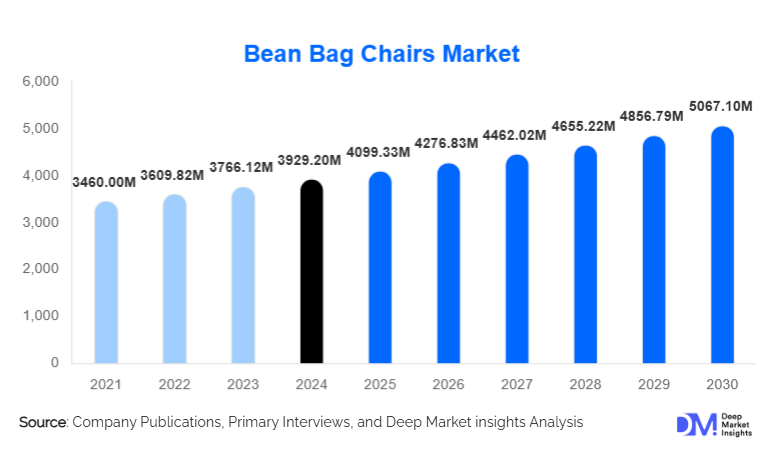
According to Deep Market Insights, the global bean bag chairs market size was valued at USD 3,929.20 million in 2025 and is projected to grow from USD 4,099.33 million in 2026 to reach USD 5,067.10 million by 2031, expanding at a CAGR of 4.33% during the forecast period (2026–2031). The bean bag chairs market growth is driven by rising consumer preference for casual and flexible furniture, increasing adoption in residential and commercial spaces, and the growing influence of gaming culture and e-commerce-led furniture retail.
Key Market Insights
- Demand for casual, ergonomic, and space-efficient seating solutions is increasing globally, particularly in urban households and rental accommodations.
- Residential applications dominate the market, supported by rising home décor spending and remote work-driven furniture upgrades.
- North America holds the largest market share, driven by high discretionary income, strong gaming culture, and premium furniture demand.
- Asia-Pacific is the fastest-growing region, fueled by rapid urbanization, an expanding middle-class population, and growing online furniture sales.
- E-commerce channels account for nearly half of global sales, enabling customization, price transparency, and direct-to-consumer expansion.
- Material and filling innovations, including memory foam, hybrid fillings, and sustainable fabrics, are reshaping product differentiation.
Bean Bag Chairs Market Trends
Premiumization and Modular Bean Bag Designs
Bean bag chairs are increasingly moving beyond basic seating toward premium and modular designs. Sofa-style and lounger bean bags that mimic traditional furniture aesthetics are gaining traction, particularly in high-income households and urban apartments. Consumers are seeking products that offer enhanced durability, ergonomic support, and premium materials such as memory foam fillings, reinforced stitching, and washable designer covers. Modular bean bags that can be rearranged or expanded are also becoming popular, especially among younger consumers seeking multifunctional furniture for dynamic living spaces.
Growth of Gaming and Youth-Centric Furniture
The rapid expansion of gaming culture and esports is significantly influencing bean bag chair demand. Gaming-specific bean bags designed for long sitting durations, enhanced back support, and immersive comfort are increasingly marketed through online platforms and influencer campaigns. This trend is particularly strong among Gen Z and millennial consumers, who prioritize comfort, aesthetics, and affordability. Gaming cafés, esports lounges, and home gaming setups are emerging as key demand generators, reinforcing bean bag chairs as lifestyle-driven furniture products.
Bean Bag Chairs Market Drivers
Shift Toward Casual and Flexible Living Spaces
Urbanization and shrinking living spaces are driving demand for lightweight, portable, and flexible furniture solutions. Bean bag chairs offer an attractive alternative to bulky sofas and chairs, especially in apartments, dormitories, and shared accommodations. Their versatility, ease of movement, and informal appeal align well with modern lifestyle preferences, making them a preferred seating option for both primary and secondary furniture needs.
Expansion of Online Furniture Retail
The rapid growth of online furniture retail has significantly boosted the bean bag chairs market. Digital platforms allow consumers to compare prices, customize products, and access a wide range of designs that may not be available offline. Online sales channels also enable manufacturers to reach global customers directly, reduce distribution costs, and respond quickly to changing consumer preferences. As a result, online distribution has become a major growth engine for the market.
Bean Bag Chairs Market Restraints
Price Sensitivity and Margin Pressure
Despite growing demand, the bean bag chairs market faces price sensitivity, particularly in emerging economies. The availability of low-cost, unbranded products intensifies competition and compresses profit margins. Consumers often view bean bags as discretionary purchases, making demand vulnerable during economic slowdowns. This limits the ability of manufacturers to pass on rising raw material costs to end users.
Volatility in Raw Material Prices
Fluctuations in the prices of raw materials such as synthetic fabrics, polyurethane foams, and polystyrene beads pose a challenge for manufacturers. These materials are often petroleum-based, making them susceptible to global oil price movements. Volatile input costs can disrupt pricing strategies and impact profitability, especially for manufacturers operating in the mid-range and economy segments.
Bean Bag Chairs Market Opportunities
Sustainable and Eco-Friendly Product Development
Sustainability is emerging as a major opportunity in the bean bag chairs market. Consumers are increasingly seeking furniture made from recycled fabrics, biodegradable fillings, and low-emission materials. Manufacturers that invest in eco-friendly designs and transparent sustainability practices can differentiate their offerings, attract environmentally conscious buyers, and command premium pricing, particularly in developed markets.
Rising Commercial and Institutional Adoption
Commercial demand for bean bag chairs is expanding across co-working spaces, educational institutions, hospitality venues, and corporate offices. These environments favor informal seating arrangements that promote collaboration, relaxation, and creative thinking. Bulk procurement by commercial buyers presents opportunities for higher-volume sales and long-term contracts, supporting steady revenue growth for manufacturers.
Report Scope
| Report Metric | Details |
|---|---|
| Market Size in 2025 | USD 3929.20 Million |
| Market Size in 2026 | USD 4099.33 Million |
| Market Size in 2031 | USD 5067.10 Million |
| CAGR | 4.33% (2026-2031) |
| Base Year for Estimation | 2025 |
| Historical Data | 2022-2024 |
| Forecast Period | 2026-2031 |
| Report Coverage | Revenue Forecast, Competitive Landscape, Supply Chain Disruption, Growth Factors, Environment & Regulatory Landscape and Trends |
| Geographies Covered | North America, Europe, APAC, Middle East and Africa, LATAM |
| Countries Covered | U.S., Canada, U.K., Germany, France, Spain, Italy, Russia, Nordic, Benelux, Rest of Europe, China, Korea, Japan, India, Australia, Singapore, Taiwan, South East Asia, Rest of Asia-Pacific, UAE, Turky, Saudi Arabia, South Africa, Egypt, Nigeria, Rest of MEA, Brazil, Mexico, Argentina, Chile, Colombia, Rest of LATAM |
Explore more data points, trends and opportunities Download Free Sample Report
Product Type Insights
Lounger-style bean bag chairs represent the leading product type, accounting for the largest share of global revenue due to their superior comfort and versatility. Classic round bean bags continue to be popular for casual home use, while gaming bean bags are gaining momentum among younger demographics. Sofa-style and modular bean bags are increasingly adopted in premium residential and commercial settings, offering an alternative to traditional upholstered furniture. Kids and novelty bean bags remain a niche but stable segment, driven by demand from families and childcare facilities.
Material Insights
Fabric-based bean bag chairs dominate the market, supported by affordability, breathability, and wide design flexibility. Faux leather and PU materials are gaining popularity due to their premium appearance and ease of maintenance, particularly in commercial applications. Genuine leather remains limited to high-end products, while outdoor-grade waterproof materials are increasingly used in patios, resorts, and poolside seating, expanding the outdoor application scope of bean bag chairs.
End-Use Insights
The residential segment accounts for the majority of demand, driven by home décor trends, remote work setups, and lifestyle-oriented furniture consumption. Commercial end use is growing at a faster pace, supported by hospitality venues, co-working spaces, educational institutions, and gaming cafés. These environments favor bean bag chairs for their informal appeal, flexibility, and cost efficiency compared to traditional seating solutions.
Distribution Channel Insights
Online retail channels dominate the bean bag chairs market, accounting for a significant share of global sales. Brand-owned websites and online marketplaces enable direct-to-consumer sales, customization options, and wider geographic reach. Offline channels, including furniture stores and specialty retailers, remain important for customers seeking physical product evaluation and immediate purchase, particularly in premium segments.
Explore more data points, trends and opportunities Download Free Sample Report
Bean Bag Chairs Market Segmentations
By Product Type
- Classic Round Bean Bag Chairs
- Lounger-Style Bean Bag Chairs
- Gaming Bean Bag Chairs
- Sofa-Style / Modular Bean Bag Chairs
- Kids & Novelty Bean Bag Chairs
By Material
- Fabric (Cotton, Polyester & Blends)
- Faux Leather / PU
- Genuine Leather
- Velvet & Suede
- Outdoor-Grade Waterproof Materials
By Filling Material
- Expanded Polystyrene (EPS) Beads
- Shredded Foam
- Memory Foam
- Hybrid Fillings
By End Use
- Residential
- Commercial
By Distribution Channel
- Online Retail
- Offline Furniture & Specialty Stores
Regional Insights
North America
North America leads the global bean bag chairs market, driven by strong consumer spending on home furniture, a mature gaming ecosystem, and widespread adoption of online retail. The United States represents the largest country-level market, with demand supported by both residential and commercial applications.
Europe
Europe represents a significant share of global demand, with countries such as Germany, the United Kingdom, and France leading consumption. Sustainability-focused furniture purchasing and growing demand for modern home décor solutions are key factors supporting market growth in this region.
Asia-Pacific
Asia-Pacific is the fastest-growing region in the bean bag chairs market, driven by rapid urbanization, expanding middle-class population, and increasing online furniture sales in countries such as China, India, and Japan. Cost-effective manufacturing capabilities in the region also support strong export activity.
Latin America
Latin America is witnessing gradual growth, led by Brazil and Mexico. Rising urban housing demand and increasing influence of Western lifestyle trends are supporting adoption, particularly in residential applications.
Middle East & Africa
The Middle East & Africa market is driven primarily by hospitality investments and premium residential demand in countries such as the UAE and Saudi Arabia. Growing tourism infrastructure and luxury real estate developments are supporting niche demand for premium bean bag chairs.