Bath Bead Market Size
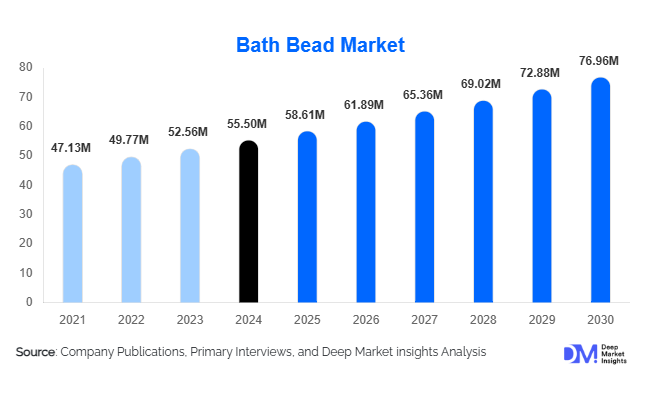
According to Deep Market Insights, the global bath bead market size was valued at USD 55.50 million in 2025 and is projected to grow from USD 58.61 million in 2026 to reach USD 76.96 million by 2031, expanding at a CAGR of 5.6% during the forecast period (2026–2031). The market growth is primarily driven by the rising consumer interest in self-care and wellness, increasing demand for natural and organic formulations, and expanding digital distribution channels that enhance accessibility for consumers globally.
Key Market Insights
- Consumer focus is shifting towards wellness and at-home spa experiences, creating demand for multifunctional bath beads that offer moisturizing, aromatherapy, and therapeutic benefits.
- Natural, organic, and eco-friendly bath beads are gaining popularity, reflecting increased awareness of skin health, environmental impact, and “clean beauty” trends.
- North America dominates the global bath bead market, driven by high disposable income, mature retail channels, and a strong preference for premium and wellness-oriented products.
- Asia-Pacific is the fastest-growing region, fueled by rising urbanization, expanding middle-class populations, and increasing adoption of e-commerce for personal care products.
- Online retail is becoming a critical distribution channel, allowing small and premium brands to reach niche markets and younger, tech-savvy consumers worldwide.
- Innovations in product formulations and sustainable packaging are reshaping the market, with brands offering herbal, vegan, and biodegradable bath bead options.
What are the latest trends in the bath bead market?
Wellness-Oriented and Functional Bath Beads
Consumers increasingly view bathing as a holistic wellness ritual, not just a hygiene activity. Bath beads offering moisturizing, aromatherapy, and skin-care benefits are becoming mainstream. Functional bath beads with herbal extracts, essential oils, or color-changing effects appeal to younger demographics seeking relaxation, stress relief, and sensory indulgence. Limited-edition and personalized bath bead variants are emerging, catering to gifting trends and social media-driven consumer behavior.
Growth of E-Commerce and Direct-to-Consumer Channels
Online platforms are transforming bath bead sales by providing a wider selection, convenience, and visibility for niche products. Direct-to-consumer sales and subscription-based models are enabling smaller brands to compete globally. Social media, influencer marketing, and digital campaigns are accelerating brand awareness, particularly among millennials and Gen Z, driving growth in premium, natural, and sustainable bath bead products.
What are the key drivers in the bath bead market?
Increasing Demand for Self-Care and Wellness Products
The rise in consumer interest in personal wellness, stress relief, and at-home spa experiences is a primary growth driver. Bath beads, offering moisturizing, aromatherapy, and sensory benefits, align perfectly with this trend. Urbanized and high-income populations are increasingly willing to invest in premium bathing products to enhance their personal care routines, supporting sustained market growth.
Preference for Natural, Organic, and Eco-Friendly Products
Consumers are increasingly opting for bath beads formulated with natural oils, herbal extracts, and biodegradable ingredients, reflecting broader clean beauty and sustainability trends. Regulatory emphasis on reducing harmful chemicals and microplastics also encourages manufacturers to innovate with safe and eco-friendly formulations, boosting demand for premium products globally.
Innovation in Product Formulations and Packaging
Bath bead manufacturers are investing in new product variants, such as color-changing beads, exfoliating beads, and therapeutic beads designed for skin-care benefits. Sustainable and biodegradable packaging innovations are further enhancing the appeal to environmentally-conscious consumers. These developments are encouraging repeat purchases and expanding market penetration, particularly among younger and wellness-focused consumers.
What are the restraints for the global market?
Health Concerns and Sensitivity Issues
Some consumers avoid bath beads due to skin sensitivity, allergic reactions, or concerns about synthetic fragrances and colorants. These health-related issues can limit the adoption of certain bath bead variants, particularly among children and individuals with sensitive skin.
Competition from Alternative Bath Products
Bath beads face competition from other personal care products such as bath salts, bubble baths, shower gels, and soaps. Price-sensitive consumers may prefer simpler hygiene products, while premium bath beads are perceived as luxury items, potentially limiting demand in emerging markets.
What are the key opportunities in the bath bead market?
Expansion in Wellness and Self-Care Segments
The increasing adoption of at-home wellness rituals offers significant growth opportunities. Bath beads can be positioned as part of daily self-care routines, offering relaxation, aromatherapy, and skin benefits. Brands that highlight therapeutic effects, such as stress relief or skin hydration, can capture a premium consumer base and increase brand loyalty.
Development of Natural, Organic, and Sustainable Products
There is a rising consumer demand for natural and eco-friendly products. Manufacturers can leverage organic ingredients, vegan formulations, and biodegradable packaging to differentiate their products and appeal to environmentally-conscious consumers. This trend is particularly strong in North America and Europe, where regulatory pressure and consumer awareness are high.
Growth in Digital and Global Distribution
Online retail and e-commerce platforms provide access to previously untapped markets. Niche and premium bath bead brands can reach global audiences without heavy investment in physical stores. Emerging markets in Asia-Pacific, Latin America, and the Middle East represent high-growth opportunities due to increasing urbanization, disposable incomes, and growing awareness of personal care and wellness.
Report Scope
| Report Metric | Details |
|---|---|
| Market Size in 2025 | USD 55.50 Million |
| Market Size in 2026 | USD 58.61 Million |
| Market Size in 2031 | USD 76.96 Million |
| CAGR | 5.6% (2026-2031) |
| Base Year for Estimation | 2025 |
| Historical Data | 2022-2024 |
| Forecast Period | 2026-2031 |
| Report Coverage | Revenue Forecast, Competitive Landscape, Supply Chain Disruption, Growth Factors, Environment & Regulatory Landscape and Trends |
| Geographies Covered | North America, Europe, APAC, Middle East and Africa, LATAM |
| Countries Covered | U.S., Canada, U.K., Germany, France, Spain, Italy, Russia, Nordic, Benelux, Rest of Europe, China, Korea, Japan, India, Australia, Singapore, Taiwan, South East Asia, Rest of Asia-Pacific, UAE, Turky, Saudi Arabia, South Africa, Egypt, Nigeria, Rest of MEA, Brazil, Mexico, Argentina, Chile, Colombia, Rest of LATAM |
Explore more data points, trends and opportunities Download Free Sample Report
Product Type Insights
Moisturizing and aromatherapy bath beads dominate the market, accounting for approximately 35–40% of global sales in 2025. Their strong market leadership is driven by their multifunctional benefits, including skin hydration, stress relief, relaxation, and aromatherapy effects. The growing awareness of self-care routines and the rising adoption of wellness-focused lifestyles have fueled the demand for these products, particularly among urban and high-income households. Additionally, herbal and natural bath beads are gaining significant traction, especially among environmentally-conscious and health-focused consumers. These products command a premium price point and are increasingly favored due to the rising preference for organic ingredients, free-from formulations (paraben-free, sulfate-free), and eco-friendly packaging, which aligns with broader clean beauty and sustainability trends. The expansion of e-commerce channels has further amplified the reach of both premium and niche variants, reinforcing the growth of moisturizing and aromatherapy bath beads globally.
Application Insights
Bath beads are predominantly used for personal care and relaxation at home, serving as an integral part of self-care and wellness rituals. The fastest-growing applications are wellness-oriented and aromatherapy bathing, which cater to stress relief, mental wellness, and sensory indulgence. This segment is experiencing rapid adoption due to increasing consumer awareness about mental health, mindfulness practices, and at-home spa experiences. Commercial applications in spas, luxury hotels, and wellness centers are also expanding, driven by the growth of wellness tourism, boutique wellness resorts, and premium hospitality offerings. Specialized therapeutic bath beads for skin hydration, exfoliation, or dermatological benefits are emerging as niche applications, supported by rising dermatology awareness and demand for multifunctional personal care solutions. This trend highlights a shift from basic bathing products to value-added, health-oriented formulations, enhancing overall market growth and profitability.
Distribution Channel Insights
Online retail channels dominate bath bead sales due to convenience, wide product variety, and accessibility for premium and niche brands. E-commerce platforms, including direct-to-consumer (D2C) websites, marketplaces, and subscription-based models, have become critical in reaching younger, tech-savvy consumers who prioritize convenience and personalized offerings. Supermarkets, hypermarkets, specialty beauty stores, and pharmacies also contribute significantly, particularly for mass-market and mid-tier products. Direct sales to spas, wellness centers, and hotels enable bulk orders and commercial applications. Additionally, social media marketing, influencer promotions, and digital campaigns are increasingly shaping consumer purchasing behavior, driving brand loyalty and engagement, particularly among millennials and Gen Z. Omnichannel strategies that integrate both offline and online presence are emerging as key growth enablers.
End-User Insights
Individual consumers dominate the bath bead market, accounting for approximately 60–70% of global demand in 2025. This segment includes households, wellness enthusiasts, and consumers seeking at-home spa and relaxation experiences. Commercial end-users such as spas, hotels, and wellness centers contribute to the remaining share, benefiting from the growing wellness tourism and luxury hospitality sectors. Emerging end-use applications targeting male grooming, dermatological care, and premium gifting are creating new avenues for market expansion. These niche applications, coupled with increasing awareness of self-care practices, are expected to accelerate demand in both mature and emerging markets.
Explore more data points, trends and opportunities Download Free Sample Report
Bath Bead Market Segmentations
By Product Type
- Moisturizing & Aromatherapy Bath Beads
- Herbal & Natural Bath Beads
- Therapeutic & Dermatological Bath Beads
- Color-Changing & Novelty Bath Beads
By Application
- Personal Care & Home Relaxation
- Wellness & Aromatherapy Bathing
- Spas, Hotels & Wellness Centers
- Therapeutic & Skin Care Treatments
By Distribution Channel
- Online Retail & E-Commerce
- Supermarkets & Hypermarkets
- Specialty Beauty Stores & Pharmacies
- Direct Sales to Spas & Hotels
- Subscription-Based & D2C Models
By End-User
- Individual Consumers
- Commercial Users (Spas, Hotels, Wellness Centers)
- Premium Gifting Segment
- Male Grooming & Dermatological Care
Regional Insights
North America
North America holds the largest share of the bath bead market at approximately 30–35% in 2025. Key drivers for this regional dominance include high consumer spending on personal care, strong preference for premium and natural products, and mature retail and e-commerce infrastructure. The U.S. and Canada lead demand, with consumers increasingly prioritizing wellness, aromatherapy, and eco-friendly formulations. The growing trend of at-home spa experiences, mental wellness initiatives, and the adoption of multifunctional personal care products further propels market growth. Additionally, collaborations between bath bead manufacturers and wellness influencers, subscription-based wellness boxes, and digital marketing campaigns have expanded consumer engagement and boosted sales.
Europe
Europe accounts for roughly 25–30% of the global market. Strong consumer preference for natural, organic, and sustainable products underpins the market, with countries like the U.K., Germany, and France leading in premium bath bead adoption. Regional growth is driven by high consumer awareness of wellness and personal care, stringent regulatory standards that encourage safe and eco-friendly formulations, and a well-established spa and luxury wellness industry. Additionally, the rise of organic and vegan personal care products, coupled with increasing online retail penetration and influencer-led campaigns, is stimulating demand across both mature and emerging European markets.
Asia-Pacific
Asia-Pacific is the fastest-growing region for bath beads, driven by rapid urbanization, rising disposable incomes, and increasing awareness of personal wellness. China, India, Japan, and South Korea are key demand centers. Consumers in this region are adopting premium and natural formulations as part of self-care and relaxation routines. Growth drivers include the proliferation of e-commerce platforms, social media influence, and expanding middle-class populations seeking lifestyle and wellness products. Additionally, rising wellness tourism, increasing participation in spa and fitness activities, and growing interest in herbal and organic personal care products contribute to the surge in demand. Government initiatives promoting domestic beauty product manufacturing and wellness-related consumer spending further accelerate regional market growth.
Latin America
Latin America contributes approximately 7–10% of the market, with Brazil, Argentina, and Mexico serving as major demand centers. Market growth is driven by rising disposable incomes, increasing beauty awareness, and expanding access to international and e-commerce beauty brands. Urbanization, a growing middle-class population, and social media penetration are enhancing consumer exposure to wellness and personal care trends. Premiumization of personal care products, coupled with an expanding hotel and spa sector, also supports bath bead adoption, particularly for aromatherapy and relaxation applications.
Middle East & Africa
MEA accounts for 5–7% of the global bath bead market. The region’s growth is propelled by high-income populations, luxury lifestyle preferences, and a burgeoning hospitality and wellness sector. Urban centers in the UAE, Saudi Arabia, and South Africa are key demand hubs. Drivers include increasing wellness and spa awareness, higher disposable income, and the adoption of premium and natural formulations. Intra-regional trade, tourism-driven demand, and expansion of high-end retail channels further support market growth. Additionally, collaborations with luxury wellness resorts and wellness-focused marketing campaigns are enhancing brand visibility and accelerating product adoption across both consumer and commercial segments.
Key Players in the Bath Bead Market
- Unilever
- Johnson & Johnson
- L'Oréal
- Coty
- Procter & Gamble
- Colgate-Palmolive
- Estée Lauder
- Reckitt Benckiser
- BASF
- Clariant
- Croda International
- Dow Inc.
- Nouryon
- Sensient Cosmetic Technologies
- Ashland Global Holdings