Top 7 Companies in E-Commerce Packaging Market: Shaping Global Packaging Solutions
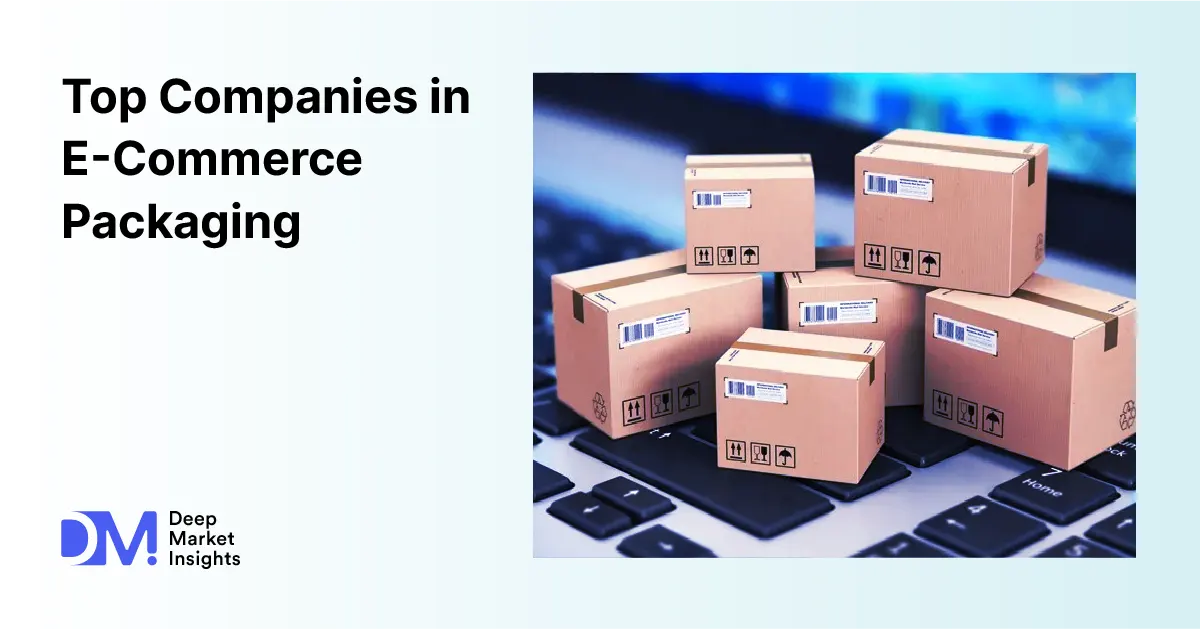
The e-commerce packaging market plays a critical role in protecting products, optimizing logistics efficiency, and enhancing customer experience across online retail channels. As global e-commerce volumes continue to rise, packaging suppliers are investing in lightweight materials, sustainable formats, and automated packaging systems to meet the evolving demands of retailers and brands.The market processes billions of parcels annually, with corrugated packaging accounting for more than 60% of e-commerce shipments worldwide. Packaging costs typically represent 8%–12% of total fulfillment expenses for online retailers, making supplier selection a strategic procurement decision. Demand for recyclable and right-sized packaging solutions has also increased, with many large retailers targeting reductions of 20%–30% in packaging material usage.This article examines the Top Companies in E-Commerce Packaging market, highlighting their capabilities, product portfolios, and competitive positioning.
Top Companies in E-Commerce Packaging Market: Market Overview with Data
The e-commerce packaging market consists of packaging materials and solutions specifically designed for online order fulfillment, transportation, storage, and last-mile delivery. Key products include corrugated boxes, protective mailers, bubble packaging, paper cushioning, flexible packaging, labels, and automated packaging systems.
Several numerical indicators demonstrate the scale of the market:
-
Corrugated boxes represent approximately 65% of total e-commerce packaging consumption globally.
-
North America accounts for nearly 30% of global demand, while Asia-Pacific contributes around 40% due to high parcel shipment volumes.
-
Standard corrugated shipping boxes typically range between $0.30 and $3.00 per unit, depending on size and specifications.
-
Protective mailers generally cost between $0.10 and $1.20 per unit.
-
Large fulfillment centers can consume more than 10 million packaging units annually.
-
Sustainable paper-based packaging solutions now represent an estimated 35%–40% of procurement spending among major e-commerce retailers.
Growing emphasis on automation, sustainability, and supply chain efficiency continues to influence purchasing decisions across the sector.
Top Companies in E-Commerce Packaging Market
International Paper

International Paper is one of the largest packaging manufacturers serving global e-commerce supply chains. The company generates annual revenue exceeding $18 billion and maintains a substantial footprint across North America, Europe, Latin America, and Asia.Its e-commerce packaging portfolio includes corrugated shipping boxes, containerboard products, protective packaging solutions, and customized retail-ready packaging. The company benefits from extensive containerboard production capacity, enabling reliable supply for high-volume online retailers.International Paper positions itself as a strategic partner for large-scale fulfillment operations by focusing on packaging optimization and material efficiency. Its investments in recyclable packaging and fiber-based solutions align with growing sustainability requirements. The company’s vertically integrated manufacturing model also provides procurement advantages through supply consistency and cost control.
WestRock

WestRock is a leading global packaging company with annual revenue of approximately $20 billion and operations spanning dozens of countries. The company serves major e-commerce platforms, consumer goods manufacturers, and logistics providers.Its product portfolio includes corrugated containers, automated packaging systems, paper-based protective packaging, and custom shipping solutions. WestRock's packaging designs help reduce dimensional weight and improve transportation efficiency, which is increasingly important for online retailers managing shipping costs.The company differentiates itself through packaging innovation and automation technologies. Its ability to provide both packaging materials and machinery strengthens its market position among large fulfillment centers. WestRock continues to expand sustainable packaging offerings to address increasing demand for recyclable and plastic-reduction solutions.
Smurfit Westrock

Smurfit Westrock has emerged as one of the most influential players in the e-commerce packaging landscape following major industry consolidation. The company operates hundreds of production facilities worldwide and serves customers across more than 40 countries.The company's offerings include corrugated packaging, shelf-ready packaging, protective shipping solutions, and fiber-based alternatives to plastic packaging. Strong expertise in paper and containerboard production enables it to support large-volume e-commerce distribution networks.Smurfit Westrock focuses heavily on circular economy principles and sustainable packaging design. Its strategy centers on helping retailers reduce packaging waste while maintaining product protection. The company’s extensive geographic presence and integrated supply chain capabilities provide significant advantages when serving multinational e-commerce customers.
DS Smith

DS Smith is a prominent supplier of sustainable packaging solutions with annual revenue exceeding £8 billion. The company has established a strong position in European e-commerce packaging markets while expanding internationally.Its portfolio includes corrugated boxes, transit packaging, paper cushioning systems, and customized packaging designs. DS Smith is recognized for developing right-sized packaging solutions that reduce unused shipping space and lower transportation costs.The company’s sustainability-driven strategy has become a key differentiator. Many of its packaging products are manufactured using recycled fiber, supporting retailer sustainability objectives. DS Smith also works closely with e-commerce companies to optimize packaging performance and reduce material consumption by as much as 20%–30% in selected packaging programs.
Mondi Group

Mondi Group is a global packaging and paper company generating annual revenue above €7 billion. The company serves e-commerce, consumer goods, food, and industrial sectors through an extensive manufacturing network.Mondi's e-commerce packaging portfolio includes corrugated packaging, paper mailers, protective paper wraps, and flexible packaging solutions. The company has gained market attention for developing paper-based alternatives to traditional plastic shipping materials.Its strategy emphasizes innovation and sustainable packaging design. Mondi invests heavily in recyclable and renewable packaging products that meet changing retailer requirements. The company’s integrated paper production capabilities support supply reliability, making it a preferred supplier for organizations seeking long-term packaging procurement partnerships.
Sealed Air

Sealed Air is widely recognized for protective packaging technologies and generates annual revenue exceeding $5 billion. The company plays a critical role in protecting products during transportation across e-commerce channels.Its product portfolio includes bubble cushioning, protective mailers, foam packaging, automated packaging equipment, and fulfillment solutions. The company’s Bubble Wrap brand remains one of the most recognized protective packaging products globally.Sealed Air focuses on reducing product damage and returns, which can significantly affect e-commerce profitability. Its automated packaging systems improve fulfillment efficiency and reduce labor requirements. The company continues to expand recyclable and recycled-content packaging options to support sustainability initiatives among online retailers.
Pregis

Pregis has established itself as a major supplier of protective packaging solutions for e-commerce and fulfillment operations. The company serves a broad range of industries, including consumer electronics, healthcare, industrial products, and retail.Its offerings include protective mailers, air cushions, polyethylene films, paper cushioning, and automated packaging equipment. Pregis is particularly strong in damage-prevention solutions designed for high-value products shipped through e-commerce channels.The company's strategy centers on packaging performance and sustainability. Investments in recyclable materials and automation technologies have strengthened its competitive position. Pregis also collaborates with fulfillment operators to optimize packaging usage and reduce overall material consumption while maintaining shipping protection standards.
Competitive Landscape Insights
The competitive structure of the e-commerce packaging market remains moderately consolidated. Large multinational suppliers control a significant portion of global demand.
Approximate market share distribution includes:
-
Top five suppliers collectively: 45%–55%
-
Regional packaging manufacturers: 25%–30%
-
Specialized protective packaging providers: 15%–20%
-
Niche sustainable packaging companies: 5%–10%
Pricing segmentation generally follows three categories:
|
Segment |
Typical Price Range |
|
Standard Corrugated Boxes |
$0.30–$1.50/unit |
|
Premium Customized Packaging |
$1.50–$3.00/unit |
|
Protective Mailers & Cushioning |
$0.10–$1.20/unit |
Supply chain resilience has become a critical competitive factor. Leading companies increasingly rely on vertically integrated paper mills, containerboard facilities, and regional distribution networks to reduce supply disruptions. Procurement teams now evaluate suppliers not only on price but also on sustainability performance, production capacity, geographic coverage, and automation capabilities.The Top Companies in E-Commerce Packaging market continue to shape global packaging standards through innovation, sustainability initiatives, and large-scale manufacturing capabilities. Industry leaders such as International Paper, WestRock, Smurfit Westrock, DS Smith, Mondi Group, Sealed Air, and Pregis maintain strong competitive positions through diversified product portfolios and extensive distribution networks.For procurement professionals and decision-makers, supplier evaluation increasingly extends beyond cost considerations to include packaging efficiency, environmental performance, production capacity, and supply chain reliability. As e-commerce shipment volumes remain substantial worldwide, these companies are expected to remain central partners in supporting efficient and sustainable packaging operations across global retail and fulfillment ecosystems.