Asia Pacific Luxury Apparel Market Size & Outlook, 2026-2034
Last Updated : 28 July, 2026 |
Study Period : 2022-2034 |
Format : PDF, Excel |
Author : Anna Morgan
Asia Pacific Luxury Apparel Market Insights
- Based on Deep Market Insights findings, the Asia Pacific Luxury Apparel Market size reached USD 19679.65 Billion in 2025 and is expected to grow to USD 31339 Billion by 2034.
- During 2026–2034, the market is forecasted to advance at a CAGR of 5.27%.
- Womenswear represented the largest share of the Product market in terms of size in 2025.
- Among the Product segments, Menswear is forecasted to achieve the highest growth and remain the most lucrative through the forecast period.
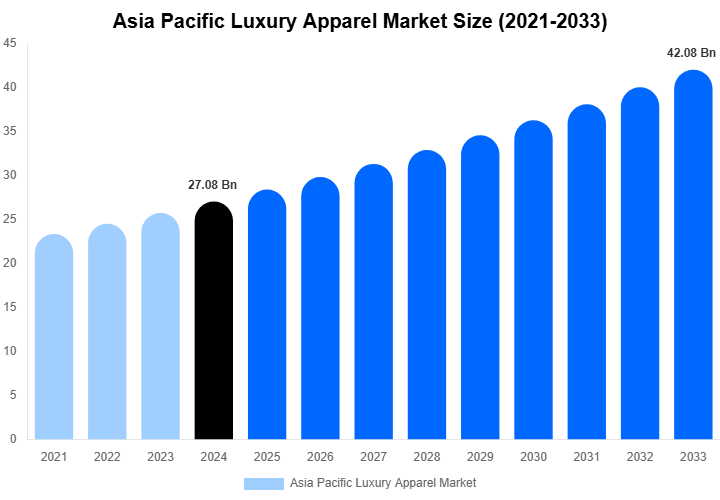
Source: DMI Analysis Company Publications, Primary Interviews.

Other Key Findings
- In 2025, Asia Pacific accounted for 22.6% of the global Luxury Apparel Market size.
- By 2034, United States is projected to lead the global market in terms of market size.
- South East Asia is projected to emerge as the fastest-growing market in Asia Pacific, reaching USD 3221.37 Billion by 2034.
Asia Pacific Luxury Apparel Market Dynamics
- Asia Pacific's luxury apparel market continues expanding through rising affluent populations, increasing premium fashion awareness, growing digital luxury commerce, and evolving consumer lifestyles. Consumers increasingly seek exclusive apparel combining exceptional craftsmanship, premium quality, sustainability, and personalized luxury experiences across diverse fashion categories.
- Luxury boutiques, department stores, flagship stores, online luxury marketplaces, specialty retailers, brand-owned stores, and direct-to-consumer platforms strengthen accessibility through diversified distribution channels. Companies increasingly improve omnichannel retail strategies, digital engagement, premium branding, and personalized shopping experiences to strengthen customer loyalty.
- Luxury apparel brands invest in sustainable fabrics, premium textiles, AI-powered personalization, digital fashion technologies, artisanal craftsmanship, limited-edition collections, and innovative manufacturing techniques to strengthen competitive differentiation. Innovation also emphasizes exclusivity, environmental responsibility, product quality, and enhanced luxury customer experiences.
- Luxury fashion companies collaborate with designers, retailers, technology providers, influencers, textile manufacturers, logistics companies, and sustainability organizations to strengthen operational resilience and product innovation. Continued investment in premium collections, sustainable production, omnichannel retail, and personalization reinforces competitiveness across Asia Pacific's luxury apparel industry.
Key Industry Insights
- Premium fashion strengthens demand.
- Sustainable luxury expands adoption.
- Digital commerce enhances accessibility.
- Exclusive collections improve competitiveness.
Asia Pacific Luxury Apparel Market Country 2026-2034 (USD Billion)
| Asia Pacific | 2022 | 2023 | 2024 | 2025 | 2026 | 2027 | 2028 | 2029 | 2030 | 2031 | 2032 | 2033 | 2034 |
|---|---|---|---|---|---|---|---|---|---|---|---|---|---|
| China | XX.x | XX.x | XX.x | 7885.64 | XX.x | XX.x | XX.x | XX.x | XX.x | XX.x | XX.x | XX.x | XX.x |
| India | XX.x | XX.x | XX.x | XX.x | XX.x | XX.x | XX.x | XX.x | XX.x | XX.x | XX.x | XX.x | XX.x |
| Japan | XX.x | XX.x | XX.x | XX.x | XX.x | XX.x | XX.x | XX.x | XX.x | XX.x | XX.x | XX.x | XX.x |
| Korea | XX.x | XX.x | XX.x | XX.x | XX.x | XX.x | XX.x | XX.x | XX.x | XX.x | XX.x | XX.x | XX.x |
| Taiwan | XX.x | XX.x | XX.x | XX.x | XX.x | XX.x | XX.x | XX.x | XX.x | XX.x | XX.x | XX.x | XX.x |
| Australia | XX.x | XX.x | XX.x | XX.x | XX.x | XX.x | XX.x | XX.x | XX.x | XX.x | XX.x | XX.x | XX.x |
| Singapore | XX.x | XX.x | XX.x | XX.x | XX.x | XX.x | XX.x | XX.x | XX.x | XX.x | XX.x | XX.x | XX.x |
| South East Asia | XX.x | XX.x | XX.x | XX.x | XX.x | XX.x | XX.x | XX.x | XX.x | XX.x | XX.x | XX.x | XX.x |
| Total | XX.x | XX.x | XX.x | 19,679.66 | XX.x | XX.x | XX.x | XX.x | XX.x | XX.x | XX.x | XX.x | XX.x |
Source: DMI Analysis Company Publications, Primary Interviews.
Asia Pacific Luxury Apparel Market Product 2026-2034 (USD Billion)
| Product | 2022 | 2023 | 2024 | 2025 | 2026 | 2027 | 2028 | 2029 | 2030 | 2031 | 2032 | 2033 | 2034 |
|---|---|---|---|---|---|---|---|---|---|---|---|---|---|
| Womenswear | XX.x | XX.x | XX.x | 6897.72 | XX.x | XX.x | XX.x | XX.x | XX.x | XX.x | XX.x | XX.x | XX.x |
| Menswear | XX.x | XX.x | XX.x | XX.x | XX.x | XX.x | XX.x | XX.x | XX.x | XX.x | XX.x | XX.x | XX.x |
| Leather Goods | XX.x | XX.x | XX.x | XX.x | XX.x | XX.x | XX.x | XX.x | XX.x | XX.x | XX.x | XX.x | XX.x |
| Footwear | XX.x | XX.x | XX.x | XX.x | XX.x | XX.x | XX.x | XX.x | XX.x | XX.x | XX.x | XX.x | XX.x |
| Accessories | XX.x | XX.x | XX.x | XX.x | XX.x | XX.x | XX.x | XX.x | XX.x | XX.x | XX.x | XX.x | XX.x |
| Total | XX.x | XX.x | XX.x | 19,679.65 | XX.x | XX.x | XX.x | XX.x | XX.x | XX.x | XX.x | XX.x | XX.x |
Source: DMI Analysis Company Publications, Primary Interviews.
Asia Pacific Luxury Apparel Market Distribution 2026-2034 (USD Billion)
| Distribution | 2022 | 2023 | 2024 | 2025 | 2026 | 2027 | 2028 | 2029 | 2030 | 2031 | 2032 | 2033 | 2034 |
|---|---|---|---|---|---|---|---|---|---|---|---|---|---|
| Exclusive Brand Stores | XX.x | XX.x | XX.x | 9493.47 | XX.x | XX.x | XX.x | XX.x | XX.x | XX.x | XX.x | XX.x | XX.x |
| E-commerce | XX.x | XX.x | XX.x | XX.x | XX.x | XX.x | XX.x | XX.x | XX.x | XX.x | XX.x | XX.x | XX.x |
| Multi-brand Boutiques | XX.x | XX.x | XX.x | XX.x | XX.x | XX.x | XX.x | XX.x | XX.x | XX.x | XX.x | XX.x | XX.x |
| Department Stores | XX.x | XX.x | XX.x | XX.x | XX.x | XX.x | XX.x | XX.x | XX.x | XX.x | XX.x | XX.x | XX.x |
| Total | XX.x | XX.x | XX.x | 19,679.66 | XX.x | XX.x | XX.x | XX.x | XX.x | XX.x | XX.x | XX.x | XX.x |
Source: DMI Analysis Company Publications, Primary Interviews.
Inside This Report
This section examines Asia Pacific's luxury apparel market through evolving consumer preferences, product innovation, sustainability initiatives, and competitive strategies. It highlights how luxury brands strengthen competitiveness by expanding premium collections, improving omnichannel retail capabilities, integrating sustainable materials, and delivering personalized shopping experiences across rapidly evolving luxury fashion markets.
- Regional market landscape: Reviews Asia Pacific's luxury apparel ecosystem.
- Consumer and purchasing trends: Explores premium and exclusive fashion preferences.
- Product innovation and distribution: Covers craftsmanship and omnichannel retail.
- Competitive and industry developments: Highlights sustainability and premium positioning.
Report Summary
| Report Scope | Details |
|---|---|
| Base Year for Study | 2025 |
| Study Period | 2022-2034 |
| Historical Period | 2022-2024 |
| Forecast Period | 2026-2034 |
| Market Size In 2025 | USD 19679.65 Billion |
| Market Size In 2034 | USD 31339 Billion |
| Largest segment | Womenswear |
| Units | Revenue in USD Billion |
| CAGR | 5.27% (2026-2034) |
| Report Coverage | Revenue Forecast, Competitive Landscape, Growth Factors, Environment & Regulatory Landscape and Trends |