Cinnamon Toast Crunch Protein Bar Market Size
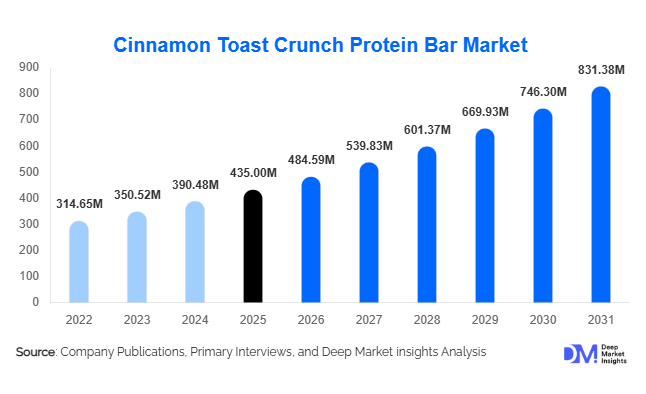
According to Deep Market Insights, the global Cinnamon Toast Crunch protein bar market size was valued at USD 435 million in 2025 and is projected to grow from USD 484.59 million in 2026 to reach USD 831.38 million by 2031, expanding at a CAGR of 11.4% during the forecast period (2026–2031). Market growth is primarily driven by rising global protein consumption, increasing demand for indulgent-yet-functional snack formats, and the premiumization of flavored nutrition bars that blend nostalgic cereal-inspired taste profiles with high-protein formulations.
Key Market Insights
- Flavor-led functional nutrition is reshaping protein bar demand, with cinnamon-based cereal flavors bridging indulgence and health positioning.
- North America dominates consumption, supported by strong cereal brand familiarity, high protein intake, and mature sports nutrition markets.
- Online and direct-to-consumer channels are the fastest-growing, driven by subscription models and influencer-led fitness marketing.
- Low-sugar and clean-label formulations are gaining rapid traction amid regulatory pressure and rising health awareness.
- Asia-Pacific is emerging as the fastest-growing region, supported by urbanization, fitness culture expansion, and premium snack adoption.
- Product innovation in texture and protein blends is improving palatability and repeat consumption.
What are the latest trends in the Cinnamon Toast Crunch protein bar market?
Indulgent Flavor Innovation in Functional Nutrition
Protein bar manufacturers are increasingly prioritizing flavor innovation to expand consumption beyond traditional sports nutrition users. Cinnamon toast-inspired profiles evoke familiarity and indulgence, making protein bars suitable for breakfast replacement, mid-day snacking, and lifestyle nutrition. Brands are investing in texture optimization, layered formulations, and cereal-like crunch to enhance sensory appeal without compromising protein content or nutritional integrity.
Digital-First Sales and Subscription Models
E-commerce platforms and DTC channels are transforming consumer engagement. Subscription-based protein bar consumption, bundled flavor packs, and personalized nutrition offerings are improving customer retention. Social media marketing and fitness influencers are playing a central role in accelerating trial among younger consumers, particularly in urban markets.
What are the key drivers in the Cinnamon Toast Crunch protein bar market?
Rising Global Protein Consumption
Increasing awareness of protein’s role in muscle health, satiety, and weight management is driving sustained demand for high-protein snacks. Cinnamon Toast Crunch protein bars offer a convenient delivery format, enabling consumption across age groups beyond athletes, including professionals and lifestyle-focused consumers.
Premiumization of Snack Bars
Consumers are willing to pay premium prices for protein bars that combine superior taste, recognizable flavors, and clean-label positioning. Cinnamon-based variants support premium pricing strategies while maintaining mass-market appeal, improving margins for manufacturers.
What are the restraints for the global market?
Price Sensitivity in Emerging Markets
Premium protein bars remain relatively expensive in price-sensitive regions, limiting mass adoption outside major urban centers. This restricts penetration in developing economies despite rising health awareness.
Raw Material Price Volatility
Fluctuations in whey protein, cocoa derivatives, and natural sweetener prices pose margin pressure for manufacturers and may lead to frequent pricing adjustments.
What are the key opportunities in the Cinnamon Toast Crunch protein bar industry?
Expansion into Emerging Economies
Asia-Pacific, the Middle East, and Latin America present strong opportunities due to growing disposable incomes, increasing gym memberships, and rising exposure to Western-style functional snacks. Localized product positioning can unlock incremental demand.
Clean-Label and Plant-Based Innovation
Opportunities exist in no-added-sugar, plant-based, and fortified protein bar variants. Advances in protein blending and flavor masking allow manufacturers to address evolving dietary preferences while maintaining taste.
Report Scope
| Report Metric | Details |
|---|---|
| Market Size in 2025 | USD 435 Million |
| Market Size in 2026 | USD 484.59 Million |
| Market Size in 2031 | USD 831.38 Million |
| CAGR | 11.4% (2026-2031) |
| Base Year for Estimation | 2025 |
| Historical Data | 2022-2024 |
| Forecast Period | 2026-2031 |
| Report Coverage | Revenue Forecast, Competitive Landscape, Supply Chain Disruption, Growth Factors, Environment & Regulatory Landscape and Trends |
| Geographies Covered | North America, Europe, APAC, Middle East and Africa, LATAM |
| Countries Covered | U.S., Canada, U.K., Germany, France, Spain, Italy, Russia, Nordic, Benelux, Rest of Europe, China, Korea, Japan, India, Australia, Singapore, Taiwan, South East Asia, Rest of Asia-Pacific, UAE, Turky, Saudi Arabia, South Africa, Egypt, Nigeria, Rest of MEA, Brazil, Mexico, Argentina, Chile, Colombia, Rest of LATAM |
Explore more data points, trends and opportunities Download Free Sample Report
Product Type Insights
Soft-baked Cinnamon Toast Crunch protein bars dominate the global market, accounting for approximately 38% of total demand. Their leadership is driven by a superior soft-baked texture, indulgent mouthfeel, and strong flavor familiarity that closely mimics traditional snack bars rather than functional nutrition products. This sensory advantage has significantly broadened appeal beyond fitness-focused consumers to mainstream snackers.
Crunchy and granola-textured protein bars continue to attract cereal enthusiasts seeking a breakfast-like eating experience, particularly among consumers with on-the-go lifestyles. These formats benefit from longer shelf life and cost efficiency. Meanwhile, layered protein bars are gaining traction in the premium segment, driven by visually differentiated formats, multi-texture profiles, and perceived indulgence, making them popular among urban and higher-income consumers willing to pay a premium for novelty and taste.
Protein Source Insights
Whey-based protein bars lead the market with an estimated 44% share, supported by high bioavailability, complete amino acid profiles, and strong trust among athletes and gym-going consumers. Whey protein’s established reputation for muscle recovery and performance remains the primary driver for this segment.
Mixed protein blends are witnessing rising adoption as manufacturers seek to balance nutritional performance, cost optimization, and sustainability goals. These blends allow brands to improve texture while moderating ingredient costs. Plant-based protein bars are expanding at a rapid pace, fueled by increasing vegan and flexitarian populations, lactose intolerance awareness, and growing demand for environmentally responsible food choices.
Distribution Channel Insights
Online and direct-to-consumer (DTC) channels account for nearly 29% of global sales and represent the fastest-growing distribution segment. Growth is driven by subscription models, influencer-led marketing, personalized nutrition offerings, and easy access to niche and premium brands.Supermarkets and hypermarkets remain critical for volume-driven sales due to high foot traffic, price promotions, and strong brand visibility. Specialty nutrition and health food stores retain importance for premium and performance-focused protein bars, where knowledgeable staff and targeted product assortments support higher-value purchases.
Consumer Demographic Insights
Adults aged 25–45 years represent the largest consumer group, accounting for approximately 51% of total consumption. This demographic prioritizes convenience, taste, and functional benefits such as sustained energy and protein intake for active lifestyles.Younger consumers aged 18–24 years are driving trial purchases and brand discovery, largely influenced by social media marketing, fitness influencers, and digital-first campaigns. Additionally, active seniors are increasingly incorporating protein bars into their daily nutrition routines, driven by rising awareness of muscle maintenance, healthy aging, and convenient meal supplementation.
Explore more data points, trends and opportunities Download Free Sample Report
Cinnamon Toast Crunch Protein Bar Market Segmentations
By Product Formulation
- Soft-Baked Protein Bars
- Crunchy / Granola-Textured Protein Bars
- Layered Protein Bars
By Protein Source
- Whey-Based Protein Bars
- Plant-Based Protein Bars
- Mixed Protein Blend Bars
By Sugar Profile
- Regular Sugar Formulation
- Low-Sugar Protein Bars
- No-Added-Sugar / Alternative Sweeteners
By Functional Positioning
- Meal Replacement Bars
- Sports & Performance Nutrition Bars
- Weight Management & Lifestyle Nutrition Bars
By Distribution Channel
- Supermarkets & Hypermarkets
- Specialty Nutrition & Convenience Stores
- Online & Direct-to-Consumer (DTC)
By Consumer Demaographic
- Young Adults (18–24 Years)
- Adults (25–45 Years)
- Active Seniors (45+ Years)
Regional Insights
North America
North America held approximately 46% of global market share in 2025, led by the United States. Regional growth is supported by high per-capita protein consumption, strong brand equity of cereal-based snacks, and widespread retail penetration. The presence of established fitness culture, premium product innovation, and aggressive digital marketing further strengthens market leadership.
Europe
Europe accounted for around 27% of the global market, with the U.K., Germany, and France leading consumption. Growth in the region is driven by rising demand for clean-label and low-sugar formulations, increased adoption of lifestyle nutrition products, and regulatory support for transparent ingredient labeling.
Asia-Pacific
Asia-Pacific represents the fastest-growing regional market, with China and India registering compound annual growth rates exceeding 14%. Rapid urbanization, expanding fitness and wellness culture, increasing disposable income, and growing acceptance of premium packaged snacks are key drivers accelerating demand across the region.
Latin America
Latin America is an emerging market, led by Brazil and Mexico. Growth is supported by a rising middle-class population, increasing awareness of functional nutrition, and expanding modern retail infrastructure. Western dietary influence and growing sports participation are further boosting protein bar adoption.
Middle East & Africa
The Middle East & Africa market is led by the UAE and Saudi Arabia, driven by premium health food consumption, strong import reliance, and well-developed retail ecosystems. Government-led wellness initiatives, growing gym memberships, and rising demand for convenient nutrition products are key regional growth drivers.
Key Players in the Cinnamon Toast Crunch Protein Bar Market
- General Mills
- Kellogg’s
- Post Consumer Brands
- Clif Bar & Company
- Quest Nutrition
- RXBAR
- KIND LLC
- ONE Brands
- Perfect Snacks
- PowerCrunch
- No Cow
- Barebells
- Grenade
- MuscleTech
- Think! Nutrition