United States Seafood Market Size & Outlook, 2026-2034
Last Updated : 27 July, 2026 |
Study Period : 2022-2034 |
Format : PDF, Excel |
Author : Hannah Blake
United States Seafood Market Insights
- As per Deep Market Insights insights, the United States Seafood Market stood at USD 67.39 Billion in 2025 and is anticipated to grow to USD 100.89 Billion by 2034.
- The United States market is expected to advance at a CAGR of 4.62% from 2026 through 2034.
- In 2025, Fresh accounted for the highest share of the Product condition market size.
- During the forecast period, Frozen is set to register the highest growth, making it the most lucrative Product condition segment.
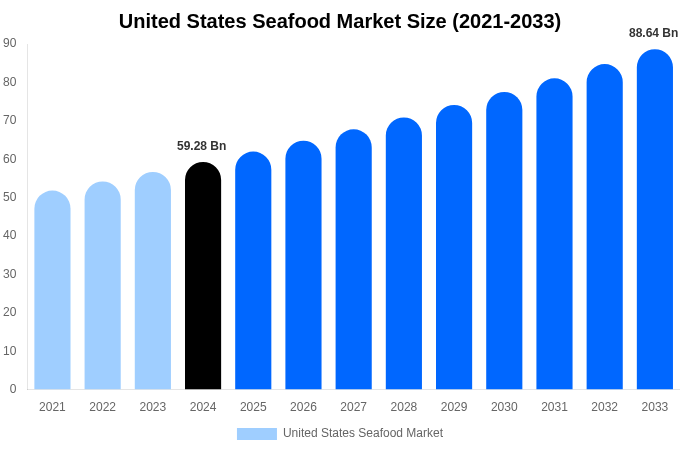
Source: DMI Analysis Company Publications, Primary Interviews.

Other Key Findings
- As of 2025, United States held 24.99% of the global Seafood Market size.
- By 2034, United States is anticipated to capture the largest share of the global Seafood Market.
- In North America, United States is expected to lead the regional Seafood Market size by 2034.
- United States will remain the fastest-growing market in North America, reaching USD 56.44 Billion by 2034.
United States Seafood Market Dynamics
- The United States seafood market benefits from increasing consumer interest in healthy diets, high-protein foods, and sustainably sourced seafood across retail and foodservice channels. Consumers increasingly prioritize freshness, certified sourcing, frozen convenience, and premium seafood products that support balanced lifestyles and culinary diversity.
- Supermarkets, warehouse clubs, seafood specialty retailers, restaurants, online grocery platforms, meal delivery services, and wholesale distributors strengthen accessibility through integrated omnichannel networks. Seafood companies increasingly expand chilled, frozen, and ready-to-cook assortments while improving nationwide distribution efficiency.
- Producers invest in sustainable aquaculture, advanced seafood processing technologies, cold-chain logistics, digital traceability systems, and innovative packaging to strengthen product differentiation. Innovation also emphasizes premium seafood selections, convenient meal solutions, and freshness preservation technologies that improve quality and operational efficiency.
- Seafood suppliers collaborate with fisheries, aquaculture operators, processors, retailers, foodservice companies, certification organizations, and logistics providers to strengthen resilient supply chains and product quality. Continued investment in sustainable sourcing, value-added processing, and digital transparency reinforces competitiveness across the United States seafood industry.
Key Industry Insights
- Sustainable sourcing supports premium positioning.
- Value-added seafood improves consumer convenience.
- Cold-chain investment enhances product quality.
- Digital traceability strengthens food safety.
United States Seafood Market Product condition 2026-2034 (USD Billion)
| Product condition | 2022 | 2023 | 2024 | 2025 | 2026 | 2027 | 2028 | 2029 | 2030 | 2031 | 2032 | 2033 | 2034 |
|---|---|---|---|---|---|---|---|---|---|---|---|---|---|
| Fresh | XX.x | XX.x | XX.x | 31.36 | XX.x | XX.x | XX.x | XX.x | XX.x | XX.x | XX.x | XX.x | XX.x |
| Frozen | XX.x | XX.x | XX.x | XX.x | XX.x | XX.x | XX.x | XX.x | XX.x | XX.x | XX.x | XX.x | XX.x |
| Canned | XX.x | XX.x | XX.x | XX.x | XX.x | XX.x | XX.x | XX.x | XX.x | XX.x | XX.x | XX.x | XX.x |
| Processed ready-to-eat | XX.x | XX.x | XX.x | XX.x | XX.x | XX.x | XX.x | XX.x | XX.x | XX.x | XX.x | XX.x | XX.x |
| Total | XX.x | XX.x | XX.x | 67.39 | XX.x | XX.x | XX.x | XX.x | XX.x | XX.x | XX.x | XX.x | XX.x |
Source: DMI Analysis Company Publications, Primary Interviews.
United States Seafood Market Species categories 2026-2034 (USD Billion)
| Species categories | 2022 | 2023 | 2024 | 2025 | 2026 | 2027 | 2028 | 2029 | 2030 | 2031 | 2032 | 2033 | 2034 |
|---|---|---|---|---|---|---|---|---|---|---|---|---|---|
| Finfish | XX.x | XX.x | XX.x | 35.61 | XX.x | XX.x | XX.x | XX.x | XX.x | XX.x | XX.x | XX.x | XX.x |
| Crustaceans | XX.x | XX.x | XX.x | XX.x | XX.x | XX.x | XX.x | XX.x | XX.x | XX.x | XX.x | XX.x | XX.x |
| Mollusks | XX.x | XX.x | XX.x | XX.x | XX.x | XX.x | XX.x | XX.x | XX.x | XX.x | XX.x | XX.x | XX.x |
| Total | XX.x | XX.x | XX.x | 67.39 | XX.x | XX.x | XX.x | XX.x | XX.x | XX.x | XX.x | XX.x | XX.x |
Source: DMI Analysis Company Publications, Primary Interviews.
United States Seafood Market Product formats 2026-2034 (USD Billion)
| Product formats | 2022 | 2023 | 2024 | 2025 | 2026 | 2027 | 2028 | 2029 | 2030 | 2031 | 2032 | 2033 | 2034 |
|---|---|---|---|---|---|---|---|---|---|---|---|---|---|
| Fillets | XX.x | XX.x | XX.x | 30.61 | XX.x | XX.x | XX.x | XX.x | XX.x | XX.x | XX.x | XX.x | XX.x |
| Whole fish | XX.x | XX.x | XX.x | XX.x | XX.x | XX.x | XX.x | XX.x | XX.x | XX.x | XX.x | XX.x | XX.x |
| Value-added products | XX.x | XX.x | XX.x | XX.x | XX.x | XX.x | XX.x | XX.x | XX.x | XX.x | XX.x | XX.x | XX.x |
| Total | XX.x | XX.x | XX.x | 67.40 | XX.x | XX.x | XX.x | XX.x | XX.x | XX.x | XX.x | XX.x | XX.x |
Source: DMI Analysis Company Publications, Primary Interviews.
United States Seafood Market By Product Type 2026-2034 (USD Billion)
| By Product Type | 2022 | 2023 | 2024 | 2025 | 2026 | 2027 | 2028 | 2029 | 2030 | 2031 | 2032 | 2033 | 2034 |
|---|---|---|---|---|---|---|---|---|---|---|---|---|---|
| Fish | XX.x | XX.x | XX.x | 24.61 | XX.x | XX.x | XX.x | XX.x | XX.x | XX.x | XX.x | XX.x | XX.x |
| Crustaceans | XX.x | XX.x | XX.x | XX.x | XX.x | XX.x | XX.x | XX.x | XX.x | XX.x | XX.x | XX.x | XX.x |
| Mollusks | XX.x | XX.x | XX.x | XX.x | XX.x | XX.x | XX.x | XX.x | XX.x | XX.x | XX.x | XX.x | XX.x |
| Total | XX.x | XX.x | XX.x | 47.02 | XX.x | XX.x | XX.x | XX.x | XX.x | XX.x | XX.x | XX.x | XX.x |
Source: DMI Analysis Company Publications, Primary Interviews.
United States Seafood Market By Form 2026-2034 (USD Billion)
| By Form | 2022 | 2023 | 2024 | 2025 | 2026 | 2027 | 2028 | 2029 | 2030 | 2031 | 2032 | 2033 | 2034 |
|---|---|---|---|---|---|---|---|---|---|---|---|---|---|
| Fresh | XX.x | XX.x | XX.x | 21.88 | XX.x | XX.x | XX.x | XX.x | XX.x | XX.x | XX.x | XX.x | XX.x |
| Frozen | XX.x | XX.x | XX.x | XX.x | XX.x | XX.x | XX.x | XX.x | XX.x | XX.x | XX.x | XX.x | XX.x |
| Processed | XX.x | XX.x | XX.x | XX.x | XX.x | XX.x | XX.x | XX.x | XX.x | XX.x | XX.x | XX.x | XX.x |
| Total | XX.x | XX.x | XX.x | 47.02 | XX.x | XX.x | XX.x | XX.x | XX.x | XX.x | XX.x | XX.x | XX.x |
Source: DMI Analysis Company Publications, Primary Interviews.
United States Seafood Market By Distribution Channel 2026-2034 (USD Billion)
| By Distribution Channel | 2022 | 2023 | 2024 | 2025 | 2026 | 2027 | 2028 | 2029 | 2030 | 2031 | 2032 | 2033 | 2034 |
|---|---|---|---|---|---|---|---|---|---|---|---|---|---|
| Supermarkets | XX.x | XX.x | XX.x | 21.73 | XX.x | XX.x | XX.x | XX.x | XX.x | XX.x | XX.x | XX.x | XX.x |
| Specialty Stores | XX.x | XX.x | XX.x | XX.x | XX.x | XX.x | XX.x | XX.x | XX.x | XX.x | XX.x | XX.x | XX.x |
| Online Retail | XX.x | XX.x | XX.x | XX.x | XX.x | XX.x | XX.x | XX.x | XX.x | XX.x | XX.x | XX.x | XX.x |
| Total | XX.x | XX.x | XX.x | 47.02 | XX.x | XX.x | XX.x | XX.x | XX.x | XX.x | XX.x | XX.x | XX.x |
Source: DMI Analysis Company Publications, Primary Interviews.
United States Seafood Market By End User 2026-2034 (USD Billion)
| By End User | 2022 | 2023 | 2024 | 2025 | 2026 | 2027 | 2028 | 2029 | 2030 | 2031 | 2032 | 2033 | 2034 |
|---|---|---|---|---|---|---|---|---|---|---|---|---|---|
| Households | XX.x | XX.x | XX.x | 23.33 | XX.x | XX.x | XX.x | XX.x | XX.x | XX.x | XX.x | XX.x | XX.x |
| Restaurants | XX.x | XX.x | XX.x | XX.x | XX.x | XX.x | XX.x | XX.x | XX.x | XX.x | XX.x | XX.x | XX.x |
| Food Processors | XX.x | XX.x | XX.x | XX.x | XX.x | XX.x | XX.x | XX.x | XX.x | XX.x | XX.x | XX.x | XX.x |
| Total | XX.x | XX.x | XX.x | 47.02 | XX.x | XX.x | XX.x | XX.x | XX.x | XX.x | XX.x | XX.x | XX.x |
Source: DMI Analysis Company Publications, Primary Interviews.
United States Seafood Market By Application 2026-2034 (USD Billion)
| By Application | 2022 | 2023 | 2024 | 2025 | 2026 | 2027 | 2028 | 2029 | 2030 | 2031 | 2032 | 2033 | 2034 |
|---|---|---|---|---|---|---|---|---|---|---|---|---|---|
| Retail Consumption | XX.x | XX.x | XX.x | 25.21 | XX.x | XX.x | XX.x | XX.x | XX.x | XX.x | XX.x | XX.x | XX.x |
| Foodservice | XX.x | XX.x | XX.x | XX.x | XX.x | XX.x | XX.x | XX.x | XX.x | XX.x | XX.x | XX.x | XX.x |
| Industrial Processing | XX.x | XX.x | XX.x | XX.x | XX.x | XX.x | XX.x | XX.x | XX.x | XX.x | XX.x | XX.x | XX.x |
| Total | XX.x | XX.x | XX.x | 47.01 | XX.x | XX.x | XX.x | XX.x | XX.x | XX.x | XX.x | XX.x | XX.x |
Source: DMI Analysis Company Publications, Primary Interviews.
Inside This Report
This section explores the United States seafood market through consumer preferences, supply chain modernization, sustainability initiatives, and competitive strategies. It explains how seafood companies strengthen competitiveness by expanding responsible sourcing, improving distribution capabilities, and introducing premium value-added seafood products.
- Country market landscape: Reviews the United States seafood ecosystem.
- Consumer and purchasing trends: Explores nutrition-driven seafood consumption.
- Product innovation and distribution: Covers aquaculture and cold-chain infrastructure.
- Competitive and industry developments: Highlights traceability and sustainability initiatives
Report Summary
| Report Scope | Details |
|---|---|
| Base Year for Study | 2025 |
| Study Period | 2022-2034 |
| Historical Period | 2022-2024 |
| Forecast Period | 2026-2034 |
| Market Size In 2025 | USD 67.39 Billion |
| Market Size In 2034 | USD 100.89 Billion |
| Largest segment | Fresh |
| Units | Revenue in USD Billion |
| CAGR | 4.62% (2026-2034) |
| Report Coverage | Revenue Forecast, Competitive Landscape, Growth Factors, Environment & Regulatory Landscape and Trends |