Japan Islamic Clothing Market Size & Outlook, 2026-2034
Last Updated : 27 July, 2026 |
Study Period : 2022-2034 |
Format : PDF, Excel |
Author : Anna Morgan
Japan Islamic Clothing Market Insights
- According to Deep Market Insights analysis, the Japan Islamic Clothing Market size was USD 4014.18 Billion in 2025 and is projected to reach USD 7346.7 Billion by 2034.
- The Japan market is projected to grow at a CAGR of 6.92% between 2026 and 2034.
- By segment, Hijab emerged as the largest Type in terms of market size in 2025.
- Hijab is anticipated to remain the most attractive Type segment, recording the fastest growth during the forecast period.
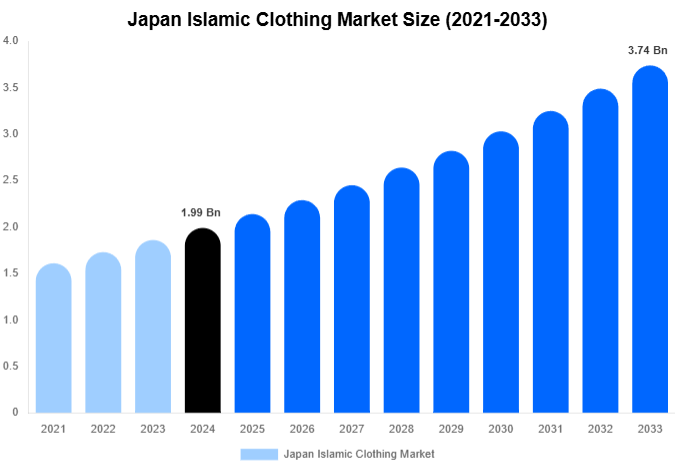
Source: DMI Analysis Company Publications, Primary Interviews.

Other Key Findings
- Japan accounted for 4.07% of the global Islamic Clothing Market size in 2025.
- By 2034, United States is expected to remain the top global market in terms of size.
- Within Asia Pacific, China is forecasted to dominate the regional Islamic Clothing Market size by 2034.
- Singapore will be the fastest-growing market in Asia Pacific, projected to achieve USD 1246.09 Billion by 2034.
Japan Islamic Clothing Market Dynamics
- Japan's Islamic clothing market is supported by increasing tourism, a growing Muslim expatriate population, and rising awareness of modest fashion. Consumers increasingly seek premium modest apparel featuring high-quality fabrics, contemporary designs, and functional comfort while maintaining cultural authenticity and everyday practicality.
- Specialty fashion retailers, department stores, brand-owned boutiques, online marketplaces, cross-border e-commerce platforms, and social commerce channels strengthen accessibility through diversified omnichannel distribution. Fashion brands increasingly expand digital engagement, improve product availability, and collaborate with international modest fashion labels to enhance consumer reach.
- Companies invest in premium fabrics, breathable textiles, sustainable materials, contemporary modest designs, customization services, and digital shopping experiences to strengthen competitive differentiation. Innovation also emphasizes lightweight collections, seasonal apparel, luxury modest wear, and inclusive fashion supporting evolving consumer preferences.
- Islamic clothing brands collaborate with textile manufacturers, fashion designers, retailers, logistics providers, tourism organizations, and digital commerce platforms to strengthen product quality and operational resilience. Continued investment in sustainable materials, premium craftsmanship, and omnichannel retail strategies reinforces competitiveness across Japan's Islamic clothing industry.
Key Industry Insights
- Premium fabrics enhance product appeal.
- Digital retail expands accessibility.
- Sustainable textiles strengthen differentiation.
- Contemporary designs attract wider audiences.
Japan Islamic Clothing Market Type 2026-2034 (USD Billion)
| Type | 2022 | 2023 | 2024 | 2025 | 2026 | 2027 | 2028 | 2029 | 2030 | 2031 | 2032 | 2033 | 2034 |
|---|---|---|---|---|---|---|---|---|---|---|---|---|---|
| Hijab | XX.x | XX.x | XX.x | XX.x | XX.x | XX.x | XX.x | XX.x | XX.x | XX.x | XX.x | XX.x | XX.x |
| Abaya | XX.x | XX.x | XX.x | XX.x | XX.x | XX.x | XX.x | XX.x | XX.x | XX.x | XX.x | XX.x | XX.x |
| Total | XX.x | XX.x | XX.x | XX.x | XX.x | XX.x | XX.x | XX.x | XX.x | XX.x | XX.x | XX.x | XX.x |
Source: DMI Analysis Company Publications, Primary Interviews.
Japan Islamic Clothing Market Distribution 2026-2034 (USD Billion)
| Distribution | 2022 | 2023 | 2024 | 2025 | 2026 | 2027 | 2028 | 2029 | 2030 | 2031 | 2032 | 2033 | 2034 |
|---|---|---|---|---|---|---|---|---|---|---|---|---|---|
| Online | XX.x | XX.x | XX.x | XX.x | XX.x | XX.x | XX.x | XX.x | XX.x | XX.x | XX.x | XX.x | XX.x |
| Offline | XX.x | XX.x | XX.x | XX.x | XX.x | XX.x | XX.x | XX.x | XX.x | XX.x | XX.x | XX.x | XX.x |
| Total | XX.x | XX.x | XX.x | XX.x | XX.x | XX.x | XX.x | XX.x | XX.x | XX.x | XX.x | XX.x | XX.x |
Source: DMI Analysis Company Publications, Primary Interviews.
Inside This Report
This section examines Japan's Islamic clothing market through evolving consumer preferences, product innovation, retail developments, and competitive strategies. It highlights how fashion brands strengthen competitiveness by expanding modest fashion collections, improving omnichannel retail capabilities, and investing in premium sustainable apparel.
- Country market landscape: Reviews Japan's Islamic clothing ecosystem.
- Consumer and purchasing trends: Explores modest fashion preferences.
- Product innovation and distribution: Covers apparel innovation and retail expansion.
- Competitive and industry developments: Highlights sustainability and brand strategies.
Report Summary
| Report Scope | Details |
|---|---|
| Base Year for Study | 2025 |
| Study Period | 2022-2034 |
| Historical Period | 2022-2024 |
| Forecast Period | 2026-2034 |
| Market Size In 2025 | USD 4014.18 Billion |
| Market Size In 2034 | USD 7346.7 Billion |
| Largest segment | Hijab |
| Units | Revenue in USD Billion |
| CAGR | 6.92% (2026-2034) |
| Report Coverage | Revenue Forecast, Competitive Landscape, Growth Factors, Environment & Regulatory Landscape and Trends |