United States Maternity Wear Market Size & Outlook, 2026-2034
Last Updated : 30 July, 2026 |
Study Period : 2022-2034 |
Format : PDF, Excel |
Author : Anna Morgan
United States Maternity Wear Market Insights
- Based on Deep Market Insights findings, the United States Maternity Wear Market reached USD 5819.83 Billion in 2025 and is estimated to attain USD 8497.23 Billion by 2034.
- From 2026 to 2034, the United States market is expected to grow at a steady CAGR of 4.33%.
- Within the Product category, Outerwear dominated in 2025 in terms of market size contribution.
- Over the forecast period, Activewear is forecasted to deliver the fastest growth, positioning it as the most lucrative Product segment.
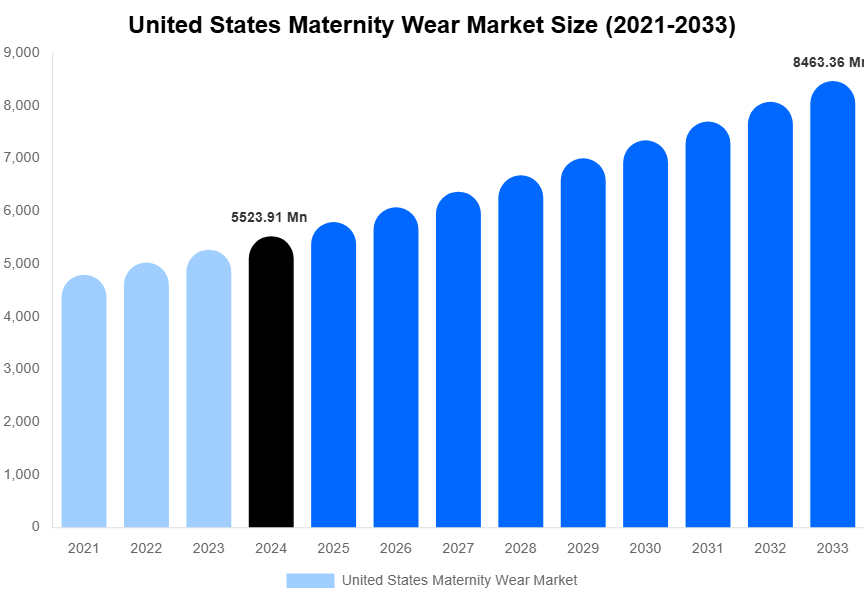
Source: DMI Analysis Company Publications, Primary Interviews.

Other Key Findings
- United States contributed 24.15% to the global Maternity Wear Market size in 2025.
- By 2034, United States is forecasted to remain the largest global market for Maternity Wear Market.
- In North America, United States is projected to capture the leading share of market size by 2034.
- Among North America markets, United States is expected to post the fastest growth, reaching USD 12.39 Billion by 2034.
United States Maternity Wear Market Dynamics
- The United States maternity wear market is driven by increasing consumer demand for fashionable maternity clothing, growing maternal wellness awareness, expanding online fashion retail, and rising preference for premium and sustainable apparel. Consumers increasingly purchase maternity dresses, casual wear, office wear, nursing apparel, leggings, athleisure, and postpartum clothing that combine comfort, style, and functionality.
- Maternity apparel manufacturers, specialty retailers, department stores, online marketplaces, baby product retailers, fashion brands, and direct-to-consumer companies strengthen market accessibility through omnichannel retail strategies. Companies increasingly improve personalized shopping experiences, premium fabrics, inclusive sizing, sustainable materials, and multifunctional clothing.
- Manufacturers invest in innovative textiles, seamless garment technologies, moisture-management fabrics, organic fibers, sustainable production methods, and digital retail solutions to strengthen competitive differentiation. Innovation also emphasizes nursing-friendly apparel, postpartum recovery clothing, athleisure maternity collections, and eco-conscious fashion.
- Market participants collaborate with textile suppliers, healthcare providers, fashion designers, retailers, and digital commerce platforms to strengthen product innovation and market expansion. Continued investment in premium maternity fashion, sustainable apparel, omnichannel retail, and functional clothing reinforces competitiveness across the United States maternity wear industry.
Key Market Insights
- Fashion-conscious consumers strengthen demand.
- Sustainable apparel expands adoption.
- Athleisure supports market growth.
- Omnichannel retail improves accessibility.
United States Maternity Wear Market Product 2026-2034 (USD Billion)
| Product | 2022 | 2023 | 2024 | 2025 | 2026 | 2027 | 2028 | 2029 | 2030 | 2031 | 2032 | 2033 | 2034 |
|---|---|---|---|---|---|---|---|---|---|---|---|---|---|
| Outerwear | XX.x | XX.x | XX.x | 3093.82 | XX.x | XX.x | XX.x | XX.x | XX.x | XX.x | XX.x | XX.x | XX.x |
| Innerwear | XX.x | XX.x | XX.x | XX.x | XX.x | XX.x | XX.x | XX.x | XX.x | XX.x | XX.x | XX.x | XX.x |
| Activewear | XX.x | XX.x | XX.x | XX.x | XX.x | XX.x | XX.x | XX.x | XX.x | XX.x | XX.x | XX.x | XX.x |
| Total | XX.x | XX.x | XX.x | 5,819.83 | XX.x | XX.x | XX.x | XX.x | XX.x | XX.x | XX.x | XX.x | XX.x |
Source: DMI Analysis Company Publications, Primary Interviews.
United States Maternity Wear Market Distribution 2026-2034 (USD Billion)
| Distribution | 2022 | 2023 | 2024 | 2025 | 2026 | 2027 | 2028 | 2029 | 2030 | 2031 | 2032 | 2033 | 2034 |
|---|---|---|---|---|---|---|---|---|---|---|---|---|---|
| Offline | XX.x | XX.x | XX.x | XX.x | XX.x | XX.x | XX.x | XX.x | XX.x | XX.x | XX.x | XX.x | XX.x |
| Online | XX.x | XX.x | XX.x | XX.x | XX.x | XX.x | XX.x | XX.x | XX.x | XX.x | XX.x | XX.x | XX.x |
| Total | XX.x | XX.x | XX.x | XX.x | XX.x | XX.x | XX.x | XX.x | XX.x | XX.x | XX.x | XX.x | XX.x |
Source: DMI Analysis Company Publications, Primary Interviews.
United States Maternity Wear Market Material 2026-2034 (USD Billion)
| Material | 2022 | 2023 | 2024 | 2025 | 2026 | 2027 | 2028 | 2029 | 2030 | 2031 | 2032 | 2033 | 2034 |
|---|---|---|---|---|---|---|---|---|---|---|---|---|---|
| Cotton | XX.x | XX.x | XX.x | XX.x | XX.x | XX.x | XX.x | XX.x | XX.x | XX.x | XX.x | XX.x | XX.x |
| Blends | XX.x | XX.x | XX.x | XX.x | XX.x | XX.x | XX.x | XX.x | XX.x | XX.x | XX.x | XX.x | XX.x |
| Total | XX.x | XX.x | XX.x | XX.x | XX.x | XX.x | XX.x | XX.x | XX.x | XX.x | XX.x | XX.x | XX.x |
Source: DMI Analysis Company Publications, Primary Interviews.
United States Maternity Wear Market By Product Type 2026-2034 (USD Billion)
| By Product Type | 2022 | 2023 | 2024 | 2025 | 2026 | 2027 | 2028 | 2029 | 2030 | 2031 | 2032 | 2033 | 2034 |
|---|---|---|---|---|---|---|---|---|---|---|---|---|---|
| Tops | XX.x | XX.x | XX.x | 3.06 | XX.x | XX.x | XX.x | XX.x | XX.x | XX.x | XX.x | XX.x | XX.x |
| Dresses | XX.x | XX.x | XX.x | XX.x | XX.x | XX.x | XX.x | XX.x | XX.x | XX.x | XX.x | XX.x | XX.x |
| Bottom Wear | XX.x | XX.x | XX.x | XX.x | XX.x | XX.x | XX.x | XX.x | XX.x | XX.x | XX.x | XX.x | XX.x |
| Total | XX.x | XX.x | XX.x | 5.74 | XX.x | XX.x | XX.x | XX.x | XX.x | XX.x | XX.x | XX.x | XX.x |
Source: DMI Analysis Company Publications, Primary Interviews.
United States Maternity Wear Market By Material 2026-2034 (USD Billion)
| By Material | 2022 | 2023 | 2024 | 2025 | 2026 | 2027 | 2028 | 2029 | 2030 | 2031 | 2032 | 2033 | 2034 |
|---|---|---|---|---|---|---|---|---|---|---|---|---|---|
| Cotton | XX.x | XX.x | XX.x | 2.59 | XX.x | XX.x | XX.x | XX.x | XX.x | XX.x | XX.x | XX.x | XX.x |
| Polyester | XX.x | XX.x | XX.x | XX.x | XX.x | XX.x | XX.x | XX.x | XX.x | XX.x | XX.x | XX.x | XX.x |
| Spandex Blends | XX.x | XX.x | XX.x | XX.x | XX.x | XX.x | XX.x | XX.x | XX.x | XX.x | XX.x | XX.x | XX.x |
| Total | XX.x | XX.x | XX.x | 5.74 | XX.x | XX.x | XX.x | XX.x | XX.x | XX.x | XX.x | XX.x | XX.x |
Source: DMI Analysis Company Publications, Primary Interviews.
United States Maternity Wear Market By Distribution Channel 2026-2034 (USD Billion)
| By Distribution Channel | 2022 | 2023 | 2024 | 2025 | 2026 | 2027 | 2028 | 2029 | 2030 | 2031 | 2032 | 2033 | 2034 |
|---|---|---|---|---|---|---|---|---|---|---|---|---|---|
| Specialty Stores | XX.x | XX.x | XX.x | 3.03 | XX.x | XX.x | XX.x | XX.x | XX.x | XX.x | XX.x | XX.x | XX.x |
| Department Stores | XX.x | XX.x | XX.x | XX.x | XX.x | XX.x | XX.x | XX.x | XX.x | XX.x | XX.x | XX.x | XX.x |
| Online Retail | XX.x | XX.x | XX.x | XX.x | XX.x | XX.x | XX.x | XX.x | XX.x | XX.x | XX.x | XX.x | XX.x |
| Total | XX.x | XX.x | XX.x | 5.74 | XX.x | XX.x | XX.x | XX.x | XX.x | XX.x | XX.x | XX.x | XX.x |
Source: DMI Analysis Company Publications, Primary Interviews.
United States Maternity Wear Market By End User 2026-2034 (USD Billion)
| By End User | 2022 | 2023 | 2024 | 2025 | 2026 | 2027 | 2028 | 2029 | 2030 | 2031 | 2032 | 2033 | 2034 |
|---|---|---|---|---|---|---|---|---|---|---|---|---|---|
| Pregnant Women | XX.x | XX.x | XX.x | 2.63 | XX.x | XX.x | XX.x | XX.x | XX.x | XX.x | XX.x | XX.x | XX.x |
| Postpartum Women | XX.x | XX.x | XX.x | XX.x | XX.x | XX.x | XX.x | XX.x | XX.x | XX.x | XX.x | XX.x | XX.x |
| Nursing Mothers | XX.x | XX.x | XX.x | XX.x | XX.x | XX.x | XX.x | XX.x | XX.x | XX.x | XX.x | XX.x | XX.x |
| Total | XX.x | XX.x | XX.x | 5.74 | XX.x | XX.x | XX.x | XX.x | XX.x | XX.x | XX.x | XX.x | XX.x |
Source: DMI Analysis Company Publications, Primary Interviews.
United States Maternity Wear Market By Application 2026-2034 (USD Billion)
| By Application | 2022 | 2023 | 2024 | 2025 | 2026 | 2027 | 2028 | 2029 | 2030 | 2031 | 2032 | 2033 | 2034 |
|---|---|---|---|---|---|---|---|---|---|---|---|---|---|
| Casual Wear | XX.x | XX.x | XX.x | 2.88 | XX.x | XX.x | XX.x | XX.x | XX.x | XX.x | XX.x | XX.x | XX.x |
| Workwear | XX.x | XX.x | XX.x | XX.x | XX.x | XX.x | XX.x | XX.x | XX.x | XX.x | XX.x | XX.x | XX.x |
| Nightwear | XX.x | XX.x | XX.x | XX.x | XX.x | XX.x | XX.x | XX.x | XX.x | XX.x | XX.x | XX.x | XX.x |
| Total | XX.x | XX.x | XX.x | 5.74 | XX.x | XX.x | XX.x | XX.x | XX.x | XX.x | XX.x | XX.x | XX.x |
Source: DMI Analysis Company Publications, Primary Interviews.
Report Summary
| Report Scope | Details |
|---|---|
| Base Year for Study | 2025 |
| Study Period | 2022-2034 |
| Historical Period | 2022-2024 |
| Forecast Period | 2026-2034 |
| Market Size In 2025 | USD 5819.83 Billion |
| Market Size In 2034 | USD 8497.23 Billion |
| Largest segment | Outerwear |
| Units | Revenue in USD Billion |
| CAGR | 4.33% (2026-2034) |
| Report Coverage | Revenue Forecast, Competitive Landscape, Growth Factors, Environment & Regulatory Landscape and Trends |