Asia Pacific Luxury Handbag Market Size & Outlook, 2026-2034
Last Updated : 15 July, 2026 |
Study Period : 2022-2034 |
Format : PDF, Excel |
Author : Anna Morgan
Asia Pacific Luxury Handbag Market Insights
- Deep Market Insights analysis indicates that the Asia Pacific Luxury Handbag Market size, which was USD 8602.72 Million in 2025, is projected to attain USD 14899.83 Million by 2034.
- The market is expected to register a CAGR of 6.24% over the period 2026–2034.
- In 2025, Sustainable Leather emerged as the dominant Type based on market size.
- Sustainable Leather is projected to register the fastest growth, positioning it as the most attractive Type segment over the forecast horizon.
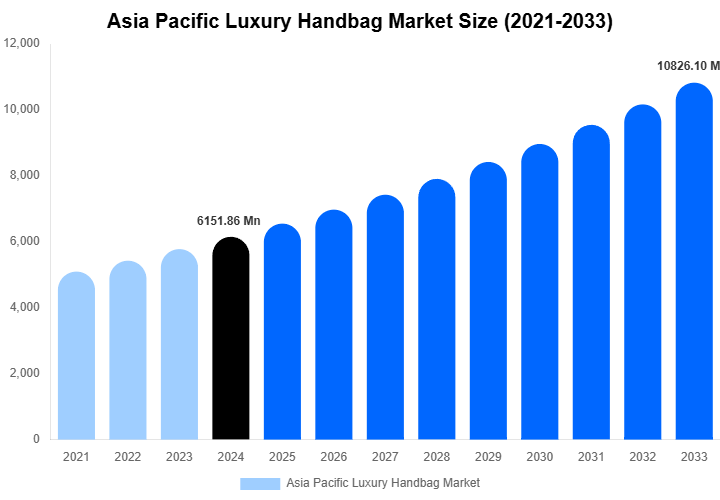
Source: DMI Analysis Company Publications, Primary Interviews.

Other Key Findings
- Asia Pacific held 35.45% share of the global Luxury Handbag Market size in 2025.
- United States is expected to remain the largest contributor to the global market size by 2034.
- By 2034, India is anticipated to record the highest growth in Asia Pacific, with the market size expected to reach USD 1872.32 Million.
Asia Pacific Luxury Handbag Market Market Dynamics
- Asia Pacific's luxury handbag market continues expanding through rising premium fashion consumption, growing affluent populations, and increasing demand for globally recognized luxury brands. Consumers increasingly seek exclusive collections, personalized products, and digitally enhanced shopping experiences that combine prestige with authenticity.
- Luxury boutiques, premium shopping malls, department stores, travel retail outlets, luxury e-commerce platforms, and authenticated resale marketplaces collectively strengthen regional market accessibility. Digital commerce continues complementing traditional luxury retail across major metropolitan markets.
- Product innovation emphasizes sustainable materials, AI-powered personalization, digital authentication, limited-edition launches, premium after-sales services, and circular luxury initiatives. Brands continue integrating omnichannel engagement with localized customer experiences to improve long-term loyalty.
- Competitive strategies focus on brand exclusivity, premium craftsmanship, experiential retail, sustainability commitments, and strategic expansion across emerging luxury destinations. Companies increasingly strengthen direct customer relationships through personalized services, digital innovation, and regional flagship store investments.
Key Industry Insights
- Asia Pacific represents one of the fastest-expanding regions for global luxury consumption.
- Luxury e-commerce continues increasing across major metropolitan markets.
- Younger consumers contribute significantly to premium handbag purchases.
- Authenticated resale platforms strengthen confidence in pre-owned luxury products.
Asia Pacific Luxury Handbag Market Country 2026-2034 (USD Million)
| Asia Pacific | 2022 | 2023 | 2024 | 2025 | 2026 | 2027 | 2028 | 2029 | 2030 | 2031 | 2032 | 2033 | 2034 |
|---|---|---|---|---|---|---|---|---|---|---|---|---|---|
| China | XX.x | XX.x | XX.x | 2062.19 | XX.x | XX.x | XX.x | XX.x | XX.x | XX.x | XX.x | XX.x | XX.x |
| India | XX.x | XX.x | XX.x | XX.x | XX.x | XX.x | XX.x | XX.x | XX.x | XX.x | XX.x | XX.x | XX.x |
| Japan | XX.x | XX.x | XX.x | XX.x | XX.x | XX.x | XX.x | XX.x | XX.x | XX.x | XX.x | XX.x | XX.x |
| Korea | XX.x | XX.x | XX.x | XX.x | XX.x | XX.x | XX.x | XX.x | XX.x | XX.x | XX.x | XX.x | XX.x |
| Taiwan | XX.x | XX.x | XX.x | XX.x | XX.x | XX.x | XX.x | XX.x | XX.x | XX.x | XX.x | XX.x | XX.x |
| Australia | XX.x | XX.x | XX.x | XX.x | XX.x | XX.x | XX.x | XX.x | XX.x | XX.x | XX.x | XX.x | XX.x |
| Singapore | XX.x | XX.x | XX.x | XX.x | XX.x | XX.x | XX.x | XX.x | XX.x | XX.x | XX.x | XX.x | XX.x |
| South East Asia | XX.x | XX.x | XX.x | XX.x | XX.x | XX.x | XX.x | XX.x | XX.x | XX.x | XX.x | XX.x | XX.x |
| Total | XX.x | XX.x | XX.x | 5,425.40 | XX.x | XX.x | XX.x | XX.x | XX.x | XX.x | XX.x | XX.x | XX.x |
Source: DMI Analysis Company Publications, Primary Interviews.
Asia Pacific Luxury Handbag Market Type 2026-2034 (USD Million)
| Type | 2022 | 2023 | 2024 | 2025 | 2026 | 2027 | 2028 | 2029 | 2030 | 2031 | 2032 | 2033 | 2034 |
|---|---|---|---|---|---|---|---|---|---|---|---|---|---|
| Sustainable Leather | XX.x | XX.x | XX.x | 3915.96 | XX.x | XX.x | XX.x | XX.x | XX.x | XX.x | XX.x | XX.x | XX.x |
| Sustainable PU Coated Leather | XX.x | XX.x | XX.x | XX.x | XX.x | XX.x | XX.x | XX.x | XX.x | XX.x | XX.x | XX.x | XX.x |
| Sustainable Bio Materials | XX.x | XX.x | XX.x | XX.x | XX.x | XX.x | XX.x | XX.x | XX.x | XX.x | XX.x | XX.x | XX.x |
| Sustainable Fabrics | XX.x | XX.x | XX.x | XX.x | XX.x | XX.x | XX.x | XX.x | XX.x | XX.x | XX.x | XX.x | XX.x |
| Total | XX.x | XX.x | XX.x | 8,602.72 | XX.x | XX.x | XX.x | XX.x | XX.x | XX.x | XX.x | XX.x | XX.x |
Source: DMI Analysis Company Publications, Primary Interviews.
Asia Pacific Luxury Handbag Market End Users 2026-2034 (USD Million)
| End Users | 2022 | 2023 | 2024 | 2025 | 2026 | 2027 | 2028 | 2029 | 2030 | 2031 | 2032 | 2033 | 2034 |
|---|---|---|---|---|---|---|---|---|---|---|---|---|---|
| Offline | XX.x | XX.x | XX.x | XX.x | XX.x | XX.x | XX.x | XX.x | XX.x | XX.x | XX.x | XX.x | XX.x |
| Online | XX.x | XX.x | XX.x | XX.x | XX.x | XX.x | XX.x | XX.x | XX.x | XX.x | XX.x | XX.x | XX.x |
| Total | XX.x | XX.x | XX.x | XX.x | XX.x | XX.x | XX.x | XX.x | XX.x | XX.x | XX.x | XX.x | XX.x |
Source: DMI Analysis Company Publications, Primary Interviews.
Asia Pacific Luxury Handbag Market By Product Type 2026-2034 (USD Million)
| By Product Type | 2022 | 2023 | 2024 | 2025 | 2026 | 2027 | 2028 | 2029 | 2030 | 2031 | 2032 | 2033 | 2034 |
|---|---|---|---|---|---|---|---|---|---|---|---|---|---|
| Tote bags | XX.x | XX.x | XX.x | 2360.04 | XX.x | XX.x | XX.x | XX.x | XX.x | XX.x | XX.x | XX.x | XX.x |
| Shoulder bags | XX.x | XX.x | XX.x | XX.x | XX.x | XX.x | XX.x | XX.x | XX.x | XX.x | XX.x | XX.x | XX.x |
| Crossbody bags | XX.x | XX.x | XX.x | XX.x | XX.x | XX.x | XX.x | XX.x | XX.x | XX.x | XX.x | XX.x | XX.x |
| Clutches | XX.x | XX.x | XX.x | XX.x | XX.x | XX.x | XX.x | XX.x | XX.x | XX.x | XX.x | XX.x | XX.x |
| Total | XX.x | XX.x | XX.x | 5,425.38 | XX.x | XX.x | XX.x | XX.x | XX.x | XX.x | XX.x | XX.x | XX.x |
Source: DMI Analysis Company Publications, Primary Interviews.
Asia Pacific Luxury Handbag Market By Material 2026-2034 (USD Million)
| By Material | 2022 | 2023 | 2024 | 2025 | 2026 | 2027 | 2028 | 2029 | 2030 | 2031 | 2032 | 2033 | 2034 |
|---|---|---|---|---|---|---|---|---|---|---|---|---|---|
| Leather | XX.x | XX.x | XX.x | 2182.09 | XX.x | XX.x | XX.x | XX.x | XX.x | XX.x | XX.x | XX.x | XX.x |
| Canvas | XX.x | XX.x | XX.x | XX.x | XX.x | XX.x | XX.x | XX.x | XX.x | XX.x | XX.x | XX.x | XX.x |
| Suede | XX.x | XX.x | XX.x | XX.x | XX.x | XX.x | XX.x | XX.x | XX.x | XX.x | XX.x | XX.x | XX.x |
| Exotic leather | XX.x | XX.x | XX.x | XX.x | XX.x | XX.x | XX.x | XX.x | XX.x | XX.x | XX.x | XX.x | XX.x |
| Total | XX.x | XX.x | XX.x | 5,425.39 | XX.x | XX.x | XX.x | XX.x | XX.x | XX.x | XX.x | XX.x | XX.x |
Source: DMI Analysis Company Publications, Primary Interviews.
Asia Pacific Luxury Handbag Market By End User 2026-2034 (USD Million)
| By End User | 2022 | 2023 | 2024 | 2025 | 2026 | 2027 | 2028 | 2029 | 2030 | 2031 | 2032 | 2033 | 2034 |
|---|---|---|---|---|---|---|---|---|---|---|---|---|---|
| Women | XX.x | XX.x | XX.x | 2197.83 | XX.x | XX.x | XX.x | XX.x | XX.x | XX.x | XX.x | XX.x | XX.x |
| Men | XX.x | XX.x | XX.x | XX.x | XX.x | XX.x | XX.x | XX.x | XX.x | XX.x | XX.x | XX.x | XX.x |
| Unisex | XX.x | XX.x | XX.x | XX.x | XX.x | XX.x | XX.x | XX.x | XX.x | XX.x | XX.x | XX.x | XX.x |
| Luxury collectors | XX.x | XX.x | XX.x | XX.x | XX.x | XX.x | XX.x | XX.x | XX.x | XX.x | XX.x | XX.x | XX.x |
| Total | XX.x | XX.x | XX.x | 5,425.39 | XX.x | XX.x | XX.x | XX.x | XX.x | XX.x | XX.x | XX.x | XX.x |
Source: DMI Analysis Company Publications, Primary Interviews.
Asia Pacific Luxury Handbag Market By Distribution Channel 2026-2034 (USD Million)
| By Distribution Channel | 2022 | 2023 | 2024 | 2025 | 2026 | 2027 | 2028 | 2029 | 2030 | 2031 | 2032 | 2033 | 2034 |
|---|---|---|---|---|---|---|---|---|---|---|---|---|---|
| Luxury boutiques | XX.x | XX.x | XX.x | 2213.56 | XX.x | XX.x | XX.x | XX.x | XX.x | XX.x | XX.x | XX.x | XX.x |
| Department stores | XX.x | XX.x | XX.x | XX.x | XX.x | XX.x | XX.x | XX.x | XX.x | XX.x | XX.x | XX.x | XX.x |
| Online retail | XX.x | XX.x | XX.x | XX.x | XX.x | XX.x | XX.x | XX.x | XX.x | XX.x | XX.x | XX.x | XX.x |
| Brand stores | XX.x | XX.x | XX.x | XX.x | XX.x | XX.x | XX.x | XX.x | XX.x | XX.x | XX.x | XX.x | XX.x |
| Total | XX.x | XX.x | XX.x | 5,425.39 | XX.x | XX.x | XX.x | XX.x | XX.x | XX.x | XX.x | XX.x | XX.x |
Source: DMI Analysis Company Publications, Primary Interviews.
Inside This Report
This section examines the Asia Pacific luxury handbag market through premium retail trends, consumer preferences, product innovation, sustainability initiatives, and competitive strategies. It highlights how digital commerce, luxury branding, and personalized customer experiences influence commercial activity across the regional luxury handbag industry.
- Regional market landscape: Reviews luxury retail ecosystem and premium distribution channels.
- Consumer and purchasing trends: Explores luxury fashion purchasing behavior and lifestyle preferences.
- Product innovation and distribution: Covers authentication technologies, sustainable materials, and personalization.
- Competitive and industry developments: Highlights experiential retail, premium branding, and circular luxury initiatives.
Report Summary
| Report Scope | Details |
|---|---|
| Base Year for Study | 2025 |
| Study Period | 2022-2034 |
| Historical Period | 2022-2024 |
| Forecast Period | 2026-2034 |
| Market Size In 2025 | USD 8602.72 Million |
| Market Size In 2034 | USD 14899.83 Million |
| Largest segment | Sustainable Leather |
| Units | Revenue in USD Million |
| CAGR | 6.24% (2026-2034) |
| Report Coverage | Revenue Forecast, Competitive Landscape, Growth Factors, Environment & Regulatory Landscape and Trends |