Top 6 Companies DJ Controller Market: Leading Manufacturers, Product Strategies, and Competitive Insights
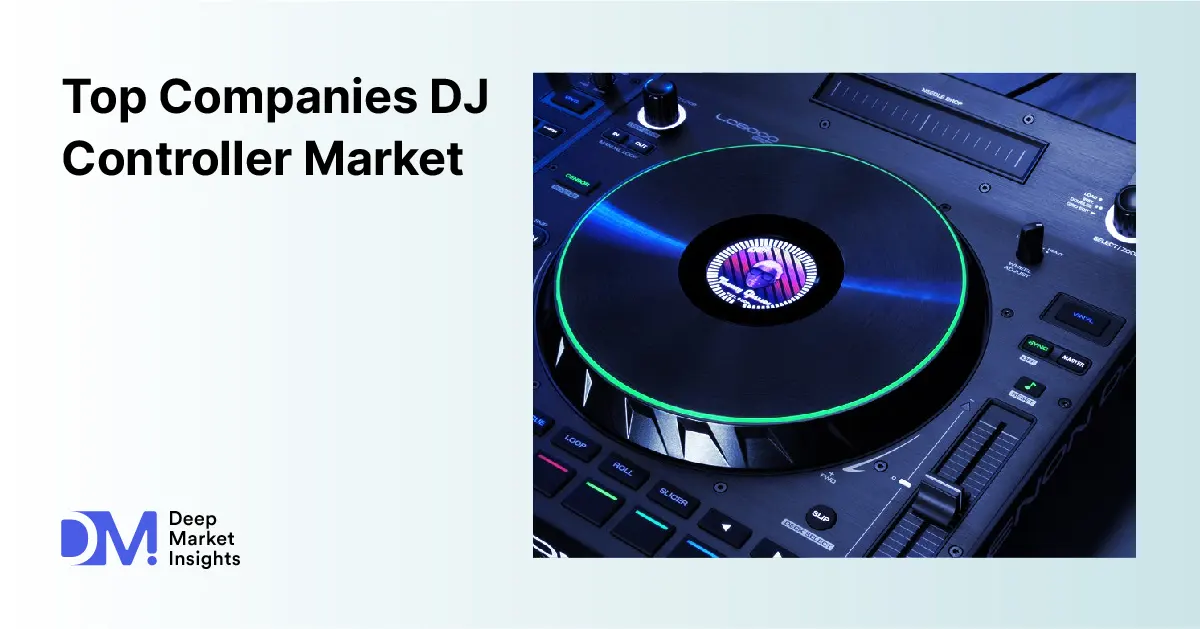
The DJ controller market is a specialized segment within the professional audio equipment industry, serving DJs, event organizers, clubs, music producers, and entertainment businesses. DJ controllers combine hardware interfaces with digital mixing software, allowing users to manage tracks, effects, and transitions from a single platform. The market includes entry-level controllers priced around USD 100–300, mid-range products in the USD 400–1,000 segment, and premium professional systems exceeding USD 2,500.The Top Companies DJ Controller Market is dominated by a handful of global manufacturers with extensive distribution networks and strong brand recognition. Professional-grade controllers account for an estimated 55–60% of total market value, while beginner and hobbyist products contribute significantly to unit sales. Growing demand from live events, music festivals, streaming DJs, and home studios continues to drive product innovation across the industry.
What is the DJ Controller Market?
The DJ controller market consists of hardware devices designed to control DJ software and digital audio workstations. These devices typically feature jog wheels, performance pads, mixers, faders, and effects controls integrated into a single unit.
DJ controllers are widely used in:
-
Nightclubs and entertainment venues
-
Event production companies
-
Mobile DJ services
-
Music production studios
-
Educational institutions offering music technology programs
The market spans compact two-channel controllers, four-channel professional systems, standalone performance units, and integrated mixer-controller combinations.
Top Companies DJ Controller Market: Market Overview with Data
The global DJ controller ecosystem supports millions of active users ranging from amateur performers to professional touring artists. Annual unit shipments across major brands are estimated in the hundreds of thousands of controllers, with premium professional models representing a smaller portion of volume but a significantly higher share of revenue.
Key market indicators include:
-
Entry-level controller pricing: USD 100–300
-
Mid-tier controller pricing: USD 400–1,000
-
Premium professional systems: USD 1,500–3,500+
-
North America accounts for approximately 30–35% of premium controller demand
-
Europe contributes around 25–30% of industry consumption
-
Asia-Pacific represents roughly 30% of unit sales due to a large base of aspiring DJs and music creators
-
Professional club installations account for nearly 40% of premium hardware spending
Technology integration, standalone operation capabilities, wireless connectivity, and software ecosystem compatibility remain major purchasing criteria for professional buyers.
Top Companies in DJ Controller Market
AlphaTheta Corporation (Pioneer DJ)
AlphaTheta, formerly known primarily through the Pioneer DJ brand, remains the most influential company in the DJ controller market. The company’s DDJ series, XDJ systems, and professional club equipment have established a strong presence in clubs, festivals, and performance venues worldwide. Many industry participants estimate that Pioneer DJ products represent over 40% of the professional DJ controller segment in value terms.The company operates in more than 100 countries through distributors and retail partners. Its product portfolio ranges from beginner-friendly DDJ-FLX models to premium standalone performance systems priced above USD 2,000. AlphaTheta's strategy focuses on ecosystem integration, ensuring compatibility across controllers, mixers, media players, and software platforms. This approach strengthens customer retention and positions the company as the benchmark brand for professional DJs and venue operators.
InMusic Brands (Numark and Denon DJ)

InMusic is a major player in the DJ controller market through brands such as Numark and Denon DJ. Numark focuses on entry-level and intermediate users, while Denon DJ targets professional performers with advanced standalone systems and performance controllers.The company generates revenue across multiple audio technology categories and serves customers in more than 120 countries. Denon DJ products compete directly with premium market leaders, offering high-resolution touchscreens, onboard music processing, and standalone functionality. Numark maintains a strong presence in the USD 150–500 price range, making it attractive for educational institutions, rental providers, and new DJs.InMusic’s growth strategy emphasizes product diversification, software integration, and broad channel distribution. By addressing both entry-level and professional segments, the company maintains a balanced market position and significant global reach.
Hercules (Guillemot Corporation)

Hercules has established itself as a leading supplier of beginner and consumer-focused DJ controllers. The brand is particularly strong among first-time users, students, hobbyists, and digital content creators seeking affordable and easy-to-use equipment.Many Hercules controllers are priced between USD 100 and USD 400, making them highly competitive in the entry-level market. The company benefits from Guillemot Corporation’s expertise in gaming and digital peripherals, enabling efficient manufacturing and distribution processes.Hercules emphasizes accessibility through bundled software, educational content, and intuitive hardware layouts. Its DJControl series is widely adopted by training centers and emerging DJs. The company’s strategy centers on volume-driven sales, broad retail availability, and continuous product updates. This positioning allows Hercules to maintain strong visibility in a market segment where affordability and ease of use drive purchasing decisions.
Roland Corporation

Roland is a globally recognized manufacturer of electronic musical instruments and professional audio equipment. In the DJ controller market, the company differentiates itself through innovation, sound processing expertise, and integration with electronic music production workflows.Roland generates annual revenues exceeding USD 500 million across its broader music technology portfolio. Its DJ products often incorporate proprietary audio technologies and advanced performance features tailored to professional users.The company’s DJ controller lineup appeals to performers who require robust build quality, low-latency operation, and integration with synthesizers and production equipment. Roland’s strategic focus involves leveraging its long-standing reputation in electronic music while targeting niche professional segments. This approach enables the company to compete on performance quality rather than volume alone, strengthening its position among advanced users and live performers.
Native Instruments

Native Instruments occupies a unique position in the DJ controller market through its close integration of hardware and software. The company’s Traktor ecosystem combines DJ software, controllers, and performance tools into a unified platform.The company serves customers across Europe, North America, and Asia, with a strong presence among electronic music producers and performance-oriented DJs. Traktor controllers are widely recognized for creative workflow capabilities and advanced software functionality.Native Instruments focuses on value-added software integration rather than competing solely on hardware specifications. This strategy allows the company to maintain relevance in a highly competitive environment. Its products typically occupy the USD 300–1,000 price range, appealing to intermediate and professional users seeking enhanced creative control. Strong brand loyalty within electronic music communities continues to support the company’s market position.
Rane DJ

Rane DJ is widely regarded as a premium-performance brand within the professional DJ equipment segment. Known for high-quality mixers and performance controllers, the company targets demanding users in clubs, touring events, and professional entertainment environments.Many Rane controllers and performance systems are priced between USD 1,000 and USD 2,500, positioning the brand firmly within the premium category. The company focuses on durability, precision engineering, and advanced performance features.Rane’s market strategy centers on serving professionals who prioritize reliability and performance over entry-level affordability. The brand has gained recognition among scratch DJs, turntablists, and performance artists. Through continuous product innovation and integration with leading DJ software platforms, Rane maintains a strong competitive presence despite operating in a relatively specialized segment of the broader DJ controller market.
Competitive Landscape Insights
Market Share Distribution
The competitive structure of the DJ controller industry remains relatively concentrated:
-
AlphaTheta (Pioneer DJ): 40–45%
-
InMusic brands: 20–25%
-
Native Instruments: 8–10%
-
Hercules: 8–10%
-
Roland: 5–7%
-
Rane and other manufacturers: 10–15%
Pricing Segmentation
The market is generally divided into three pricing tiers:
|
Segment |
Price Range |
|
Entry Level |
USD 100–300 |
|
Mid-Range |
USD 400–1,000 |
|
Premium Professional |
USD 1,500–3,500+ |
Premium products generate a disproportionately large share of revenue despite lower shipment volumes.
Supply Chain Insights
Most manufacturers rely on global electronics supply chains concentrated in Asia for component sourcing and assembly. Distribution networks include specialized music equipment retailers, online marketplaces, professional audio distributors, and direct-to-consumer channels. Software compatibility and ecosystem support have become increasingly important competitive differentiators alongside hardware quality and pricing.
The Top Companies DJ Controller Market is led by AlphaTheta (Pioneer DJ), followed by major competitors such as InMusic, Hercules, Roland, Native Instruments, and Rane. These companies compete through product innovation, software integration, distribution reach, and brand reputation. While entry-level controllers drive volume sales, premium professional systems generate substantial revenue and influence purchasing decisions across clubs, event companies, and professional entertainment providers. As buyers increasingly prioritize ecosystem compatibility and performance features, leading manufacturers continue to strengthen their positions through differentiated product portfolios and strategic market segmentation.