Top 6 Companies in Kitchen Appliances Market | Industry Analysis
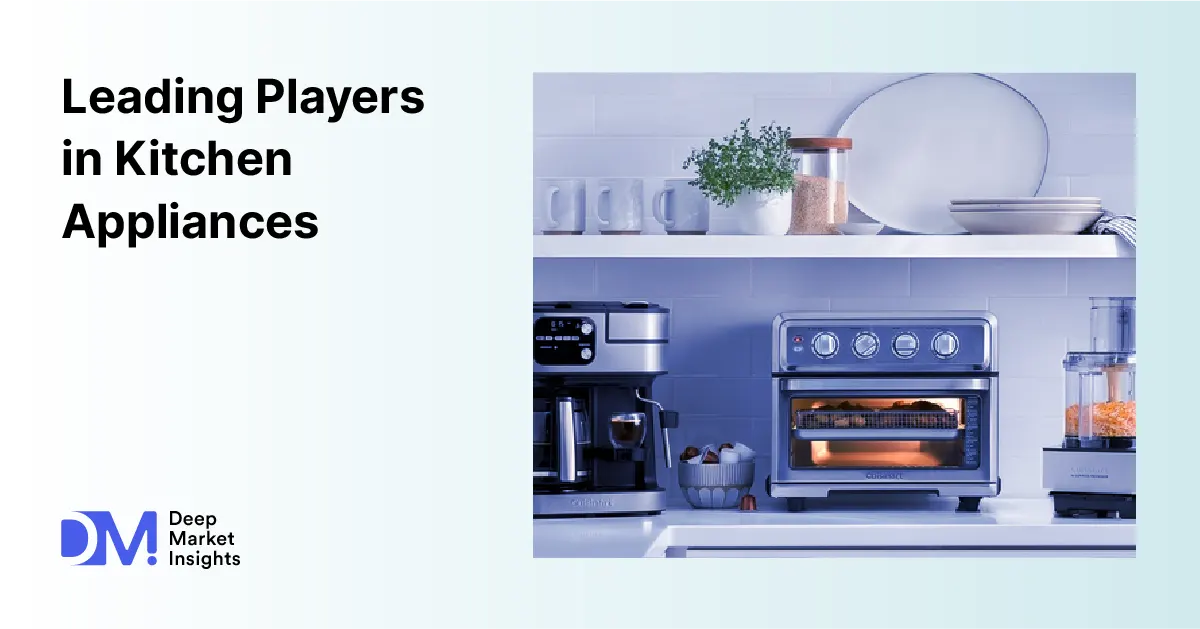
The Leading Players in Kitchen Appliances market represents one of the most dynamic segments within the global consumer goods industry. Kitchen appliances have evolved from basic utility products into technology-driven solutions that improve convenience, energy efficiency, and food preparation capabilities. The market includes refrigerators, microwave ovens, dishwashers, cooktops, range hoods, blenders, mixers, and other countertop appliances.Global annual production of major kitchen appliances exceeds 500 million units, while premium smart appliances can account for 20–30% higher average selling prices than conventional models. Typical retail pricing ranges from USD 50–300 for small appliances and USD 500–3,000 for large kitchen equipment. Rising urbanization, smart home adoption, and replacement demand continue to support purchasing activity among residential and commercial buyers.
Leading Players in Kitchen Appliances Market Overview with Data
The Leading Players in Kitchen Appliances market serves households, hospitality operators, foodservice businesses, and institutional kitchens. Large appliances such as refrigerators and dishwashers contribute a substantial share of industry revenue, while small appliances generate high-volume sales.
Key market indicators include:
-
Global kitchen appliance consumption exceeds 450 million units annually.
-
Asia-Pacific accounts for approximately 45% of total manufacturing output due to large-scale production hubs.
-
North America contributes roughly 25% of premium appliance demand.
-
Average refrigerator prices range between USD 600 and USD 2,500.
-
Built-in kitchen appliance systems often command prices above USD 3,000 per installation.
-
Smart appliance penetration in developed markets has surpassed 30% of new appliance purchases.
-
Energy-efficient models can reduce electricity consumption by 15–40% compared with older products.
Manufacturers continue investing in connected appliances, advanced sensors, and energy management technologies to strengthen competitive differentiation.
Top Companies in Leading Players in Kitchen Appliances Market
Whirlpool Corporation

Whirlpool Corporation remains one of the most recognized names in the global kitchen appliance industry. The company operates across multiple regions and markets products through brands including Whirlpool, KitchenAid, Maytag, and JennAir. With annual revenue exceeding USD 19 billion, Whirlpool maintains a strong presence in refrigerators, cooking appliances, dishwashers, and food preparation equipment.The company’s product portfolio targets both mass-market and premium consumers. KitchenAid, in particular, holds a strong position in stand mixers and premium kitchen appliances. Whirlpool emphasizes product reliability, energy efficiency, and smart connectivity features.Its market strategy focuses on premiumization, operational efficiency, and innovation-driven product launches. The company also continues to invest in manufacturing modernization and supply chain optimization to support large-scale production volumes. Strong distribution relationships across retail and e-commerce channels further reinforce Whirlpool's competitive position.
Haier Smart Home

Haier Smart Home has developed into one of the world's largest appliance manufacturers through organic growth and strategic acquisitions. The company markets products under brands such as Haier, GE Appliances, Casarte, and Fisher & Paykel.The business generates annual revenue exceeding USD 35 billion and maintains manufacturing operations across Asia, Europe, and North America. Its kitchen appliance portfolio includes refrigerators, ovens, microwaves, dishwashers, and integrated smart kitchen systems.Haier's market positioning centers on connected home ecosystems and localized product development. The company has invested heavily in Internet of Things (IoT) integration, allowing users to manage appliances through mobile applications and smart home platforms.Its extensive manufacturing network supports production volumes reaching tens of millions of units annually. Haier's broad geographic presence enables it to serve both premium and value-oriented market segments effectively.
Midea Group

Midea Group is a major global appliance manufacturer known for high-volume production capabilities and extensive international reach. The company serves both branded and original equipment manufacturing (OEM) markets, making it a significant supplier within the kitchen appliance value chain.The company reports annual revenue above USD 50 billion and produces a wide range of products including microwave ovens, refrigerators, induction cookers, dishwashers, and small kitchen appliances. Midea's large-scale manufacturing footprint provides cost advantages and production flexibility.Midea's competitive strategy combines technological innovation with efficient manufacturing. The company invests substantially in automation and smart factory initiatives to improve productivity and quality consistency.Its strong presence in emerging markets, combined with growing premium product offerings, allows Midea to compete across multiple pricing tiers. The company's OEM capabilities also strengthen its influence throughout the global appliance supply ecosystem.
Samsung Electronics
Samsung Electronics has established a strong position in the premium kitchen appliance segment through technology integration and smart home connectivity. The company leverages its broader consumer electronics expertise to differentiate its kitchen product portfolio.Samsung's kitchen appliance lineup includes smart refrigerators, built-in ovens, microwave ovens, induction cooktops, and dishwashers. Annual corporate revenue exceeds USD 150 billion, providing significant resources for research and development.The company focuses heavily on connected ecosystems, artificial intelligence features, and user-centric design. Smart refrigerators with touchscreen interfaces and integrated connectivity have become key differentiators in premium markets.Samsung's strategy emphasizes high-margin products, innovation leadership, and ecosystem integration. Its strong brand recognition and global retail presence support competitive positioning across North America, Europe, and Asia-Pacific, particularly within premium household appliance categories.
LG Electronics

LG Electronics is a leading manufacturer of premium kitchen appliances with a strong reputation for energy-efficient technologies and advanced consumer features. The company offers refrigerators, ovens, cooktops, dishwashers, microwave ovens, and smart kitchen solutions.LG generates annual revenue exceeding USD 60 billion across its business divisions and maintains significant market share in major appliance categories. The company's ThinQ platform enables connectivity across multiple household devices, creating a unified smart home experience.Its product development strategy focuses on convenience, sustainability, and automation. Features such as AI-powered cooling systems and energy monitoring capabilities appeal to environmentally conscious consumers and commercial buyers.LG's market positioning balances innovation with reliability. Extensive distribution networks, strong after-sales service capabilities, and premium branding support continued growth across developed and emerging markets.
Electrolux Group

Electrolux Group is a major European appliance manufacturer with a well-established presence in residential and professional kitchen equipment markets. The company operates several recognized brands and serves customers across more than 120 countries.The product portfolio includes refrigerators, cooking appliances, dishwashers, and integrated kitchen solutions. Annual revenue exceeds USD 12 billion, supported by a strong footprint in Europe and North America.Electrolux emphasizes sustainability, energy efficiency, and premium design. The company has introduced multiple appliance platforms designed to reduce water and electricity consumption while maintaining high performance standards.Its competitive strategy focuses on premium product development, operational efficiency, and environmentally responsible manufacturing. The company's expertise in both household and professional kitchen equipment provides diversification advantages and strengthens customer relationships across multiple end-user segments.
Competitive Landscape Insights
The Leading Players in Kitchen Appliances market remains moderately concentrated, with major multinational manufacturers controlling a substantial share of global sales.
Estimated market share distribution among leading groups includes:
-
Top five manufacturers: 45–55%
-
Regional manufacturers: 25–30%
-
Local and niche brands: 15–25%
Pricing segmentation generally follows three tiers:
|
Segment |
Typical Price Range |
|
Entry-Level |
USD 50–500 |
|
Mid-Range |
USD 500–1,500 |
|
Premium |
USD 1,500–5,000+ |
Supply chain competitiveness depends heavily on component sourcing, semiconductor availability, steel costs, and logistics efficiency. Large manufacturers increasingly adopt regional production strategies to reduce transportation expenses and improve responsiveness to market demand.Smart technology integration, energy efficiency compliance, and digital retail capabilities continue to influence purchasing decisions among distributors, procurement teams, and commercial buyers.The Leading Players in Kitchen Appliances market is characterized by strong competition, large-scale manufacturing, and continuous product innovation. Companies such as Whirlpool, Haier Smart Home, Midea Group, Samsung Electronics, LG Electronics, and Electrolux Group maintain leadership positions through extensive product portfolios, global distribution networks, and investments in smart appliance technologies.For procurement professionals and industry decision-makers, supplier evaluation increasingly extends beyond pricing to include manufacturing scale, technology capabilities, energy efficiency performance, and supply chain reliability. As smart kitchens become more mainstream, leading manufacturers are strengthening their positions through connected ecosystems, premium product development, and operational excellence, creating a highly competitive and innovation-driven marketplace.


